Warrawee is small, only about 135 hectares between Turramurra and Wahroonga, and almost all of it sits on one soil: deep clay weathered from shale. That makes it unusual even for the North Shore. It also explains both the forest that grew here and the big gardens that replaced it.
This guide is part of my series on North Shore suburbs. I've overlaid the Warrawee suburb boundary on the NSW Government's soil and vegetation maps to see what was here before clearing.
What grew in Warrawee before 1788
| Plant community | Share of the suburb |
|---|---|
| Blue Gum High Forest | about 84% |
| Sydney Turpentine Ironbark Forest | about 10% |
| Sydney Coastal Enriched Sandstone Forest | about 5% |
| Sydney Coastal Shale-Sandstone Forest | about 2% |
Almost all blue gum
No other suburb in this series comes close: more than four-fifths of Warrawee was Blue Gum High Forest. Tall Sydney blue gum (Eucalyptus saligna) and blackbutt (Eucalyptus pilularis) stood over smaller trees and a soft, shrubby understorey on deep shale soil. Across its range about 99% of this forest has been cleared, and it's listed as critically endangered in NSW and nationally.
The rest was mostly Sydney Turpentine-Ironbark Forest, also critically endangered, with only a sliver of sandstone forest on the steeper edges.
Timber was the first thing Europeans came for. The Dictionary of Sydney records timber-getters working here as early as 1815, cutting cedar, mahogany, turpentine, ironbark and blue gum.
Some of that forest still survives in Warrawee gardens and streets. Remnant eucalypts are recorded in Oswald Close and in Warrawee and Chilton avenues, and eucalypts line Pibrac Avenue. If you have a big old blue gum or blackbutt on your block, it may well be a survivor of the original forest. My which plant community guide explains how to tell what your block once grew.
Warrawee soil type: deep shale clay
| Soil landscape | Share of the suburb | Rock underneath | What it's like |
|---|---|---|---|
| Glenorie | about 91% | Wianamatta shale | Friable loam over deep red and yellow clay. Acidic, moderately reactive, waterlogs in places |
| West Pennant Hills | about 8.5% | Shale and shale colluvium | Steep slopes, deep clay soils, mass movement hazard, plastic shrink-swell subsoil |
What that means in the garden
Most of Warrawee (Glenorie): the soil survey describes up to about 15 cm of friable dark brown loam on the crests over reddish-brown clay, getting deeper and yellower down the slopes, with grey, plastic clay along drainage lines. It measured the topsoil at about pH 5.0 to 6.0 and the clay at about pH 4.0 to 5.5. The topsoil has moderate fertility and holds water well, but it can set hard when compacted. The clay is moderately reactive, so it swells and shrinks as it wets and dries.
In practice: good soil for big trees and shrubs, poor drainage in the wrong spots. Lift beds on flat or low ground, and keep heavy machinery off the lawn when it's wet.
On the steep slopes (West Pennant Hills): a small part of Warrawee is mapped as West Pennant Hills soil landscape, the steep, mostly south-west-facing shale slopes the survey also lists along the ridge at Turramurra, Pymble and Wahroonga. The survey rates it as a mass movement hazard and high erosion hazard, with impermeable, plastic clay that shrinks and swells. On these blocks, think hard before cutting into a slope or concentrating stormwater.
How the 1800s changed Warrawee's soil
The Aboriginal name means "stop here". After the timber-getters, Governor Gipps granted 2,000 acres, including what is now Warrawee, to the merchant and brewer John Terry Hughes on 18 August 1842, for a quit rent of one peppercorn. Another 640 acres, leased to the timber-getter John Brown, were cleared and turned into orchards in the 1860s.
In 1876 a syndicate of politicians bought the Big Island Estate and sold 41 blocks of four to seven acres to orchardists and market gardeners. Eccleston du Faur built Pibrac, the first substantial house, in 1888. The Chilton family's orchards stayed productive in Warrawee until 1938. Warrawee station finally opened on 1 August 1900, after locals pushed for it.
What that meant for the soil:
- Logging removed the blue gum forest that had built and protected this soil.
- Orchards and market gardens worked the clay for decades, from the 1860s and in places until the 1930s.
- Big estates, mostly built from the late 1920s to the early 1930s, replaced the orchards with houses set in large grounds, lawns and formal gardens.
Warrawee gardens today
Big houses, big trees
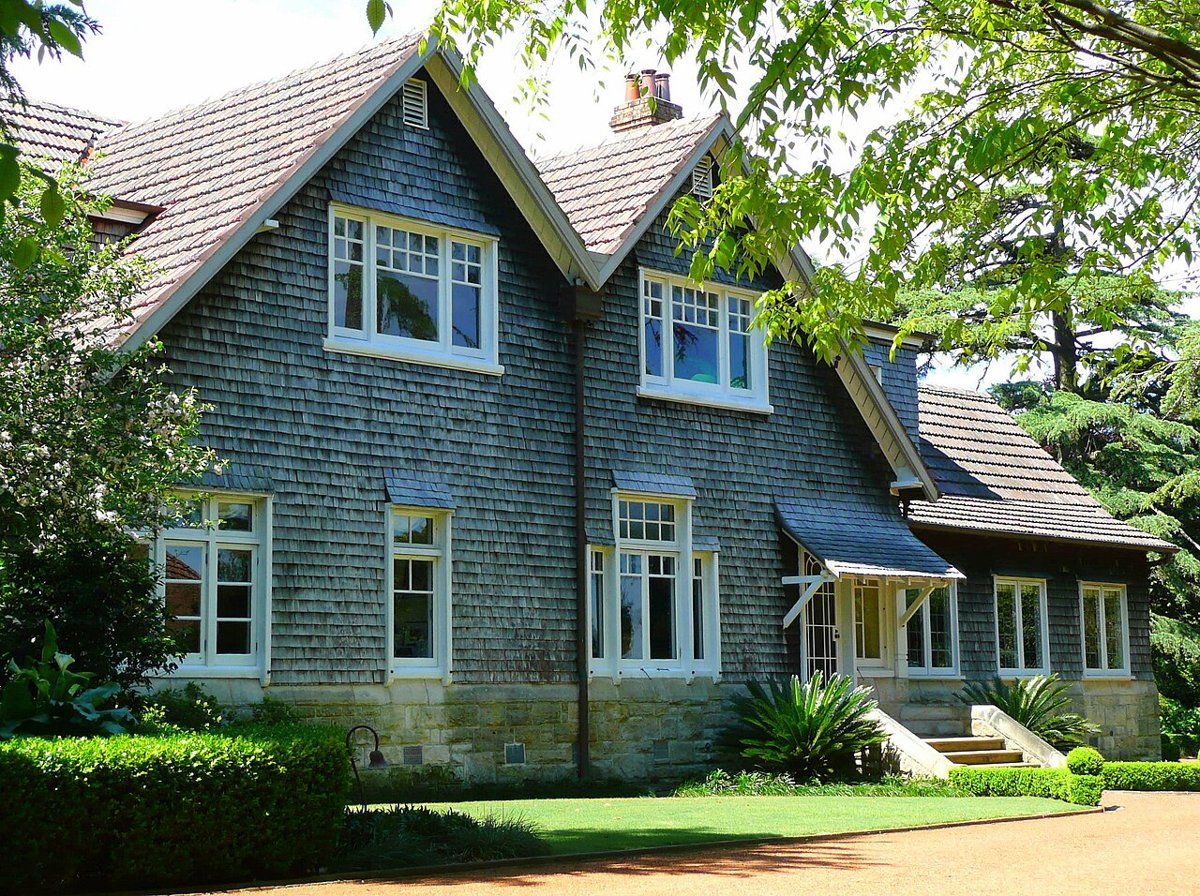
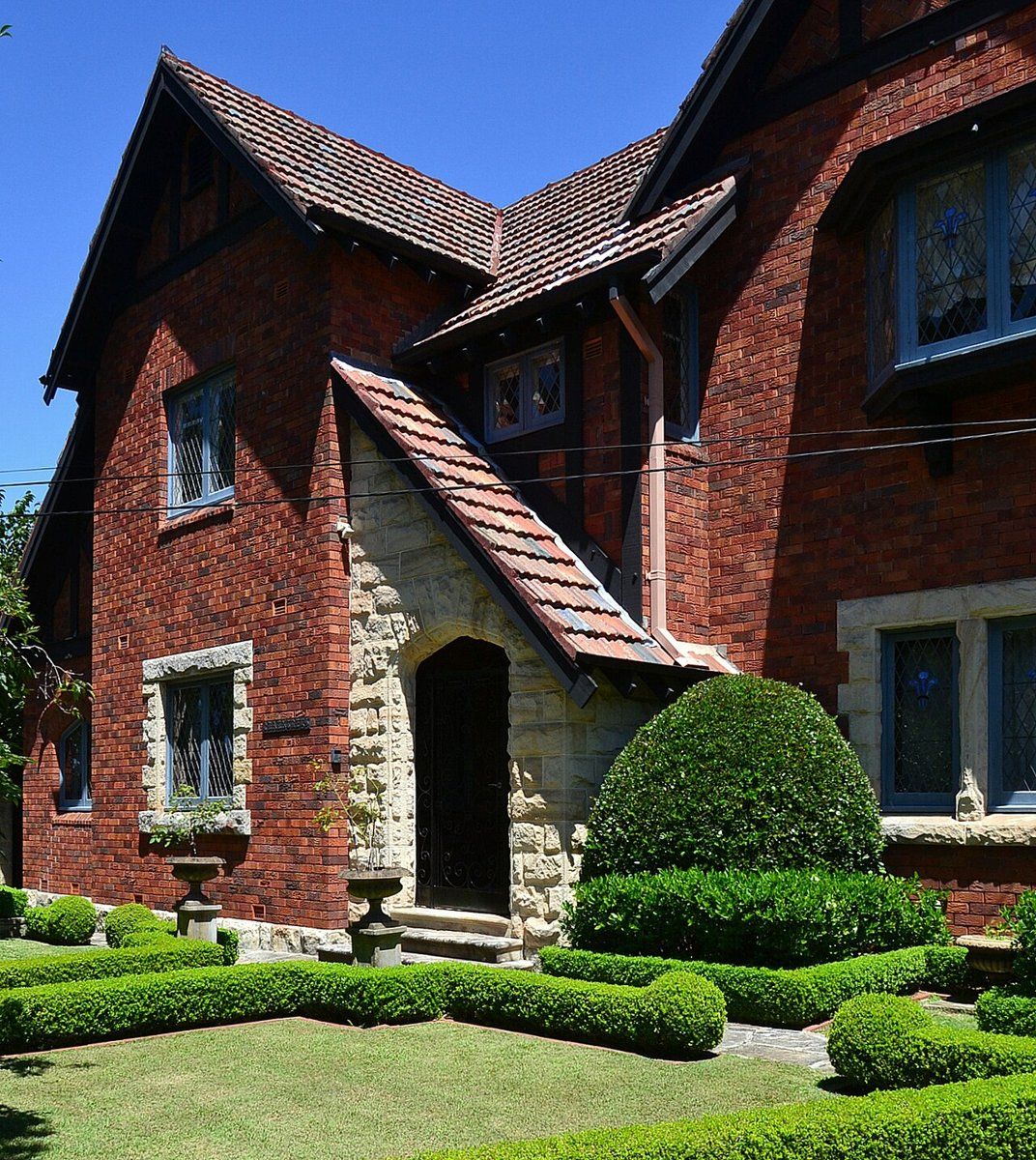
Warrawee's early houses were large and set in generous grounds, often with big trees and formal layouts. The council lists the Warrawee Conservation Area (C3), and two more that cross into neighbouring suburbs: Heydon Avenue Warrawee and Woodville Avenue Wahroonga, and Laurel Avenue King Street.
The Dictionary of Sydney entry for Warrawee has one of the best descriptions of a suburb's gardens I've read. It lists maples, jacarandas, liquidambars, camphor laurels and conifers planted around the main building period, a hoop pine in Pibrac Avenue, a bunya pine in Heydon Street, jacarandas in Bangalla Street, pines in Young Street, oaks in Hastings Road and a tight canopy of liquidambars in Winton Street. The original shrubs were mainly roses, camellias and privet, with courtyards, summerhouses, sunken gardens, herbaceous borders and rose beds.

Looking after a heritage garden here
The council notes that fences, trees and gardens contribute to a conservation area's significance, so changes to a front garden in an HCA can matter as much as changes to the house. My heritage and classic gardens guide covers the plants and layouts that suit these houses, and the council rules guide explains what needs approval.
One thing I'd point out: one of those old favourites, privet, is also a weed. The soil survey lists privets among the garden escapes that wash into the sandstone valleys below the ridge. When an old privet hedge needs replacing, it's worth choosing something that won't seed into the bush.
Working on your garden in Warrawee
I work across Sydney's North Shore, including Warrawee (see my Ku-ring-gai area page). Nearby suburbs in this series are Wahroonga, Turramurra and North Wahroonga.
Sources
- NSW DCCEEW, State Vegetation Type Map, pre-1750 Plant Community Types (map service VIS/SVTM_NSW_1750_PCT), queried 13 Oct 2026
- NSW Spatial Services, NSW Administrative Boundaries, Suburb layer (Warrawee, 135 ha)
- BioNet Vegetation Classification, PCT definitions 3136 and 3262
- NSW Threatened Species profile, Blue Gum High Forest in the Sydney Basin Bioregion
- NSW Threatened Species profile, Sydney Turpentine-Ironbark Forest in the Sydney Basin Bioregion
- NSW DCCEEW, Soil Landscapes of the Sydney 1:100,000 Sheet (Chapman & Murphy 1989; map ed. 4, 2009), map service Soil_Landscape/Sydney queried 13 Oct 2026
- NSW DCCEEW eSPADE, Glenorie (gn) soil landscape report, from Chapman & Murphy 1989
- NSW DCCEEW eSPADE, West Pennant Hills (wp) soil landscape report, from Chapman & Murphy 1989
- NSW DCCEEW eSPADE, Hawkesbury (ha) soil landscape report, from Chapman & Murphy 1989
- Edwards Z, Warrawee, Dictionary of Sydney, 2008
- "Ku-ring-gai Council, Heritage conservation areas (list of HCAs by suburb, history of the listings, and note that fences, trees and gardens contribute to significance), read 13 Oct 2026