Free guide
Living with possums: a natural guide for North Shore gardens
Possums on the roof at 2am? Rose buds nibbled overnight? You can share your garden with possums and still enjoy your flowers, fruit and veg. Here's how: a Possum Hotel, cat- and dog-safe tips, plants for possums, decoy plants and wildlife-safe protection.
- Put up a Possum Hotel (a nest box), so they sleep there instead of your roof.
- Keep cats inside from dusk to dawn.
- Plant thick native shrubs, and a decoy patch they can munch.
- Only use wildlife-safe netting: if you can poke your finger through, it's not safe.
- Never trap or move a possum yourself. It's illegal without a licence.
Jump to: Why possums matter, and how a Possum Hotel helps · Choosing and placing a Possum Hotel · Cat-safe (and dog-safe) tips · Plant for them · Decoy and companion plants · Protect what you love · Natural deterrents for trees · What not to do
If you've got possums visiting your garden, you're lucky. Lots of people on the North Shore hear them thumping across the roof at night. Or they find a half-eaten rose bud in the morning and think "problem". I see it differently. Possums were here first. They're part of what makes a leafy Sydney garden feel alive. And with a bit of planning, you can share your garden with them and still enjoy your flowers, fruit and veg.
This guide is about working with possums, not against them. Give them somewhere to stay and something to eat, and gently protect the plants you love.
Quick version
- Possums are native and protected. Work with them, not against them.
- Put up a Possum Hotel. I recommend about 2 metres high, so you can see who's moved in. (The official advice is 4 metres or more.)
- Keep cats in from dusk to dawn, especially in spring when baby possums are about.
- Plant a "possum pantry" of local natives at the edge of your garden.
- Give them a decoy patch of things they love, like parsley, silverbeet and cheap flowers such as dahlias.
- Protect your favourite plants with wildlife-safe netting (if your finger fits through, it's not safe) or a cage.
- Never trap, move, poison or glue-trap a possum. Found a hurt one? Call WIRES on 1300 094 737.
Why possums matter, and how a Possum Hotel helps
You'll most likely meet two kinds of possum on the North Shore: the common brushtail and the common ringtail. Both are native. Both are protected in NSW. And both have learnt to live alongside us.
- Brushtails are the bigger, bolder ones. In the wild they shelter in tree hollows and eat leaves, blossoms and fruit. In suburbia they'll eat almost anything.
- Ringtails are smaller, with a white tip on their curly tail. They build a ball-shaped nest called a drey from grass and shredded bark. You'll find dreys in tree forks, hollows and thick shrubs. Ringtails eat the leaves, flowers and fruit of native and introduced plants.
The big problem for possums is housing. Tree hollows take many decades to form. When old trees are cleared, possums lose their beds. That's usually why a brushtail ends up in your roof. It's the closest thing to a hollow it can find.
A Possum Hotel (my name for a possum nest box) gives them a safe, dry bed that isn't your roof. Brushtails are the most likely to check in. Ringtails often prefer to build their own drey in thick shrubs. So planting dense native shrubs helps them just as much as a box does.
Choosing and placing a Possum Hotel
Choosing a hotel
- Solid, weatherproof timber. Marine ply around 12 mm thick is the usual recommendation. Chipboard falls apart outdoors.
- Drainage holes in the floor, a lid you can open for checking, and an overhanging roof to keep rain out.
- The right size for the guest. Brushtail, ringtail and glider boxes differ mostly in size and entrance hole. Tell me what you've been seeing at night and I'll help you pick. (There's a Possum Hotel in the RF Horticulture shop if you'd like to do it yourself.)
How high? The official advice, and what I do
The official guidance is at least 4 metres. The NSW Government's possum house guide and WIRES both recommend fixing a possum box at least 4 metres above the ground, mainly to keep it out of reach of cats and dogs.
I install up to 3 metres, and I recommend about 2 metres. At 2 metres you can look up and see if someone's checked in. Look for fresh scratch marks on the entrance, leaves dragged inside, or droppings underneath. I've had possums move into hotels at 2 metres. If you go lower, follow the cat-safe tips in section 3.
Want yours at 4 metres or higher? That's above what I install myself. I don't climb trees (I'm a horticulturist, not an arborist). You've got two options:
- I can arrange an arborist I work with to do the install. The arborist's own rates apply.
- Or install it yourself, following the NSW Government's possum house guide.
Other placement tips
- Face it away from the prevailing weather and away from the hot afternoon sun. A baffle in front of the entrance helps if you can't avoid both.
- Shade. A spot under the canopy of a tree stays cooler in summer.
- Fix it kindly to the tree. Use a strap system that allows for the trunk to grow, or wire sheathed in old hose. Don't drive fixings hard into the tree.
- Away from your roof. You want the hotel to be the better option, not a stepping stone back into the ceiling.
Be patient
No one can promise a possum will check in. Some hotels fill within weeks. Some take a season or more. Some never do. Planting for possums (section 4) makes your garden more inviting and gives the hotel a better chance.
Cat-safe (and dog-safe) tips
Who's most at risk: the young ones
In my experience, a healthy adult possum can usually look after itself. It's the young ones that cats catch. Think joeys just out of the pouch, babies riding on mum's back, and youngsters on their first trips out of the hotel. Sydney Wildlife Rescue's records back this up. In one recent season (August 2019 to March 2020), cat attacks were the number one reason baby ringtails came into care. That was about a quarter of all rescues. Baby ringtails can't always hold on to mum's back. When she runs from a cat, they can fall off, and she won't go back for them. Cats kill mums too, so adults aren't completely safe.
When to be extra careful: possums breed all year, but spring is the busiest time. Sydney Wildlife starts seeing baby ringtails in July. Numbers peak from August to October, with a smaller wave from January to March. WIRES also gets lots of spring calls about ringtails killed by cats and dogs with live joeys still in tow.
Cats
- Keep cats inside from dusk to dawn. That's when possums are out and about. WIRES, Ku-ring-gai Council and Sydney Wildlife all say to keep cats in, at least at night. Even better, keep them home day and night, with a cat run or enclosure so they still get outside time. Ku-ring-gai Council has handy tips for turning a roamer into a homebody. The NSW Government also funds RSPCA NSW's Keeping Cats Safe at Home program with councils.
- This matters most in breeding season (spring, and again January to March). That's when joeys ride on mum's back or take their first steps out of the hotel.
- Collar, bell or bib? Ku-ring-gai Council suggests a collar, tag and bell. A CatBib (a soft flap that hangs from the collar and spoils the pounce) can help too. But nothing beats keeping cats in at night.
- Put the hotel where cats can't climb up or pounce. Keep it clear of branches, fence tops, roofs, sheds and ledges a cat could jump from.
- Trunk guard below the hotel. A smooth metal or plastic collar around the trunk is a great cat stopper. Cats can't grip it, so they can't climb up. Nest-box makers suggest tree collars for exactly this. But it stops possums climbing the trunk too. So I always make sure they've got another way up. Possums are great at finding a route. Good ones are:
- overhanging branches from a neighbouring tree that reach the hotel tree above the guard
- a fence or pergola line that runs to the tree above guard height
- a dense climbing plant or shrub growing up to the branches above the guard
- a branch "bridge" or rope run from another tree or structure to the hotel tree, fixed above the guard
When I fit a guard, I check at least one of these routes is in place. The trick is to give possums a way in over the top that a cat on the ground can't use.
- Keep the ground under the hotel clear. With no thick shrubs or clutter right underneath, a cat has nowhere to hide. And if a youngster drops, it's easier to spot. (My own tip; no published source found.)
Dogs
- Keep dogs inside at night, or in a secure area away from the hotel, especially in breeding season (WIRES advice). Ku-ring-gai Council also suggests keeping a dog inside if it barks at possums at night.
- If a possum is in the yard, keep pets in until it has moved on (WIRES).
- Has your cat or dog had a possum in its mouth? Even if the possum looks fine, call WIRES on 1300 094 737 or take it to a vet straight away. Germs from cat and dog mouths and claws can kill wildlife. Found a baby on the ground? It could be a twin, so look around for a second one.
Plant for them
The kindest way to save your favourite plants is to give possums something better to eat. The South Australian Government suggests exactly this. Plant trees that feed possums, and they'll pay less attention to your precious plants.
Here are local Sydney natives that possums use for food or shelter. They all grow naturally in North Shore bushland. ✓ CSV means the plant is on RF Horticulture's own local native plant list.
| Plant | ✓ Local | What possums get from it | Notes for your garden |
|---|---|---|---|
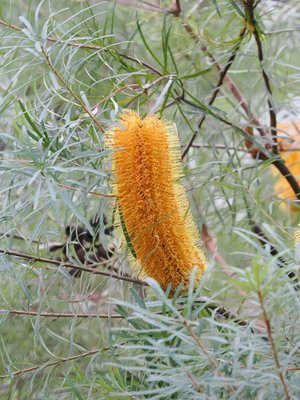 Hairpin banksia (Banksia spinulosa) Hairpin banksia (Banksia spinulosa) | ✓ | Nectar from autumn–winter flower spikes. Named as "a major food source for birds and possums" in a Pittwater-region native plant guide | One of my top picks. Compact forms suit small yards. Sandy, well-drained soil. |
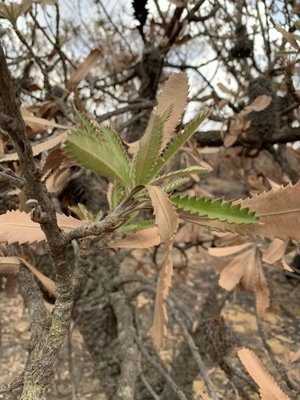 Old-man banksia (Banksia serrata) Old-man banksia (Banksia serrata) | ✓ | Nectar | Gnarled small tree for sandy soils. |
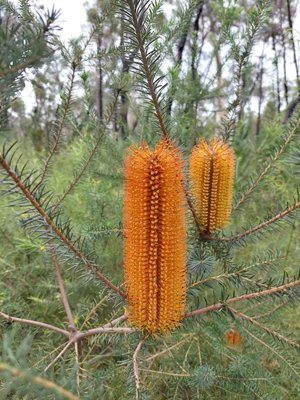 Heath-leaved banksia (Banksia ericifolia) Heath-leaved banksia (Banksia ericifolia) | ✓ | Nectar (orange winter flowers) | Also feeds the threatened eastern pygmy-possum where it occurs in local bushland (per RF's plant list, citing Ku-ring-gai Council). |
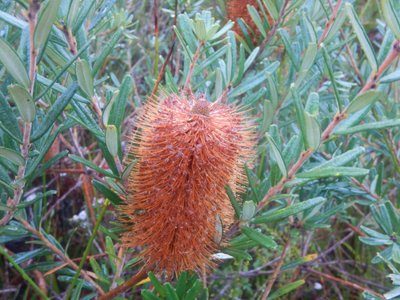 Silver banksia (Banksia marginata) Silver banksia (Banksia marginata) | ✓ | Nectar (banksias generally) | Sandy soils. |
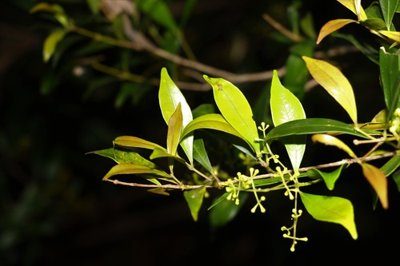 Lilly pilly (Acmena smithii, also called Syzygium smithii) Lilly pilly (Acmena smithii, also called Syzygium smithii) | ✓ | Fruit | Moist soils, good screen. Fruit can be messy near paths. |
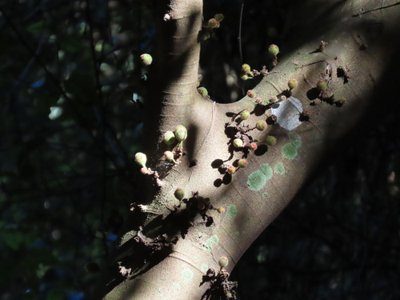 Sandpaper fig (Ficus coronata) Sandpaper fig (Ficus coronata) | ✓ | Fruit (figs generally) | Moist, shady gully gardens. |
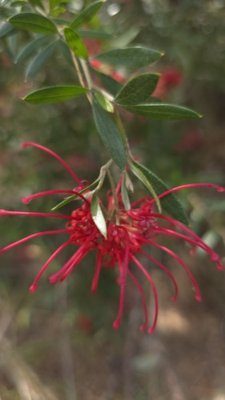 Red spider flower (Grevillea speciosa) Red spider flower (Grevillea speciosa) | ✓ | Nectar. Sydney Wildlife Rescue notes possums prefer red-flowered grevilleas | Small shrub, flowers most of the year. |
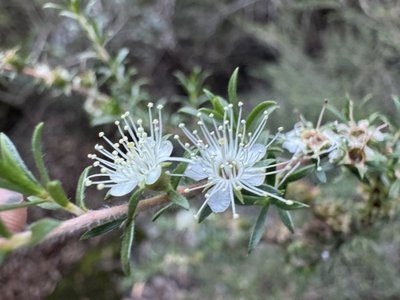 Tick bush (Kunzea ambigua) Tick bush (Kunzea ambigua) | ✓ | Food, and good material for building dreys | Fast-growing white-flowered screen. Great for ringtails. |
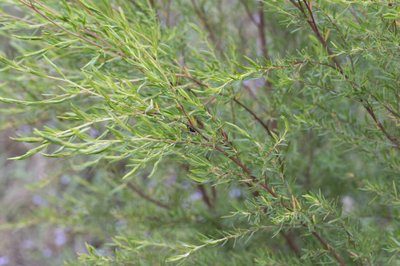 Tantoon / tea-tree (Leptospermum polygalifolium) Tantoon / tea-tree (Leptospermum polygalifolium) | ✓ | Food (tea-trees generally) | Creek-bank and moist-site shrub. |
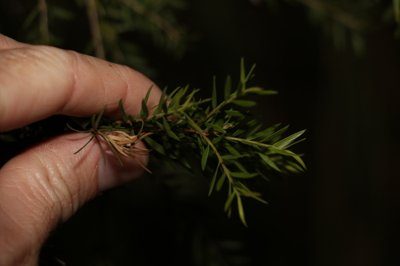 White feather honey-myrtle (Melaleuca decora) White feather honey-myrtle (Melaleuca decora) | ✓ | Nectar (paperbarks generally) | Tolerates heavy soils. |
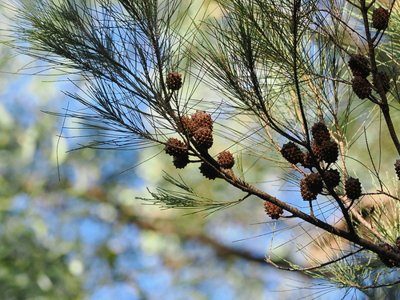 Black she-oak / forest oak (Allocasuarina littoralis, A. torulosa) Black she-oak / forest oak (Allocasuarina littoralis, A. torulosa) | ✓ | Food and dense habitat foliage (she-oaks generally) | Female cones also feed the threatened glossy black-cockatoo. |
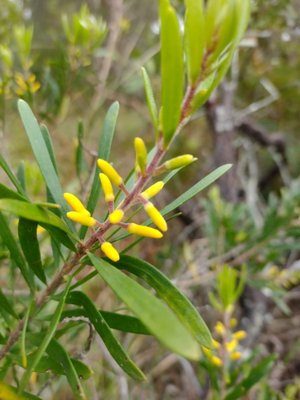 Geebungs (Persoonia linearis, P. levis, P. pinifolia) Geebungs (Persoonia linearis, P. levis, P. pinifolia) | ✓ | Fruit | Need excellent drainage. Buy tubestock. |
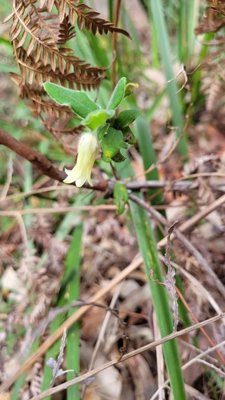 Hairy apple berry (Billardiera scandens) Hairy apple berry (Billardiera scandens) | ✓ | Fruit | Light, gentle climber. |
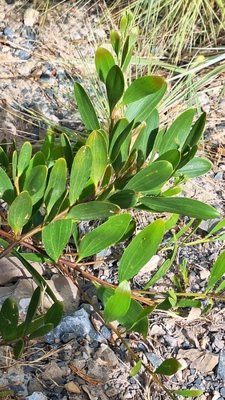 Wattles (Acacia species, e.g. A. longifolia, A. floribunda) Wattles (Acacia species, e.g. A. longifolia, A. floribunda) | ✓ | Some browsing. Sydney Wildlife Rescue says possums eat wattle "sparingly with other flora" | A supporting plant, not a main food. |
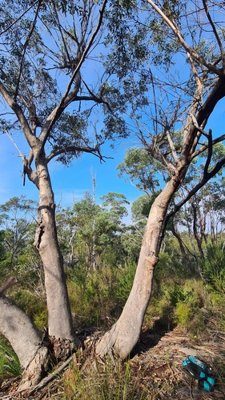 Grey gum (Eucalyptus punctata) and other local eucalypts Grey gum (Eucalyptus punctata) and other local eucalypts | ✓ | Leaves and flowers. Eucalypts are a key food for possums | Big trees (grey gum to 35 m). Only for large blocks, well away from the house. |
How to use these plants:
- Plant a "possum pantry" at the edge of the garden, away from the beds you most want to protect. Banksias, tick bush and a lilly pilly make a good mix.
- Layer your planting. Dense shrubs give ringtails somewhere to build dreys and help small birds too.
- Don't plant them right next to the house or under eaves, so you're not building a ladder to the roof.
Plants I wouldn't rely on as possum food: Sydney Wildlife Rescue says pea-flowered plants and hop bushes (Dodonaea) can be toxic to wildlife. They're still great garden plants, but I've left them off this list..
Not sure which natives suit your garden? That's exactly what my native garden advice is for. I'll walk your garden with you and pick plants that suit your soil, your light and your possums.
Decoy and companion plants
This one comes from gardening experience, not science, and I use it myself. Give possums an easy, tasty patch of their own, and they'll leave your special plants alone. It won't stop every nibble, but it takes a lot of pressure off. Other gardeners say the same. One Melbourne community gardener plants extra silverbeet and parsley along the fence the possums use. Then she nets the beds she wants to harvest.
I use three groups of decoys: leafy veg and herbs, local natives, and a few non-native flowering plants. Mix and match to suit your garden.
Veggie and herb decoys
These are my five go-to veggie decoys. Parsley is the one I know works, and the other four are the ones gardeners most often report possums stripping.
| Decoy plant | Why it works | Where to plant it | Safe for pets? |
|---|---|---|---|
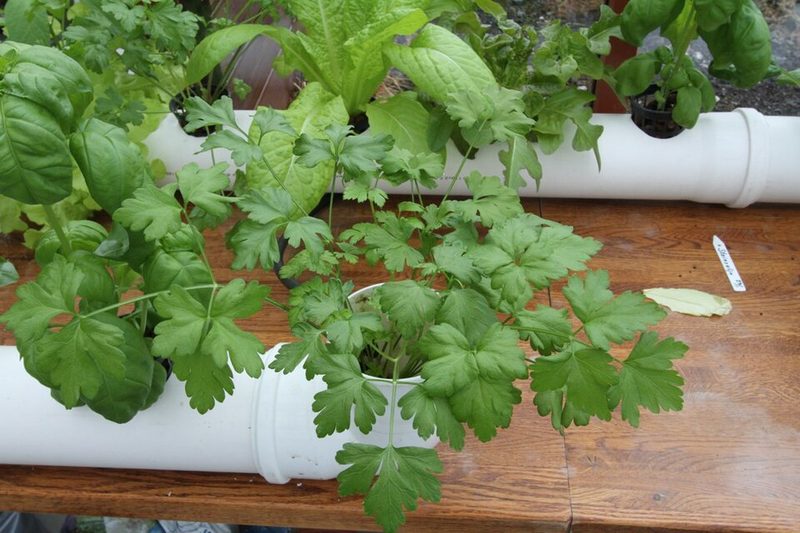 Flat-leaf (Italian) parsley Flat-leaf (Italian) parsley | In my experience possums go straight for it. Gardeners report the same. | A sacrificial patch or a couple of big pots along the possum "highway" (the fence or branch route they use at dusk), near the hotel, well away from your prize beds | No, keep pets away |
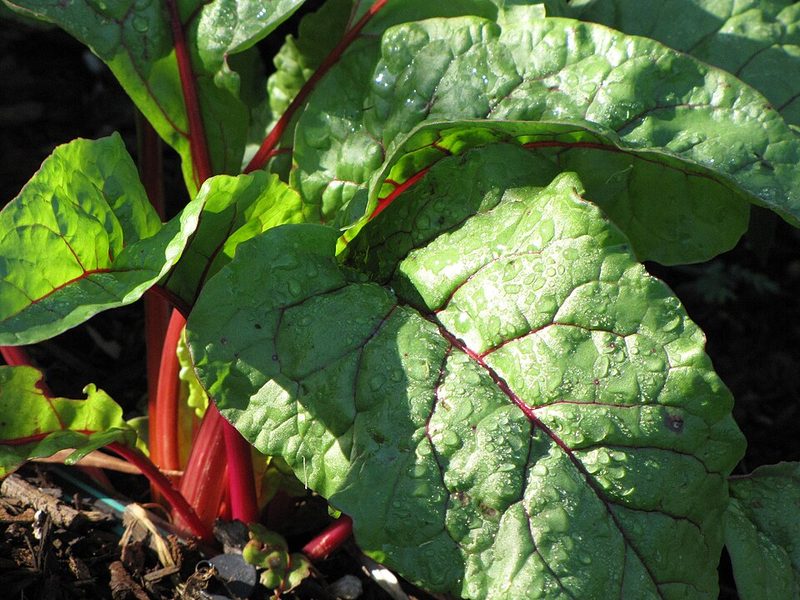 Silverbeet / Swiss chard Silverbeet / Swiss chard | Hardy, regrows after browsing, and gardeners report possums eat it heavily | Same sacrificial patch. Plant more than you need. | Mostly, in small amounts |
 Loose-leaf lettuce Loose-leaf lettuce | Gardeners report possums nibbling it | Sacrificial patch or pots | Yes |
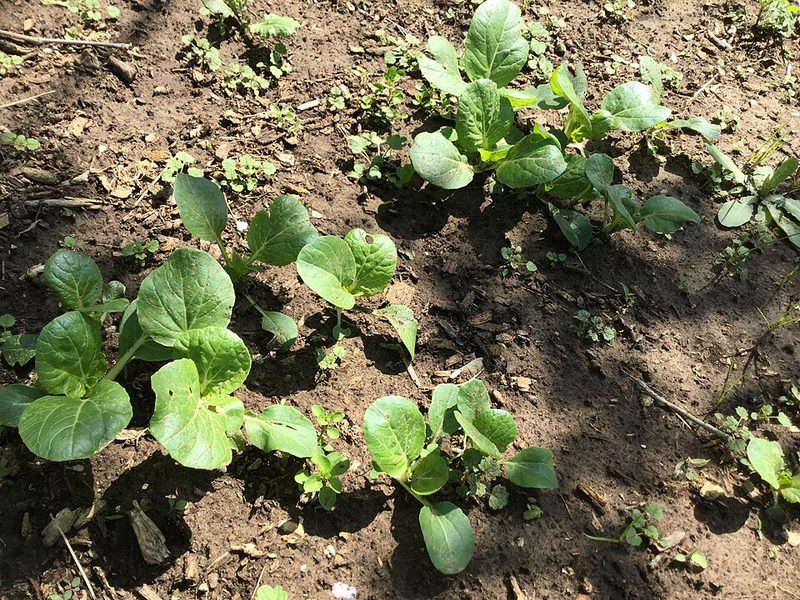 Bok choy and other Asian greens / brassicas Bok choy and other Asian greens / brassicas | Gardeners report possums stripping them. One used bok choy as a decoy and it was eaten to the ground. | Sacrificial patch | Mostly, in small amounts |
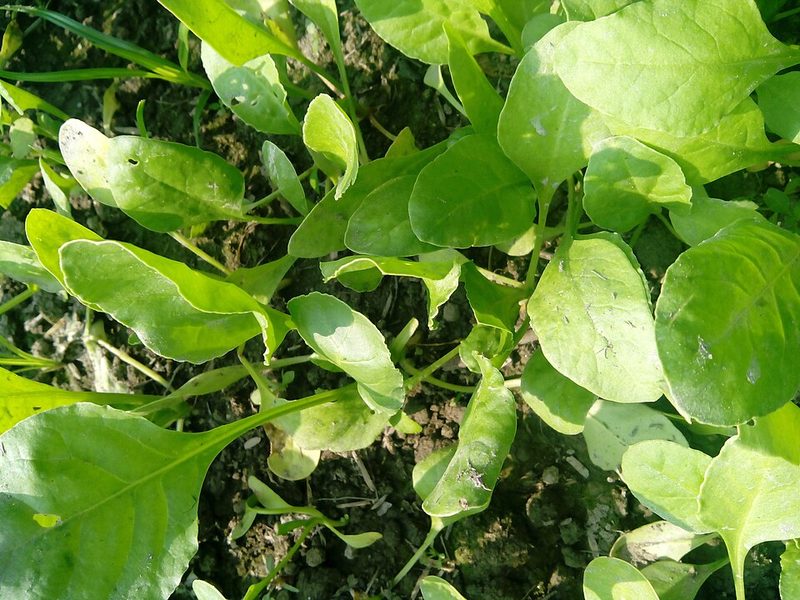 English spinach English spinach | Gardeners report possums eating it down to the stem | Sacrificial patch, cool season | Mostly, in small amounts (not for cats with kidney or bladder problems) |
Pet answers are a quick guide, based on ASPCA and vet advice (details in Sources). Any plant can upset a pet's tummy if they eat lots. If you're worried, ask your vet.
Native decoys
These local natives all grow in North Shore bushland and are on RF Horticulture's own plant list. They're food and shelter in one, so they're my pick for a permanent "possum pantry" corner. They're garden-sized, grow fast or take pruning well, so they cope with a nibble. Want help choosing? See my native garden advice.
| Decoy plant | Why it works | Where to plant it | Safe for pets? |
|---|---|---|---|
| Tick bush (Kunzea ambigua) | Sydney Wildlife Rescue lists Kunzea as possum food and good drey-building material for ringtails. It's a fast-growing screen shrub to about 3.5 m. | A back-of-garden screen near the hotel, away from prize beds | Probably. No known problems |
| Lilly pilly (Acmena smithii, also called Syzygium smithii) | Sydney Wildlife Rescue lists lilly pillies as possum food (fruit). It's a classic hedge plant, so it takes regular trimming and browsing in its stride. Pick a compact form for small yards. | A hedge or screen on the possums' route, in moist soil | Yes, as far as vets know |
| Red spider flower (Grevillea speciosa) | Sydney Wildlife Rescue notes possums prefer red-flowered grevilleas. It's a small shrub (0.4–3 m) that flowers most of the year, so there's nearly always nectar on offer. | Sunny, well-drained spot near the hotel | Probably, but don't let pets chew it |
| Hairpin banksia (Banksia spinulosa) | "A major food source for birds and possums" (Pittwater-region native plant guide). It flowers autumn to winter, when other food is scarce. Compact forms suit small yards. | Sandy, well-drained bed at the garden edge | Yes, as far as vets know |
| Tantoon / tea-tree (Leptospermum polygalifolium) | Sydney Wildlife Rescue lists tea-trees (Leptospermum) as possum food. It's a tough, bushy shrub that handles trimming. | Moist or creek-side spot, screen planting | Mostly. The oils can irritate |
Pet answers are a quick guide, based on ASPCA and vet advice (details in Sources). Any plant can upset a pet's tummy if they eat lots. If you're worried, ask your vet.
Non-native flowering decoys
A decoy should be cheap, quick to regrow and easy to replace. Never a plant you treasure. So no roses or camellias here (see section 6 for those). These are cheap flowers gardeners say possums eat. Most grow from a punnet, a packet of seed or a cutting.
| Decoy plant | Why it works | Where to plant it | Safe for pets? |
|---|---|---|---|
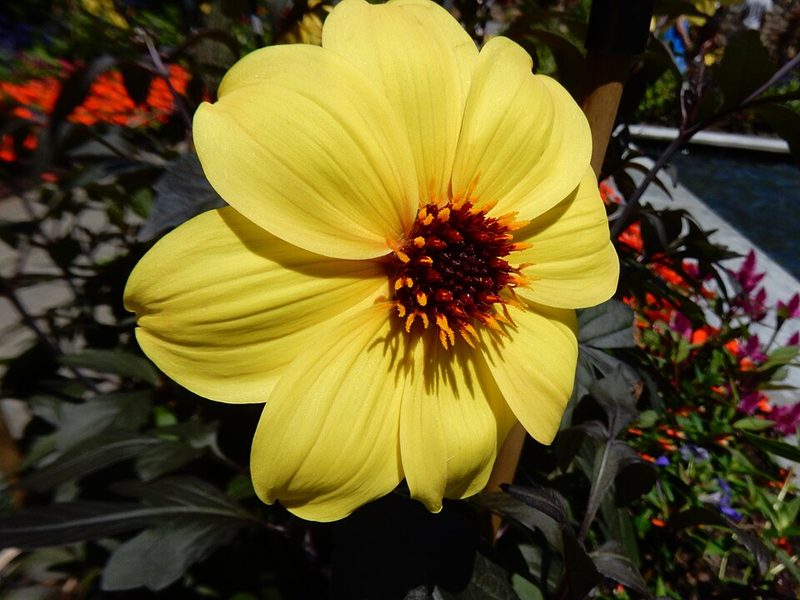 Dahlias Dahlias | Gardeners report possums stripping dahlia flowers overnight. One noted the plant "will bounce back". Tubers are cheap, and plants regrow every season. | A sacrificial flower bed or big pots near the hotel | No, keep pets away (can cause a mild upset tummy and itchy skin) |
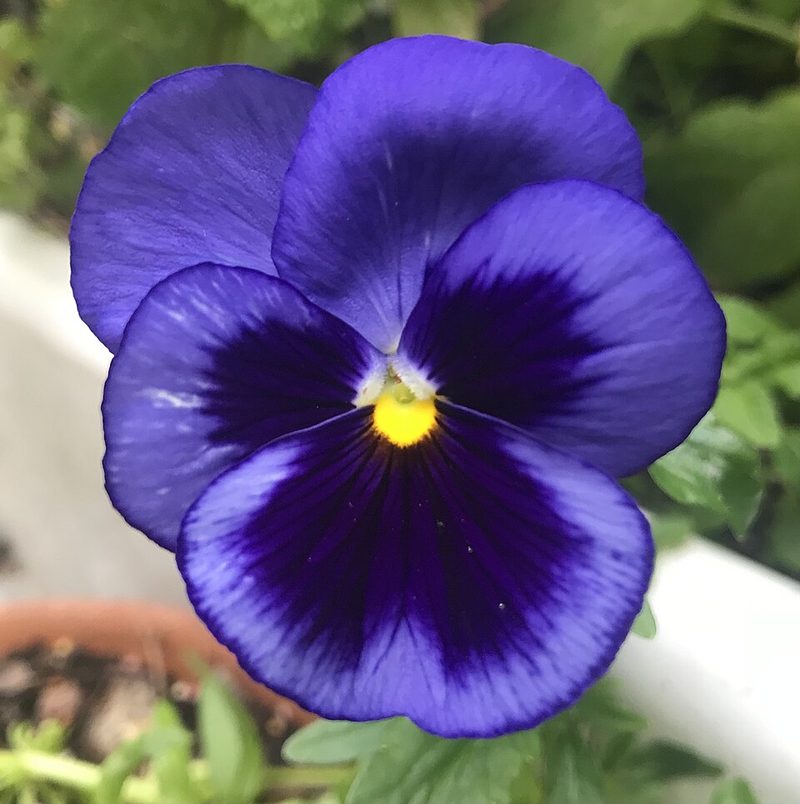 Pansies and violas Pansies and violas | Cheap punnets of soft-petalled annuals. Gardeners list them among flowers possums nibble, though one garden found possums "may or may not" eat them. | Pots or a border along the possum route. Replant each season. | Yes |
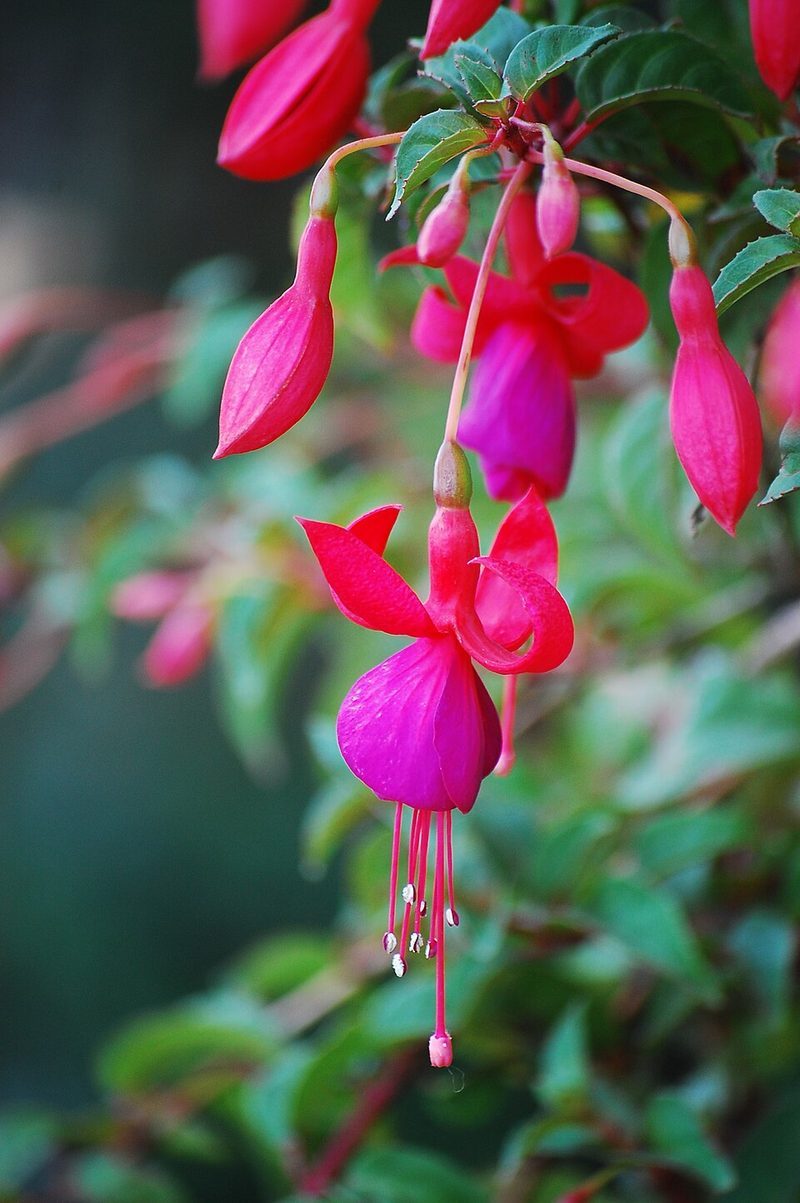 Fuchsias Fuchsias | Better Homes & Gardens lists fuchsias among flowers possums are fond of. Soft and quick-growing, and they strike easily from cuttings. | Part shade, in pots or hanging baskets near the hotel | Yes |
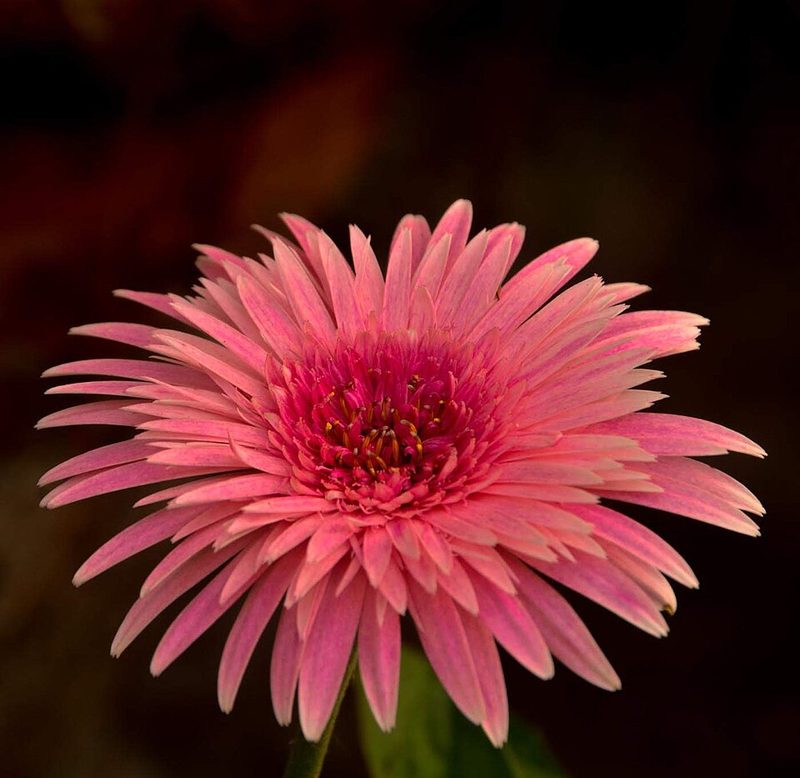 Gerberas Gerberas | A cheap, soft-petalled daisy. Better Homes & Gardens' garden editor says possums go for soft petals first and leave "torn daisy petals". There's less direct evidence for gerberas specifically. | Pots or a sunny border | Yes |
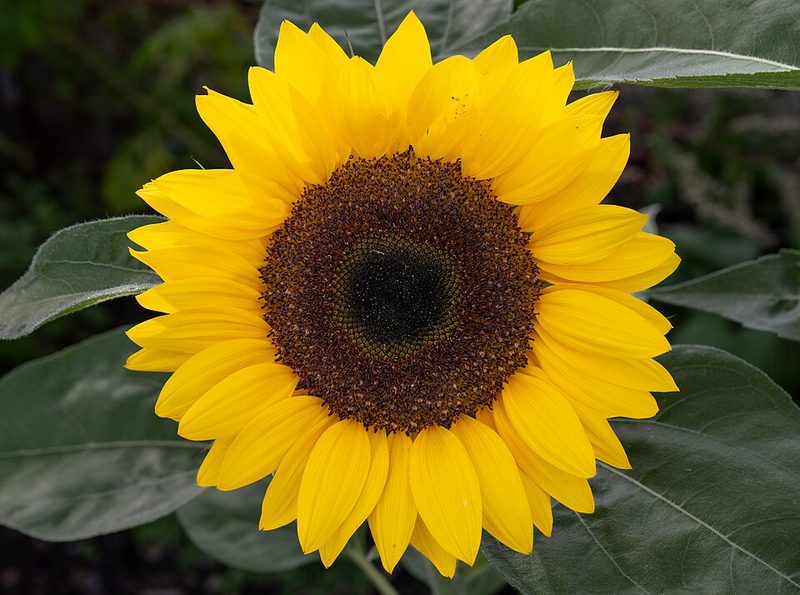 Sunflowers Sunflowers | A packet of seed costs a few dollars and they grow fast. Gardening sites list sunflowers among flowers possums target. This is lighter evidence than for dahlias. | A sunny sacrificial strip along the fence line | Yes |
Pet answers are a quick guide, based on ASPCA and vet advice (details in Sources). Any plant can upset a pet's tummy if they eat lots. If you're worried, ask your vet.
How to make a decoy patch work
- Plant it on their route, close to the hotel and well away from the beds you want to protect.
- Grow more than you need, and keep sowing a few more every few weeks so there's always something leafy on offer.
- Protect brand-new seedlings under a cage until they're big enough to cope with browsing. Possums happily eat young plants.
- Pots are handy. You can move them to wherever the possums are causing trouble.
- Net or cage what you want to harvest (section 6). A decoy patch works best alongside protection, not instead of it.
Companion planting. Some gardeners tuck strong-smelling plants around their veg. A Brisbane city farm suggests garlic chives, leeks and citronella geraniums. It's worth a try. But in my experience it's hit and miss, so I'd count on the decoy patch and netting first. Heads up: garlic, chives and leeks are in the onion family, which is toxic to cats and dogs.
What I've left off on purpose
- Peas and beans: Sydney Wildlife Rescue lists pea-flowered (leguminous) plants as toxic to wildlife.
- Tomatoes: Sydney Wildlife Rescue's Flora for wildlife list includes "tomato plants" among its known toxic plants.
- Onion family (garlic, chives, leeks, spring onions) as decoys: toxic to cats and dogs.
- Pea-flowered natives and hop bushes (Dodonaea) as native decoys: Sydney Wildlife Rescue lists both as toxic to wildlife.
- Petunias and other nightshade-family flowers: Sydney Wildlife Rescue lists nightshades as toxic to wildlife.
- Roses and camellias as decoys: possums do love them, but they're plants people treasure, so protect them instead (section 6).
- Garden geraniums (Pelargonium): gardeners report possums eating them, but they're not safe for pets, and one kind is listed as a weed in NSW.
- Anything weedy: none of the plants in the three tables is on the NSW WeedWise weed list (checked 11 Oct 2026). I've avoided self-seeders that escape into bushland, such as fennel and nasturtium.
Protect what you love
You don't have to choose between possums and roses. Here are the natural options I use and recommend.
Wildlife-safe netting
Netting works well, but the wrong netting kills wildlife. Every year, possums, birds, flying-foxes, snakes and lizards get tangled in loose, wide-mesh netting. Many don't survive.
- Use netting with holes no bigger than 5 mm × 5 mm when stretched. The easy check is the finger test: if you can poke your finger through, it's not safe.
- Choose white netting so animals can see it at night.
- Never throw net loosely over a tree. Stretch it taut over a frame, or use a net with a long skirt gathered and tied around the trunk.
- Avoid loose monofilament "bird netting" with big holes. That's the kind wildlife carers spend their nights cutting animals out of.
- Check nets daily, and take them off once the fruit's picked. Old, tattered nets left on trees keep catching animals.
- Fruit protection bags over individual bunches or fruit are a great small-garden alternative.
In NSW this is government and council advice, not a law for home gardens. In Victoria, the 5 mm rule is now law for home fruit netting.
Exclusion cages and floppy fences
- Veggie and seedling cages: a simple frame covered in fine mesh or wire over a raised bed works beautifully for herbs, lettuces and young plants.
- Floppy fence: for a whole bed, Victorian and SA government guides describe an 80 cm-wide, heavy galvanised chicken-wire fence with the bottom 20 cm buried, supported on flexible wire and curved outward at the top. When a possum tries to climb it, it bends over and springs back.
Roses, camellias and other treasured plants
Possums love roses (buds, flowers and soft new leaves) and camellia flowers. These are plants to protect, not sacrifice. Net or cage them at night in bud season, keep them away from fences and pergolas possums use as highways, and give possums a decoy patch elsewhere.
Decoy and sacrificial planting
Pair your protection with a native "possum pantry" (section 4) and a leafy decoy patch (section 5), so possums have somewhere else to eat.
Cut off the easy routes
Possums are brilliant climbers and jumpers. Branches, fences, powerlines and roofs are their highways.
- Trim branches that bridge from fences, roofs or other trees into the plant you're protecting (see section 7).
- Think about where they're coming from at dusk, and remove the stepping stones.
Natural deterrents for trees
Here's an honest rundown of what works and what's patchy.
| Option | How to do it | How well it works |
|---|---|---|
| Tree collar / trunk guard | A band of smooth sheet metal or clear plastic (perspex/polycarbonate) about 60 cm wide, fitted around the trunk about 60 cm above the ground (the Victorian and SA government guides give these figures). Possums can't grip the smooth surface. | Works well, but only if the tree has no other way in. If branches touch a fence, roof or another tree, possums will simply go around the collar. Loosen or adjust it as the trunk grows. |
| Trim access branches | Cut back branches that link the tree to fences, roofs, sheds or neighbouring trees. Victoria's guide suggests a gap of at least 1.5 m around a roof. | Very effective, especially combined with a collar. Check with your council first if the tree is large or protected, and keep in mind that possums and birds may be nesting in it. Higher pruning is a job for an arborist. |
| Plant-safe scent and taste deterrents | The NSW Government suggests boiling a litre of water with a handful of hot chillies, garlic and vinegar, leaving it to brew for a few days, straining it, and spraying the cooled liquid on affected plants. Commercial non-harmful sprays, blood and bone, and quassia wood chips are also suggested. | Hit and miss. Victoria's wildlife agency notes tests found none of 15 common repellent compounds reliably stopped possums damaging trees or fruit. Reapply after rain and new growth. Best used alongside netting or collars, not alone. |
| Motion-activated lights or sprinklers | Aim at the tree or bed possums visit. | Short-term at best. Possums often get used to them over time. Fine as an extra, not a fix. Avoid lights that spill into neighbours' bedrooms or shine across bushland. |
What not to do
- Don't trap or move possums yourself. Possums are protected in NSW (Biodiversity Conservation Act 2016). Without a licence, it's illegal to trap, move or kill one. If a possum really has to go (say, from a roof after the nest box steps haven't worked), use a licensed catch-and-release possum operator. Ask to see their licence. NSW rules say the possum must be released at dusk, no more than 150 metres from where it was caught, near something it can climb straight away.
- Why not move it "somewhere nicer"? Possums are territorial. Drop one in strange bushland and it usually has to fight the locals for food and shelter. It often doesn't survive.
- No poisons. Harming a protected native animal is illegal. Poisons and baits also put pets, birds of prey and other wildlife at risk.
- No glue traps, sticky bands or sticky barriers. They can trap and badly hurt possums, birds, lizards and even pets. Under NSW animal cruelty law (2025), glue traps have been banned across NSW since 1 February 2025, unless they're caged so animals can't touch the glue. Sticky bands on tree trunks catch wildlife the same way, so skip those too.
- No loose, wide-mesh netting (see section 6).
- Don't block a roof gap while a possum is inside. Only seal it once the possum is out for the night, and only after a nest box is up.
Found an injured, orphaned or distressed possum? A possum out in daylight is often unwell. Call:
- WIRES: 1300 094 737 (24/7)
- Sydney Wildlife Rescue: (02) 9413 4300 (24/7)
Want a hand with possums?
Possum Hotel installs up to 3 metres (about 2 metres recommended, no tree climbing), a possum-friendly planting plan with a decoy patch, or native garden advice. For 4 metres or higher, I can arrange an arborist I work with, at the arborist's own rates. Quotes for installs and planting.
Sources
- NSW Government (DCCEEW), How to stop possums eating your garden: protected under the Biodiversity Conservation Act 2016; trapping illegal without a licence; wildlife-friendly netting; chilli/garlic/vinegar spray; non-harmful commercial sprays; blood and bone; quassia chips. (Page updated 1 July 2026.)
- NSW Government (DCCEEW), How to remove a possum from your roof: illegal to relocate or kill, or trap/catch and release, without a licence; nest box at least 4 m; block access only once the possum has left; licensed catch-and-release operators; release at dusk within 150 m; territoriality.
- NSW Office of Environment and Heritage, Guide to making a possum house (PDF): clearing of old trees and hollow loss; box at least 4 m; face away from prevailing winds and afternoon sun; baffle; drainage holes; hose-sheathed wire; don't drive nails fully in.
- NSW Government (DCCEEW), Flying-foxes and netting: mesh no greater than 5 × 5 mm at full stretch; finger test; white netting; never throw loosely over trees; taut netting or skirts gathered at the trunk; check regularly. Also the factsheet Net it right, get it right.
- City of Ryde, Wildlife-friendly netting: 5 mm × 5 mm mesh; fruit protection bags; frame; secure the net base; white netting; check daily.
- Agriculture Victoria, Use of fruit netting – harvest without harm: mandatory 5 × 5 mm rule for household netting in Victoria (comparison only).
- WIRES, Possums: ringtail dreys; brushtails favour boxes; box at least 4 m; daytime possums may be sick or injured; rescue line 1300 094 737.
- WIRES, Possum in your roof? Here's how to help: box at least 4 m and out of reach of cats or dogs; trim overhanging branches; illegal to harm, trap or relocate without a licence.
- Sydney Wildlife Rescue, Flora for wildlife: plant genera used by possums (Acacia sparingly, Acmena/Syzygium, Banksia, Callistemon, Casuarina/she-oak, Eucalyptus, Ficus, Grevillea with red flowers preferred, Kunzea incl. drey building, Leptospermum, Melaleuca); "known toxic plants" list including leguminous (pea-flowered) plants, hop bush and tomato plants. Rescue line (02) 9413 4300.
- Sydney Wildlife Rescue, Simple wildlife tips (wildlife-friendly netting is white with holes your fingers can't go through; plant natives; nest boxes) and Wildlife in urban environments (plant natives, provide nest boxes, keep pets in at night).
- Australian Museum, Eastern (common) ringtail possum and Common brushtail possum: diet, dreys, hollows and roofs.
- Government of South Australia, Possums in your roof / garden (PDF): plant alternative food trees; sheet-metal collars 60 cm wide, 60 cm above ground; floppy fence design.
- Wildlife Victoria (Vic Government), Possums: 60 cm collars fitted 60 cm above ground; 1.5 m gap around roofs; floppy fence; tests found none of 15 common repellent compounds effectively prevented damage.
- Canopy Keepers, Native plants for your garden – Pittwater region (PDF): hairpin banksia "a major food source for birds and possums".
- NSW Prevention of Cruelty to Animals Regulation 2025, cl. 42 Prohibited traps: a glue trap must not be set anywhere in NSW unless it has a cage or other protection preventing animal contact with the glue, or is otherwise designed to prevent capture. Commenced 1 February 2025 (NSW DPIRD; Judicial Commission of NSW Lawcodes, offence code 6755, in force from 1 Feb 2025). Also summarised by the RSPCA Knowledgebase.
- Sydney Wildlife Rescue, Ringtail possum: an overview of the season: babies from July, peak August–October, second wave January–March; immature joeys lose grip on mum's back when she flees predators like cats; in the August 2019 to March 2020 season overview, cat attacks were the number one reason baby ringtails came into care (about a quarter of rescues); mums also die from cat attacks.
- WIRES, Ringtail possums: worth a second look: possums breed all year but especially in spring; calls about ringtails killed by cats and dogs with live joeys; ringtails nearly always have twins.
- WIRES, Living with wildlife: domestic pets: keep cats inside at least at night; keep dogs inside or confined at night; enclosed cat runs; keep pets in while a native animal is in the yard; call WIRES or a vet if a pet has had an animal in its mouth.
- Ku-ring-gai Council, Keeping cats safe at home, Tips for pet owners (collar, tag and bell; keep cats indoors particularly at night) and Animal FAQs (no legal night curfew under the Companion Animals Act 1998, but indoors or an enclosure recommended; keep dogs that bark at possums inside). (Pages blocked a direct fetch; content from search-indexed copies, 11 Oct 2026.)
- NSW Government, Keeping cats home and wildlife safe and Keeping Cats Safe at Home Phase 2: NSW Environmental Trust–funded RSPCA NSW program with councils encouraging voluntary cat containment.
- Calver M. et al. (2007), Reducing the rate of predation on wildlife by pet cats: the efficacy and practicability of collar-mounted pounce protectors, Biological Conservation (the "Did you know?" figure): Perth study; of all mammals caught, 36% were caught while cats wore a CatBib and 64% while they didn't, i.e. about half as many; birds 25%; bells added no extra protection; bells alone 34–48% reduction in earlier studies; confinement is the only complete prevention.
- fauNature, nest box installation brochure (PDF): tree collars around the trunk to stop predators such as cats reaching the box.
- ASPCA, Parsley: toxic to dogs, cats and horses (furanocoumarins; photosensitisation; large amounts needed).
- ASPCA, Beets (incl. Swiss chard, Beta vulgaris): non-toxic to dogs, cats and horses; large mature leaves contain oxalic acid.
- ASPCA, Toxic and non-toxic plants list: lettuce and spinach have no toxic listing (checked 11 Oct 2026). ASPCA Animal Poison Control Center, spinach advice (Facebook, 12 Jun 2015): a leaf or two is unlikely to matter for a healthy adult cat; avoid in cats with urinary problems, crystaluria or kidney disease.
- Pet answers in the decoy tables, in detail: parsley: ASPCA toxic to dogs, cats and horses (sun sensitivity; large amounts needed). Silverbeet: ASPCA non-toxic, but large mature leaves contain oxalic acid. Lettuce: no ASPCA toxic listing; Merck Animal Health lists it as an OK dog snack. Bok choy: Preventive Vet says safe in small amounts; may cause gas; caution for pets with thyroid problems. English spinach: no ASPCA toxic listing; contains oxalates; ASPCA Poison Control advises avoiding it for cats with urinary or kidney problems. Tick bush: no pet-toxicity listing found (not on ASPCA's list). Lilly pilly: not on ASPCA's list; Walkerville Vet calls it "quite safe" (experience, not formal data). Red spider flower: most grevilleas low risk; some species (e.g. G. robusta) contain cyanogenic compounds; no data for G. speciosa. Hairpin banksia: Walkerville Vet says "true toxicity is unknown", no recognised poisonings. Tea-tree: Walkerville Vet lists it as dog-friendly but notes its oils may irritate. Dahlia: ASPCA toxic to dogs, cats and horses (mild stomach upset, mild dermatitis). Pansy: ASPCA non-toxic (Viola tricolor var. hortensis). Fuchsia: ASPCA non-toxic (honeysuckle fuchsia, Fuchsia triphylla; garden hybrids not listed separately). Gerbera: ASPCA non-toxic (Gerbera jamesonii). Sunflower: ASPCA non-toxic (Helianthus).
- Merck Animal Health, Feeding table scraps: do or don't?: lettuce listed among raw vegetables that are OK as dog snacks.
- Preventive Vet, Safe and unsafe vegetables for dogs and cats: bok choy safe in small amounts; may cause gas; caution for pets with thyroid issues; onion family toxic to cats and dogs.
- Sustainable Macleod, Possums raiding my vegie patch: possums eating broccoli, silverbeet, parsley, spinach, cauliflower, lettuce; decoy silverbeet and parsley planted densely on the fence-line "possum highway"; netting the beds to harvest. (Gardener's account, not research.)
- Love of Dirt, How to stop possums from eating plants: decoy flat-leaf parsley; a decoy bok choy "annihilated"; possums ate seedlings, parsley, coriander, brassicas, leafy greens, chards. (Gardener's account.)
- Northey Street City Farm, Loving pesky pests: possums: a sacrificial "gift" plant on the possum trail; garlic chives, leeks and citronella geraniums as companion plants. (Gardener's account.)
- NSW WeedWise, Browse weeds by scientific name: checked 11 Oct 2026; parsley (Petroselinum), silverbeet (Beta), lettuce (Lactuca), brassicas (Brassica), spinach (Spinacia), Kunzea, Acmena/Syzygium, Grevillea, Banksia, Leptospermum, Dahlia, Viola, Fuchsia, Gerbera and Helianthus are not listed; Pelargonium alchemilloides (garden geranium) is listed.
- Walkerville Vet (Adelaide), Australian plants safe for dogs: lilly pilly "quite safe" (no data, based on experience); tea-tree among dog-friendly native shrubs, with irritant oils noted; banksia "true toxicity is unknown" but no recognised poisonings.
- The Plant Aide, Is grevillea toxic to dogs, cats or other pets?: risk generally low to moderate; G. robusta, G. banksii and G. bipinnatifida reported to contain cyanogenic glycosides.
- Jackie French, Why possums love roses (The Canberra Times): buds, flowers and leaves all eaten; soft hybrid tea and floribunda leaves preferred; pergolas and straight fences are possum highways.
- Jennifer Stackhouse, Garden path (Sydney Morning Herald, 17 Aug 2006): ringtail eating camellia flowers.
- Better Homes & Gardens Australia, 5 possum deterrent strategies: possums fond of camellias, roses, gardenias and fuchsias. 3 plants that deter possums from your vegie patch: garden editor Jenny Dillon: "for flowers, anything with a soft petal will be the first choice"; "torn daisy petals".
- The Tree Trove, Do possums eat garden plants?: sunflowers, pansies and dahlias listed among flowers possums target (general gardening site; light evidence).
- Going Grey and Slightly Green, Pesky possums! (NSW gardener's blog, Apr 2023) and Fairy Wren Cottage, Plants that rabbits, pademelons & possums haven't eaten (Tasmanian garden, 2025): dahlias eaten; dahlia "will bounce back"; roses "definitely" eaten except Rosa rugosa; pansies and violas "may or may not" be eaten.
- ASPCA: Dahlia (toxic: mild GI signs, mild dermatitis), Honeysuckle fuchsia (non-toxic), African daisy (Gerbera jamesonii) (non-toxic), Sunflower (non-toxic), Geranium (Pelargonium) (toxic), and Are these fall plants hazardous or harmless? (pansies non-toxic). Checked 11 Oct 2026.
- Hornsby Shire Council, Weeds, and Willoughby City Council, Vegetation Management Guidelines (PDF): dahlias, pansies/violas, fuchsias, gerberas and sunflowers don't appear on these lists.
- RF Horticulture native plant list: species presence in local North Shore communities; possum notes for geebungs, hairy apple berry, banksias, grey gum, and the eastern pygmy-possum note (citing Ku-ring-gai Council).
RF Horticulture is an independent business. This guide draws on publicly available NSW Government, wildlife rescue and council information, linked below; it isn't endorsed by any of those organisations.
Photo credits
All photos are used under their open licences and haven't been altered except for resizing. Photos marked CC BY-SA are share-alike: any adapted version must be shared under the same licence.
RF Horticulture native plant photo set (from iNaturalist)
- Hairpin banksia (Banksia spinulosa): photo by Lucas Christofides, CC BY 4.0 via iNaturalist.
- Old-man banksia (Banksia serrata): photo by Guy Taseski, CC BY 4.0 via iNaturalist.
- Heath-leaved banksia (Banksia ericifolia): photo by Ruth Palsson, CC BY-SA 4.0 via iNaturalist (CC BY-SA: share-alike).
- Silver banksia (Banksia marginata): photo by Bryce Watts-Parker, CC BY 4.0 via iNaturalist.
- Lilly pilly (Acmena smithii): photo by Greg Tasney, CC BY-SA 4.0 via iNaturalist (CC BY-SA: share-alike).
- Sandpaper fig (Ficus coronata): photo by ian_mcallan, CC BY 4.0 via iNaturalist.
- Red spider flower (Grevillea speciosa): photo by Petra Holland, CC BY 4.0 via iNaturalist.
- Tick bush (Kunzea ambigua): photo by Caleb Catto, CC BY 4.0 via iNaturalist.
- Tantoon / tea-tree (Leptospermum polygalifolium): photo by Max Tweddell, CC0 1.0 via iNaturalist.
- White feather honey-myrtle (Melaleuca decora): photo by Greg Tasney, CC BY-SA 4.0 via iNaturalist (CC BY-SA: share-alike).
- Black she-oak / forest oak (Allocasuarina littoralis): photo by Lucas Christofides, CC BY 4.0 via iNaturalist.
- Geebungs (Persoonia linearis): photo by Tricia Kaye, CC0 1.0 via iNaturalist.
- Hairy apple berry (Billardiera scandens): photo by Eamonn Culhane, CC BY 4.0 via iNaturalist.
- Wattles (Acacia longifolia): photo by insiderelic, CC0 1.0 via iNaturalist.
- Grey gum (Eucalyptus punctata): photo by Petra Holland, CC BY 4.0 via iNaturalist.
Wikimedia Commons (veggie and flowering decoys)
- Flat-leaf parsley: photo by dalli58, CC BY-SA 2.0, via Wikimedia Commons (CC BY-SA: share-alike).
- Silverbeet: photo by Forest and Kim Starr, CC BY 3.0 us, via Wikimedia Commons.jpg).
- Loose-leaf lettuce: photo by Forest and Kim Starr, CC BY 3.0 us, via Wikimedia Commons.jpg).
- Bok choy: photo by Geo Lightspeed7, CC BY-SA 4.0, via Wikimedia Commons (CC BY-SA: share-alike).
- English spinach: photo by Kayser Ahmad, CC BY-SA 4.0, via Wikimedia Commons (CC BY-SA: share-alike).
- Dahlia flower: photo by Shuvaev, CC BY 4.0, via Wikimedia Commons.
- Pansy flower: photo by Tim Green from Bradford, UK, CC BY 2.0, via Wikimedia Commons.
- Fuchsia flowers: photo by Challiyan, CC BY-SA 4.0, via Wikimedia Commons (CC BY-SA: share-alike).
- Gerbera flower: photo by Sohom Datta, CC BY 4.0, via Wikimedia Commons.
- Sunflower: photo by Wilfredor, CC0, via Wikimedia Commons.


DIY it
What you'll need:
- A Possum Hotel (solid timber nest box) and a tree strap system
- A short ladder and a helper
- White, fine wildlife-safe netting (finger test) or a mesh cage for the beds you want to protect
- Local natives for a possum pantry, and parsley or silverbeet for a decoy patch
Get in touch for a quote
I supply and install a Possum Hotel at about 2 metres (maximum 3 metres) with cat-safe placement, and plan a possum pantry and decoy patch that suit your soil and light.
No travel fee on the North Shore.