Free guide

Weeds to worry about on the North Shore

84 weeds that matter most in North Shore gardens: the official Greater Sydney priority weeds, plus garden escape artists that councils list as environmental weeds. How to spot them, how to get rid of them, and what local plants to grow instead.

Before you start pulling

  • Remove in stages and replant straight away, especially dense weeds like lantana where small birds shelter.
  • Bag seeds, fruit, tubers and bulbs rather than composting them, unless a weed's control notes say otherwise. Never dump garden waste in bushland.
  • Follow up. Weeds rarely give up after one round. Come back for regrowth and seedlings.
  • Weed trees can still be protected trees. Check your council's tree rules before removing anything large.
The law in plain English. Everyone in NSW who deals with plants has a general biosecurity duty: a legal duty to prevent, eliminate or minimise weed risks (Biosecurity Act 2015). In other words: know what's growing, don't let it spread, and don't share known weeds. State and regional priority weeds carry extra duties, such as not selling them. If you think you've found prohibited matter, don't touch or move it: report it to NSW DPI on 1800 680 244 or your council weed officer.

"Weeds are only a problem out in the bush."

Many of our worst bush weeds started out as garden plants. Birds carry off the berries, and runners, tubers and dumped clippings do the rest. Stopping them in your garden stops them reaching the bush.

Quick tip

What's "cut-and-paint"? You'll see it below. Cut the stem off low, then straight away paint the fresh cut with a herbicide registered for that weed, following the label. It uses far less chemical than spraying.

All 84 weeds

84 weeds shown

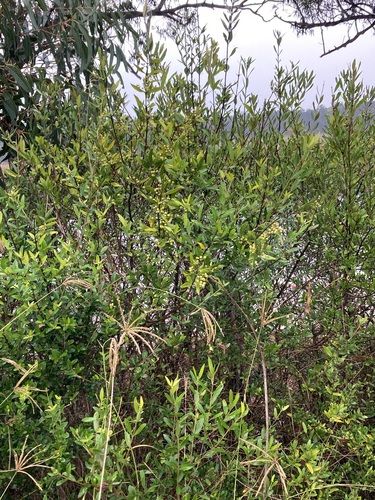
African olive (Olea europaea subsp. cuspidata)

African olive

Olea europaea subsp. cuspidata

Regional priorityTree

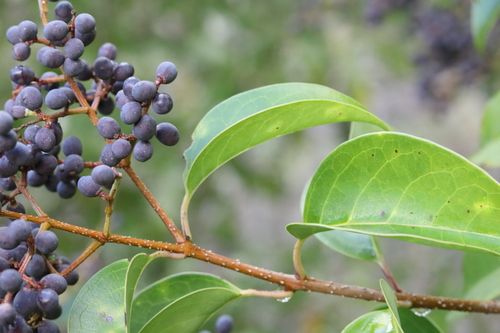
How to spot it: African olive is a much-branched evergreen shrub or small tree with a dense canopy. It is usually 5-10 m tall. Leaves: glossy grey-green on top green or yellow-brown underneath 6-10 cm long and 10-25 mm wide often with a hooked tip opposite on the stem. Flowers: yellow-white to creamy white with 4 petals 2-4 mm diameter on a short stem present in spring and summer. Fruit: 15-30 mm long and 6-20 mm wide round with a sharp tip at the base green with white spots when unripe purple-black when ripe with ...

Plant instead: Blueberry ash, ash quandong, blue (Elaeocarpus reticulatus), Lilly pilly, midjuburi (cadigal) (Acmena smithii), Grey myrtle, ironwood (Backhousia myrtifolia), Wild yellow jasmine (Pittosporum revolutum), Large mock-olive, large-leaved olive (Notelaea longifolia), Muttonwood (Myrsine variabilis) (hedge/screen); Elaeocarpus reticulatus, Forest oak (Allocasuarina torulosa), Water gum, kanooka, kanuka (Tristaniopsis laurina), Cheese tree (Glochidion ferdinandi), New south wales christmas-bush, christmas bush (Ceratopetalum gummiferum) (small); Turpentine (Syncarpia glomulifera) or Sydney red gum, rusty gum, smooth-barked apple (Angophora costata) for large sites
How to control it

Overview: Successful weed control relies on follow up after the initial efforts. This means looking for and killing regrowth or new seedlings. Using a combination of control methods is usually more successful. Aim to control plants before they fruit.

Manual: Hand weeding Pull or dig out seedlings, removing all of the roots.

Herbicide options listed by NSW WeedWise: Glyphosate 360 g/L - Spot spray seedlings and coppice shoots.; Aminocyclopyrachlor 240 g/L - Basal bark application for plants with stems less than 15 cm diameter at the base.; Metsulfuron-methyl 75 g/kg + Aminopyralid 93.7 g/kg - Capsule herbicide: See critical comments on the label for details on how to apply and seal the capsule into ...

Disposal (general advice, not from WeedWise): bag seeds/fruit/tubers for general waste (not green bin) or as advised by council; never dump in bushland.

Always read the herbicide label or APVMA permit, and use a licensed operator where required.

Legal status
  • REGIONAL PRIORITY (Greater Sydney) - CONTAINMENT
  • WeedWise Greater Sydney duty -> Regional Recommended Measure: An exclusion zone is established for all lands in the Blue Mountains City Council local government area and lands to the west of the Nepean River in the City of Penrith local government area. The rest of the region is classified as the core infestation area.
  • Listed by: Sydney North Sub-Regional Weeds Committee list (Hornsby, Ku-ring-gai, Lane Cove, North Sydney, Ryde, Willoughby + others); Willoughby: exempt undesirable species (remove without permit); Sydney Weeds Committees garden-escape guide
  • General biosecurity duty applies to all land managers (Biosecurity Act 2015)

NSW WeedWise profile

Photo: Thomas Mesaglio, CC BY 4.0, via iNaturalist (research-grade observation)
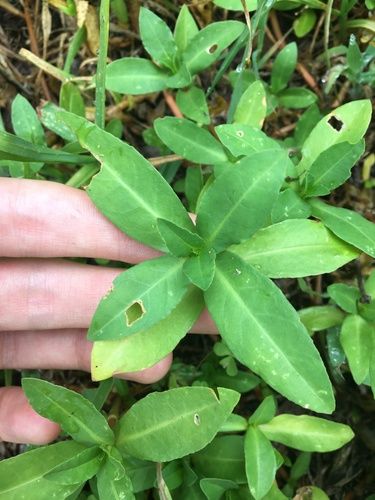
Alligator weed (Alternanthera philoxeroides)

Alligator weed

Alternanthera philoxeroides

State priorityHerb / groundcover

How to spot it: Alligator weed is a perennial herb. It has small white papery flower heads 8–10 mm in diameter, generally appearing from November to March. The flowers grow at the end of short stalks which rise from the leaf axils.

Plant instead: Not a garden plant. For ponds/rain gardens use local natives such as Juncus usitatus, Indian pennywort, gotu cola (Centella asiatica), Sedge (Carex maculata) and Spiny-headed mat-rush, honey reed (Lomandra longifolia) on margins (from a local native nursery).
How to control it

Overview: Alligator weed is difficult to control. Any infestations should be reported immediately to your local council weed officer. Do not try to control alligator weed without their expert assistance.

Herbicide and timing: Due to its ability to tolerate most herbicides, many herbicides have been trialled over the years for alligator weed control. It is now clear that there are important roles for specific herbicides in suppressing and depleting alligator weed and in assisting with eradication.

Herbicide options listed by NSW WeedWise: Imazapyr 250 g/L - For terrestrial situations only including riparian zones. Do not apply more than once per annum.; Dichlobenil 40 g/kg - Granular application for home gardens in residential areas. Treat dormant plants.; Glyphosate 360 g/L - Spot spray actively growing plants. For control in home gardens in residential areas.

Disposal: With any physical removal method there are issues of disposing of the removed plant material. Removed material must be treated and disposed of securely.

Always read the herbicide label or APVMA permit, and use a licensed operator where required.

Legal status
  • STATE PRIORITY - ERADICATION AND/OR CONTAINMENT (biosecurity zone)
  • REGIONAL PRIORITY (Greater Sydney) - ASSET PROTECTION
  • WeedWise Greater Sydney duty -> Prohibition on certain dealings: Must not be imported into the state, sold, bartered, exchanged or offered for sale.
  • WeedWise Greater Sydney duty -> Biosecurity Zone: The Alligator Weed Biosecurity Zone is established for all land within the state except land in the following regions: Greater Sydney;
  • WeedWise Greater Sydney duty -> Regional Recommended Measure: Land managers should mitigate the risk of the plant being introduced to their land. Land managers should mitigate spread of the plant from their land. A person should not buy, sell, move, carry or release the plant into the environment.
  • Listed by: Sydney North Sub-Regional Weeds Committee list (Hornsby, Ku-ring-gai, Lane Cove, North Sydney, Ryde, Willoughby + others)
  • General biosecurity duty applies to all land managers (Biosecurity Act 2015)

NSW WeedWise profile

Photo: Thomas Mesaglio, CC BY 4.0, via iNaturalist (research-grade observation)
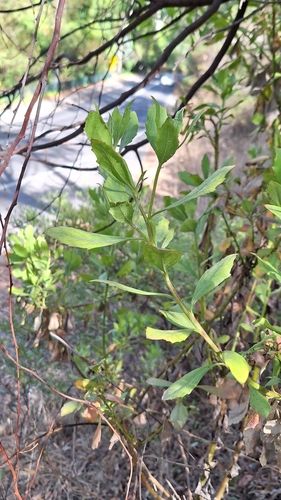
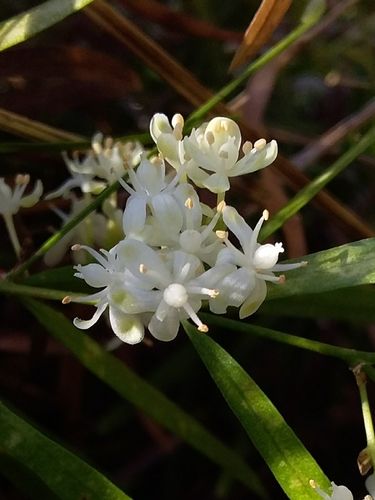
Asparagus fern (Asparagus virgatus)

Asparagus fern

Asparagus virgatus

State priorityVine / climber

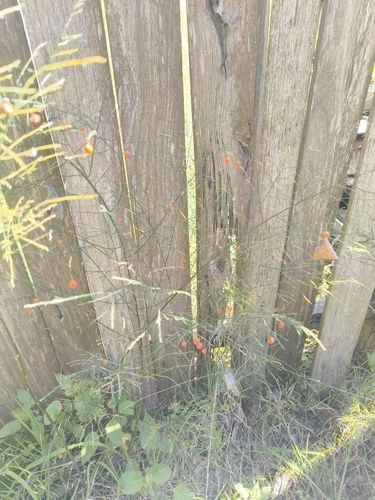
How to spot it: Asparagus fern is a, erect herb, climber or shrub usually 40-80 cm tall. Flowers: greenish-white with 6 petals up to 12 mm long and 8 mm in diameter solitary and grow at the point where the cladodes join the stem present mostly in ... Fruit: oval shaped berries with a single seed bright orange when mature 4-6 mm in diameter present year round.

Plant instead: Ivy-leaved violet (Viola hederacea), Kidney weed, yilibili (d'harawal) (Dichondra repens), Native wandering jew / scurvy weed (Commelina cyanea), Pastel flower (Pseuderanthemum variabile), Whiteroot (Lobelia purpurascens), Creeping beard grass (Oplismenus imbecillis), Common maidenhair (Adiantum aethiopicum); Prickly rasp fern (Doodia aspera), Gristle fern, soft water fern (Blechnum cartilagineum) (ferny look)
How to control it

Overview: Successful weed control relies on follow up after the initial efforts. This means looking for and killing regrowth or new seedlings. Using a combination of control methods is usually more successful.

Manual: By hand Hand weed seedlings in small-to-medium infestations. Try to remove the entire root system though this can be difficult as the rhizomes can spread under rocks, logs, or between the roots of other vegetation.

Herbicide options listed by NSW WeedWise: Fluroxypyr 333 g/L - Spot spray application; Glyphosate 360 g/L - Spot spray application, best done between flowering and berries forming.; Metsulfuron-methyl 600 g/kg - Spot spray application, best done between flowering and berry formation.

Disposal: Asparagus fern may be composted but compost material should not contain any fruit. Regular turning and covering the plants in black plastic can help the compost process.

Always read the herbicide label or APVMA permit, and use a licensed operator where required.

Legal status
  • STATE PRIORITY - CONTAINMENT AND/OR ASSET PROTECTION
  • REGIONAL PRIORITY (Greater Sydney) - CONTAINMENT
  • WeedWise Greater Sydney duty -> Regional Recommended Measure: Central Coast Council area is classified as the core infestation area. An exclusion zone is established for the rest of the region. Whole of region: Land managers should mitigate the risk of the plant being introduced to their land.
  • General biosecurity duty applies to all land managers (Biosecurity Act 2015)

NSW WeedWise profile

Photo: Billie, CC0 1.0, via iNaturalist (research-grade observation)
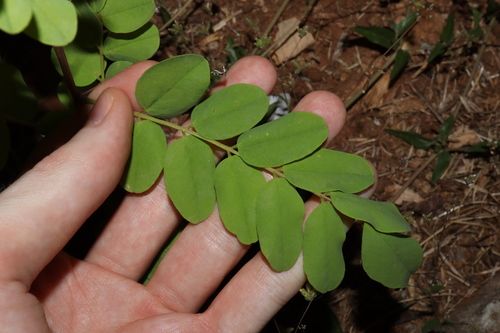
Balloon vine (Cardiospermum grandiflorum)

Balloon vine

Cardiospermum grandiflorum

Environmental weedVine / climber

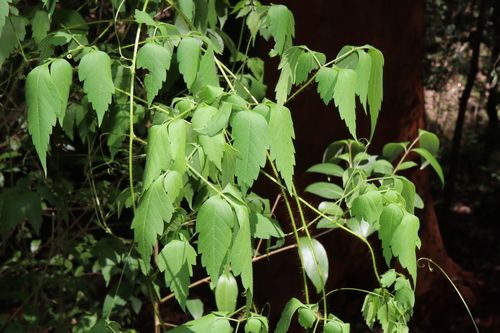
How to spot it: Balloon vine is a semi-woody perennial vine with tendrils that help it climb up to 10 m into trees. Leaves: The leaves are made up of 3 groups of 3 leaflets with the centre leaflet longer than the rest. The 9 leaflets combined are up to 16 cm long and on a stalk 2-10 cm long. Flowers: white with 4 petals 8–10 mm long in clusters with tendrils at the base of the cluster usually present in spring and summer or throughout the year in ... Fruit: thin-skinned, papery, balloon-like capsules with 3…

Plant instead: Wonga wonga vine (Pandorea pandorana), Purple coral pea, false sarsaparilla, waraburra (Hardenbergia violacea), Hairy apple berry (Billardiera scandens), Climbing guinea flower (Hibbertia scandens), Old man's beard (Clematis aristata), Twining glycine (Glycine clandestina)
How to control it

Overview: Successful weed control requires follow up after the initial efforts. This means looking for and killing regrowth or new seedlings. Using a combination of control methods is usually more successful.

Manual: By hand When : Year-round Follow up : With chemical control or regular hand weeding Manual removal is best for small infestations. If the balloon vines are climbing over other desirable plants, cut them and leave the top part of the vine to die.

Herbicide options listed by NSW WeedWise: Glyphosate 360 g/L - Spot spray. Spray regrowth up to 0.5 m tall.; Glyphosate 360 g/L + Metsulfuron-methyl 600 g/kg - Spot spray application.; Picloram 44.7 g/L + Aminopyralid 4.47 g/L - Cut stump: Apply a 3–5 mm layer of gel for stems less than 20 mm diameter.

Disposal (general advice, not from WeedWise): bag seeds/fruit/tubers for general waste (not green bin) or as advised by council; never dump in bushland.

Always read the herbicide label or APVMA permit, and use a licensed operator where required.

Legal status
  • Listed by: Sydney North Sub-Regional Weeds Committee list (Hornsby, Ku-ring-gai, Lane Cove, North Sydney, Ryde, Willoughby + others); Lane Cove common weeds; Sydney Weeds Committees garden-escape guide
  • General biosecurity duty applies to all land managers (Biosecurity Act 2015)

NSW WeedWise profile

Photo: Thomas Mesaglio, CC BY 4.0, via iNaturalist (research-grade observation)
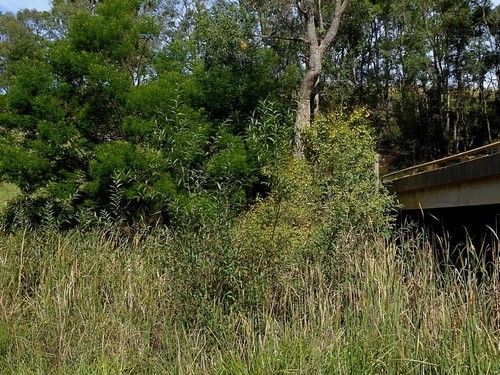
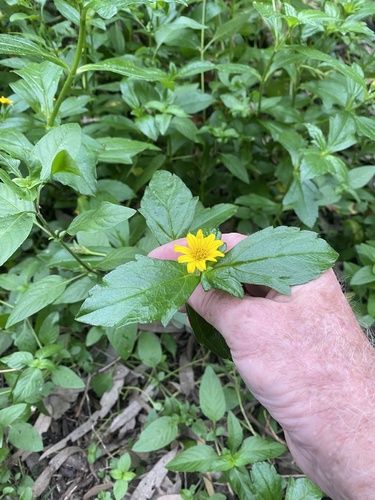
Bitou bush (Chrysanthemoides monilifera subsp. rotundata)

Bitou bush

Chrysanthemoides monilifera subsp. rotundata

State priorityShrub

How to spot it: Bitou bush is a woody shrub that grows 1–2 m tall and 2–6 m wide. It sometimes grows along the ground and develops a creeping habit under shade. It can also climb up over other plants up to 10 m. Leaves: bright green 3–8 cm long and 1.5–5 cm wide leathery, semi succulent broadly oval (spoon-shaped) and tapered at the base sometimes slightly toothed along the edges ... Flowers: bright yellow like daisy flowers with 5–13 petals up to 20 mm in diameter clustered on the ends of branches. Fruit:…

Plant instead: Sydney golden wattle (Acacia longifolia), Sweet wattle (Acacia suaveolens), Heath-leaved banksia, wadanggari (cadigal) (Banksia ericifolia) (coastal sand)
How to control it

Overview: Successful weed control requires follow up after the initial efforts. This means looking for and killing regrowth or new seedlings. Using a combination of control methods is usually more successful.

Manual: By hand Hand pulling seedlings is easy in sandy soils. In heavy soils the plants may be dug out. Remove all of the roots. By machine Mature plants can be slashed, and the mulch left on site. Follow up by planting native species.

Herbicide options listed by NSW WeedWise: Glyphosate 360 g/L - Aerial boom spray applications. Refer to the critical use comments in the permit.; Metsulfuron-methyl 600 g/kg - Aerial boom spray applications. Refer to the critical use comments in the permit.; Metsulfuron-methyl 300 g/kg + Aminopyralid 375 g/kg - Spray to thoroughly wet all foliage, but not run-off.

Disposal (general advice, not from WeedWise): bag seeds/fruit/tubers for general waste (not green bin) or as advised by council; never dump in bushland.

Always read the herbicide label or APVMA permit, and use a licensed operator where required.

Legal status
  • STATE PRIORITY - ERADICATION AND/OR CONTAINMENT (biosecurity zone)
  • WeedWise Greater Sydney duty -> Prohibition on certain dealings: Must not be imported into the state, sold, bartered, exchanged or offered for sale.
  • WeedWise Greater Sydney duty -> Biosecurity Zone: The Bitou Bush Biosecurity Zone is established for all land within the State except land within 10 kilometres of the mean high water mark of the Pacific Ocean between Cape Byron in the north and Point Perpendicular in the south.
  • Listed by: Sydney North Sub-Regional Weeds Committee list (Hornsby, Ku-ring-gai, Lane Cove, North Sydney, Ryde, Willoughby + others)
  • General biosecurity duty applies to all land managers (Biosecurity Act 2015)

NSW WeedWise profile

Photo: insiderelic, CC0 1.0, via iNaturalist (research-grade observation)
Black locust (Robinia pseudoacacia)

Black locust

Robinia pseudoacacia

Environmental weedTree

How to spot it: Black locust is a fast-growing deciduous tree. It produces suckers from the roots and can grow in dense, spiky walls. It usually grows to around 10-15 m tall but can get up to 25 m. Leaves: The leaves are up to 15 cm long and made up of 11–21 leaflets. There is one leaflet at the end and the rest are in opposite pairs. Flowers: white, occasionally pink or purple pea-like strong smelling in drooping clusters about 10–15 cm long. Fruit: smooth, shiny, leathery pods 3–8 cm long and 1.0–1.5 cm wide…

Plant instead: Blueberry ash, ash quandong, blue (Elaeocarpus reticulatus), Forest oak (Allocasuarina torulosa), Water gum, kanooka, kanuka (Tristaniopsis laurina), Cheese tree (Glochidion ferdinandi), New south wales christmas-bush, christmas bush (Ceratopetalum gummiferum) (small); Turpentine (Syncarpia glomulifera) or Sydney red gum, rusty gum, smooth-barked apple (Angophora costata) for large sites
How to control it

Overview: Controlling black locust can be difficult because of its strong root system. Plants often re-sprout or sucker. Combining several control options is usually the most effective way to kill black locust. Check treated sites for a few years to make sure plants are dead.

Manual: Seedlings can be hand pulled or dug out but it can be hard to tell a seedling from a sucker. Suckers: have sharp spines cannot be easily pulled up or dug out regrow very easily. Wear gloves to protect yourself from sharp spines.

Herbicide options listed by NSW WeedWise: Picloram 100 g/L + Triclopyr 300 g/L + Aminopyralid 8 g/L - Use a knapsack or handgun to spray plants less than 1.5 metres tall. Apply from October to May.; Fluroxypyr 200 g/L - Basal bark; Fluroxypyr 333 g/L - Basal bark

Disposal: Contact your local council for information about how to dispose of black locust material.

Always read the herbicide label or APVMA permit, and use a licensed operator where required.

Legal status
  • Listed by: Willoughby: exempt undesirable species (remove without permit)
  • General biosecurity duty applies to all land managers (Biosecurity Act 2015)

NSW WeedWise profile

Photo: Thomas Mesaglio, CC BY 4.0, via iNaturalist (research-grade observation)
Black willow (Salix nigra)

Black willow

Salix nigra

State priorityTree

How to spot it: Black willow is an upright, deciduous tree that grows up to 20 m. It usually has one trunk but can have up to 4 main stems. Young trees are cone shaped and they broaden with age. Leaves: dark green above and paler below slender and tapering to a pointed tip 4–10 cm long and 0.7–1.7 cm wide very finely toothed on the edges present from spring to autumn. Flowers: Male and female flowers are on separate plants and present in spring. Male flowers are: yellow with no petals fragrant widely spaced in…

Plant instead: Spiny-headed mat-rush, honey reed (Lomandra longifolia), Sedge (Carex maculata), Juncus usitatus, Water gum, kanooka, kanuka (Tristaniopsis laurina), Black wattle, callicoma, silver-leaf butterwood (Callicoma serratifolia), Grey myrtle, ironwood (Backhousia myrtifolia)
How to control it

Overview: Successful weed control requires follow up after the initial efforts. This means looking for and killing regrowth or new seedlings. Using a combination of control methods is usually more successful.

Herbicide options listed by NSW WeedWise: Glyphosate 360 g/L - Spray to wet all foliage. Use the higher rate for trees 1–2 m high.; Picloram 44.7 g/L + Aminopyralid 4.47 g/L - Cut stump for small plants: Apply a 3–5 mm layer of gel onto stems less than 2 cm diameter.; Triclopyr 240 g/L + Picloram 120 g/L - Cut stump application method for plants with stems more than 10 cm diameter at the base.

Disposal: Trees killed by stem injection should be left for 12 months before they are cut and removed. Plants should not be chipped unless they have been treated with herbicide.

Always read the herbicide label or APVMA permit, and use a licensed operator where required.

Legal status
  • STATE PRIORITY - CONTAINMENT AND/OR ASSET PROTECTION
  • REGIONAL PRIORITY (Greater Sydney) - CONTAINMENT
  • WeedWise Greater Sydney duty -> Prohibition on certain dealings: Must not be imported into the state, sold, bartered, exchanged or offered for sale.
  • WeedWise Greater Sydney duty -> Regional Recommended Measure: Hornsby Shire Council, Hawkesbury City Council, Sutherland Shire Council, City of Canterbury Bankstown and Central Coast Council areas are classified as the core infestation area. An exclusion zone is established for the rest of the region.
  • Listed by: Willoughby: exempt undesirable species (remove without permit)
  • General biosecurity duty applies to all land managers (Biosecurity Act 2015)

NSW WeedWise profile

Photo: Max Campbell, CC BY 4.0, via iNaturalist (research-grade observation)
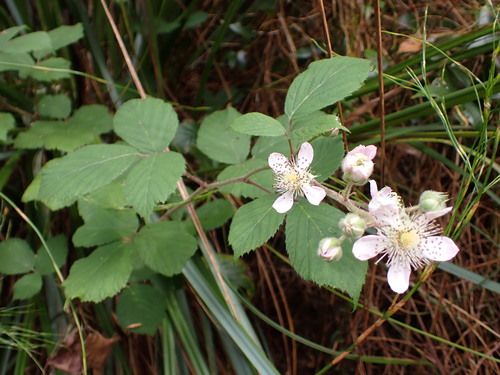
Blackberry (Rubus fruticosus species aggregate)

Blackberry

Rubus fruticosus species aggregate

State priorityShrub

How to spot it: Blackberries in the Rubus fruticosus aggregate are erect shrubs 0.3–7 m tall, with tangled, prickly stems. Leaves: dark green on top and lighter green on the underside in clusters of 3–5 leaflets toothed along the edges covered in short, curved prickles on the veins on the underside ... Flowers: white or pink with 5 petals 2–3 cm in diameter in clusters at the ends of branches present from spring to summer. Fruit: shiny black berries when ripe green to red when unripe 1–3 cm in diameter present…

Plant instead: Rubus parvifolius (native raspberry; listed by Ryde for BGHF, accepted on PlantNET), Blackthorn, boxthorn, sweet bursaria, kurwan (d'harawal) (Bursaria spinosa), Needlebush (Hakea sericea) for prickly shelter
How to control it

Overview: Successful weed control requires follow up after the initial efforts. This means looking for and killing regrowth or new seedlings. Using a combination of control methods is usually more successful.

Manual: By hand If there are just a few plants they can be dug out by hand. This is easiest after rain when the soil is moist. Remove as much of the roots as possible preferably to at least 45 cm deep. Plants can regrow from the roots.

Herbicide options listed by NSW WeedWise: Glyphosate 360 g/L - Spot spray when flowering to leaf fall. Use higher rate on old, dense infestations.; Hexazinone 250 g/L - Spray bushes up to 1 m in height. Hexazinone will move downslope with water, read "Protections" on the label.; Metsulfuron-methyl 300 g/kg + Aminopyralid 375 g/kg - Spray to thoroughly wet all foliage and canes. Ensure peripheral runners are sprayed.

Disposal (general advice, not from WeedWise): bag seeds/fruit/tubers for general waste (not green bin) or as advised by council; never dump in bushland.

Always read the herbicide label or APVMA permit, and use a licensed operator where required.

Legal status
  • STATE PRIORITY - CONTAINMENT AND/OR ASSET PROTECTION
  • WeedWise Greater Sydney duty -> Prohibition on certain dealings: Must not be imported into the state, sold, bartered, exchanged or offered for sale. All species in the Rubus fruiticosus species aggregate have this requirement, except for the varietals Black Satin, Chehalem, Chester Thornless, Dirksen Thornless, Loch Ness, ...
  • Listed by: Sydney North Sub-Regional Weeds Committee list (Hornsby, Ku-ring-gai, Lane Cove, North Sydney, Ryde, Willoughby + others); BioNet: named threat to BGHF; Sydney Weeds Committees garden-escape guide
  • General biosecurity duty applies to all land managers (Biosecurity Act 2015)

NSW WeedWise profile

Photo: naturewatchwidow, CC BY 4.0, via iNaturalist (research-grade observation)
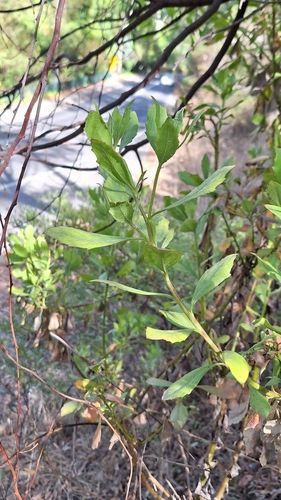
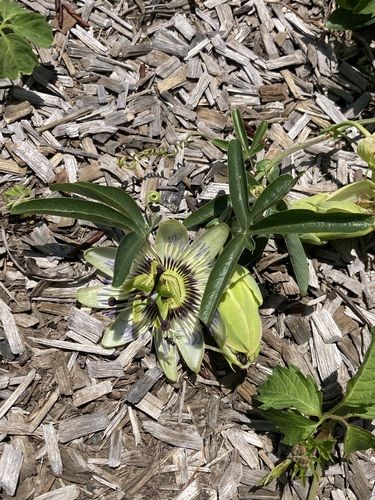
Blue passionflower (Passiflora caerulea)

Blue passionflower

Passiflora caerulea

Environmental weedVine / climber

How to spot it: Blue passionflower is a hardy perennial vine. It is an excellent climber and can grow to more than 6 m. The plant has lots of tendrils which twist and coil their way around plants, fences and other structures for support. Leaves: green, sometimes dull green-blue 8-12 cm long with smooth edges deeply divided usually with 5 lobes (sometimes no lobes on young plants) deciduous stalks are 10-40 mm ... Flowers: have 5 greenish whitish petals, 5 greenish whitish sepals, 5 greenish-yellow stamens and…

Plant instead: Native passionfruit (Passiflora herbertiana), Wonga wonga vine (Pandorea pandorana), Purple coral pea, false sarsaparilla, waraburra (Hardenbergia violacea), Hairy apple berry (Billardiera scandens), Climbing guinea flower (Hibbertia scandens), Old man's beard (Clematis aristata), Twining glycine (Glycine clandestina)
How to control it

Overview: Successful weed control relies on follow up after the initial efforts. This means looking for and killing regrowth or new seedlings. Using a combination of control methods is usually more successful.

Manual: Small plants can be hand pulled or dug out. Make sure all roots are removed. This can be done year-round but will be easiest when the soil is damp. Do not leave stems in contact with soil as they can sprout roots and regrow.

Herbicide options listed by NSW WeedWise: Picloram 100 g/L + Triclopyr 300 g/L + Aminopyralid 8 g/L - Thoroughly cover the foliage of plants up to 1.5 m tall via knapsack or handgun. Apply from October to May.; Triclopyr 300 g/L + Picloram 100 g/L - Thoroughly cover the foliage of plants up to 1.5 m tall via knapsack or handgun. Apply from October to May.; Fluroxypyr 200 g/L - Spot spray actively growing plants.

Disposal (general advice, not from WeedWise): bag seeds/fruit/tubers for general waste (not green bin) or as advised by council; never dump in bushland.

Always read the herbicide label or APVMA permit, and use a licensed operator where required.

Legal status
  • Listed by: Sydney Weeds Committees garden-escape guide
  • General biosecurity duty applies to all land managers (Biosecurity Act 2015)

NSW WeedWise profile

Photo: Thomas Mesaglio, CC BY 4.0, via iNaturalist (research-grade observation)
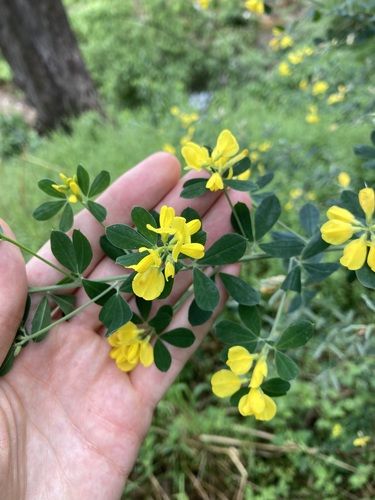
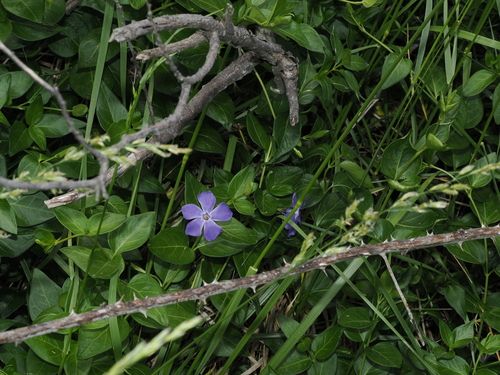
Blue periwinkle (Vinca major)

Blue periwinkle

Vinca major

Environmental weedHerb / groundcover

How to spot it: Blue periwinkle is a creeping herb that grows up to 0.5 m tall but mostly trails over the ground or other plants. Leaves: green or sometimes variegated (with white patches on the edges) glossy on top, paler and duller on the undersides oval shaped with a pointed tip and round or ... Flowers: usually blue or violet, sometimes whitish in the centre tubular at the base spreading to 5 petals 2–5 cm wide on short stems present in spring and ... Fruit: cylindrical and tapered at both ends dry with…

Plant instead: Ivy-leaved violet (Viola hederacea), Kidney weed, yilibili (d'harawal) (Dichondra repens), Native wandering jew / scurvy weed (Commelina cyanea), Pastel flower (Pseuderanthemum variabile), Whiteroot (Lobelia purpurascens), Creeping beard grass (Oplismenus imbecillis), Common maidenhair (Adiantum aethiopicum)
How to control it

Overview: Established infestations of blue periwinkle in native vegetation are difficult to remove because: they have a dense network of runners above ground that can become entwined with native understorey plants the root system is tough and matted plants reproduce vegetatively from root ...

Manual: By hand Dig out small patches and remove all plant pieces. In larger patches, start at the edge of the infestation and work towards the centre. Fold the runners inwards towards the centre as work progresses.

Herbicide options listed by NSW WeedWise: Fluroxypyr 200 g/L - Spot spray; Fluroxypyr 333 g/L - Spot spray; Glyphosate 360 g/L - Spot spray

Disposal (general advice, not from WeedWise): bag seeds/fruit/tubers for general waste (not green bin) or as advised by council; never dump in bushland.

Always read the herbicide label or APVMA permit, and use a licensed operator where required.

Legal status
  • Listed by: Sydney Weeds Committees garden-escape guide
  • General biosecurity duty applies to all land managers (Biosecurity Act 2015)

NSW WeedWise profile

Photo: Thomas Mesaglio, CC BY 4.0, via iNaturalist (research-grade observation)
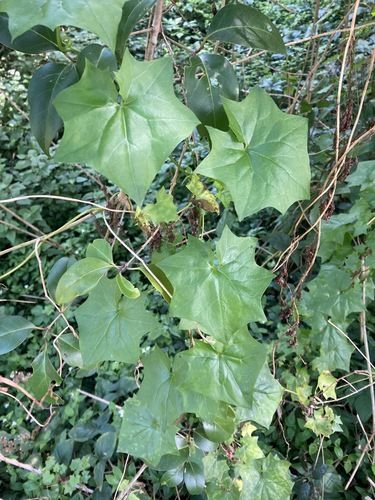
Boneseed (Chrysanthemoides monilifera subsp. monilifera)

Boneseed

Chrysanthemoides monilifera subsp. monilifera

State priorityShrub

How to spot it: Boneseed is an erect, woody, perennial shrub which grows up to 3 m high. Leaves: oval shaped with irregular toothed edges sometimes lobed with pointed tips on the lobes usually 2-6 cm long and 1-3 cm wide, occassionally up to 9 cm long covered with ... Flowers: yellow daisy-like flowers with 4–8 petals up to 3 cm in diameter in clusters at the end of branches mostly present from late winter to mid-spring. Fruit: round, green and fleshy when young black when mature 6–8 mm in diameter with a single seed.

Plant instead: Sydney golden wattle (Acacia longifolia), Sweet wattle (Acacia suaveolens), Rough guinea flower (Hibbertia aspera), Rice flower, white dogwood, pill flower, sago bush (Ozothamnus diosmifolius)
How to control it

Overview: Your local council weeds officer will assist with identification and information on control, removal and eradication of this weed. Infestations can be spread by inappropriate control activities.

Manual: By hand Small plants and seedlings are easy to pull out because of the shallow roots and the plants preference for sandy soils. If the plants are fruiting, dispose of them by fire or bagging the seeds. Contact your local council for disposal options.

Herbicide options listed by NSW WeedWise: Glyphosate 360 g/L - Aerial boom spray applications. Refer to the critical use comments in the permit.; Metsulfuron-methyl 600 g/kg - Aerial boom spray applications. Refer to the critical use comments in the permit.; Metsulfuron-methyl 300 g/kg + Aminopyralid 375 g/kg - Spray to thoroughly wet all foliage, but not run-off.

Disposal (general advice, not from WeedWise): bag seeds/fruit/tubers for general waste (not green bin) or as advised by council; never dump in bushland.

Always read the herbicide label or APVMA permit, and use a licensed operator where required.

Legal status
  • STATE PRIORITY - ERADICATION
  • WeedWise Greater Sydney duty -> Prohibition on certain dealings: Must not be imported into the state, sold, bartered, exchanged or offered for sale.
  • WeedWise Greater Sydney duty -> Control Order: Boneseed Control Order (Zone - Whole of NSW): Owners and occupiers of land on which there is boneseed must notify the local control authority of new infestations; immediately destroy the plants; ensure subsequent generations are destroyed;
  • Listed by: Sydney North Sub-Regional Weeds Committee list (Hornsby, Ku-ring-gai, Lane Cove, North Sydney, Ryde, Willoughby + others)
  • General biosecurity duty applies to all land managers (Biosecurity Act 2015)

NSW WeedWise profile

Photo: insiderelic, CC0 1.0, via iNaturalist (research-grade observation)
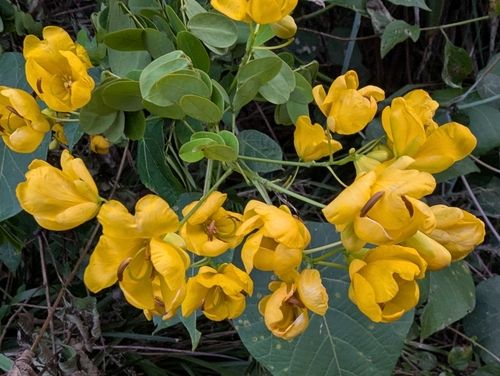
Bridal creeper (Asparagus asparagoides)

Bridal creeper

Asparagus asparagoides

State priorityVine / climber

How to spot it: Bridal creeper is a climbing perennial plant that grows during autumn and winter. It dies back over summer or when conditions are very dry. If there is enough moisture over summer the leaves will not fall off over summer. Flowers: greenish-white tubular with 6 petals that curve backwards 3-8 mm long and 8-9 mm wide scented present in winter to early spring. Fruit: small round berries usually with 2-3 seeds (rarely up to 14) green at first changing from pink to red 5-19 mm in diameter sticky ...

Plant instead: Wombat berry (Eustrephus latifolius), Sweet sarsaparilla (Smilax glyciphylla), Twining glycine (Glycine clandestina), Hairy apple berry (Billardiera scandens)
How to control it

Overview: Successful weed control requires follow up after the initial efforts. This means looking for and killing regrowth or new seedlings. Using a combination of control methods is usually more successful.

Manual: By hand Hand pulling and digging out plants can be used for seedlings and small plants in small to medium sized infestations or in areas near sensitive plants. All of the rhizomes need to be dug up for this method to be effective.

Herbicide options listed by NSW WeedWise: Fluroxypyr 200 g/L - Spot spray from mid-June to late August.; Fluroxypyr 333 g/L - Spot spray from mid-June to late August.; Glyphosate 360 g/L - Spray August to September only.

Disposal (general advice, not from WeedWise): bag seeds/fruit/tubers for general waste (not green bin) or as advised by council; never dump in bushland.

Always read the herbicide label or APVMA permit, and use a licensed operator where required.

Legal status
  • STATE PRIORITY - CONTAINMENT AND/OR ASSET PROTECTION
  • WeedWise Greater Sydney duty -> Prohibition on certain dealings: Must not be imported into the state, sold, bartered, exchanged or offered for sale. *this requirement also applies to the Western Cape form of bridal creeper
  • Listed by: Sydney North Sub-Regional Weeds Committee list (Hornsby, Ku-ring-gai, Lane Cove, North Sydney, Ryde, Willoughby + others); BioNet: named threat to BGHF
  • General biosecurity duty applies to all land managers (Biosecurity Act 2015)

NSW WeedWise profile

Photo: Carl Ramirez, CC BY 4.0, via iNaturalist (research-grade observation)
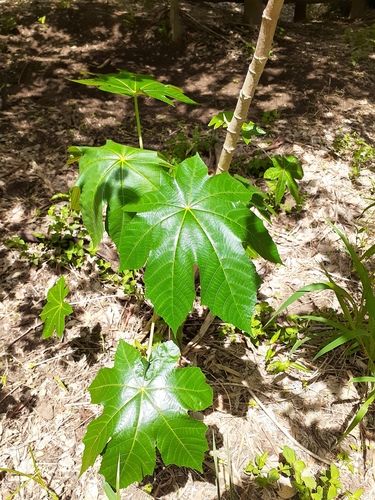
Camphor laurel (Cinnamomum camphora)

Camphor laurel

Cinnamomum camphora

Environmental weedTree

How to spot it: Camphor laurel is an evergreen tree which grows up to 20 m in height. It has a large, spreading canopy and a short, stout bole or trunk up to 1.5 m in diameter. The bark is greyish brown and has a rough texture.

Plant instead: Blueberry ash, ash quandong, blue (Elaeocarpus reticulatus), Forest oak (Allocasuarina torulosa), Water gum, kanooka, kanuka (Tristaniopsis laurina), Cheese tree (Glochidion ferdinandi), New south wales christmas-bush, christmas bush (Ceratopetalum gummiferum) (small); Turpentine (Syncarpia glomulifera) or Sydney red gum, rusty gum, smooth-barked apple (Angophora costata) for large sites
How to control it

Overview: Landowners are encouraged to control isolated and scattered camphor laurel trees, particularly if they are small, as soon as possible. Local councils have active control programs for roadsides and reserves.

Manual: Smaller trees (up to 10 cm in diameter) can be lopped and the stumps treated with chemical. Professional tree arborists can cut down bigger mature camphor laurel trees, mulch the timber and grind the stump out of the ground.

Herbicide and timing: Chemical control is an effective way of controlling existing infestations. Herbicides can control trees without the need to disturb soil or other vegetation. In areas to be cleared, prior herbicide control allows easy removal of the dead stumps and hastens the revegetation process.

Herbicide options listed by NSW WeedWise: Glyphosate 360 g/L - Spray seedlings and coppice shoots.; Glyphosate 700 g/kg - Capsule herbicide: See critical comments on the label for details on how to apply and seal the capsule in the ...; Picloram 100 g/L + Triclopyr 300 g/L + Aminopyralid 8 g/L - Spray actively growing plants, thoroughly cover all of the foliage. Use higher rate on trees over 2 m tall.

Disposal (general advice, not from WeedWise): bag seeds/fruit/tubers for general waste (not green bin) or as advised by council; never dump in bushland.

Always read the herbicide label or APVMA permit, and use a licensed operator where required.

Legal status
  • Listed by: Lane Cove common weeds; Willoughby: exempt undesirable species (remove without permit); Sydney Weeds Committees garden-escape guide
  • General biosecurity duty applies to all land managers (Biosecurity Act 2015)

NSW WeedWise profile

Photo: Lachlan Copeland, CC BY-SA 4.0, via iNaturalist (research-grade observation)
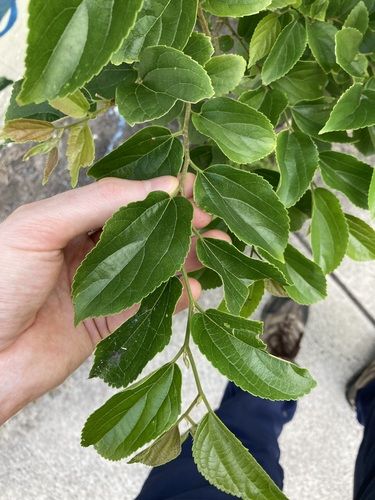
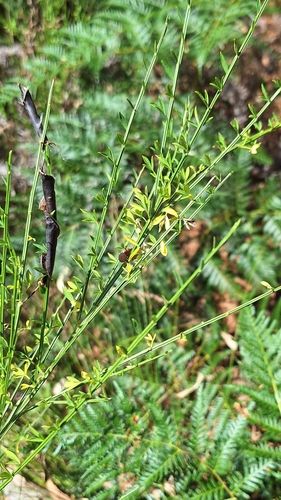
Cape broom (Genista monspessulana)

Cape broom

Genista monspessulana

State priorityShrub

How to spot it: Cape broom is an upright, perennial shrub growing to 3 m high. It usually has one main stem with many branches. Leaves: in groups of three with the middle leaf longer than the outer two oblong-shaped often with a short, pointed end 5–20 mm long and 2–10 mm wide on a short stalk up to 4 mm ... Flowers: bright yellow 8–12 mm long like pea flowers usually in clusters of 3 to 9 at the end of branches present from late winter to summer.

Plant instead: Tick bush (Kunzea ambigua), Leptospermum trinervium (Flaky-barked tea-tree, slender tea-tree (Gaudium trinervium)), Hairpin banksia (Banksia spinulosa), Red spider flower (Grevillea speciosa), Large-leaf hop-bush (Dodonaea triquetra), Rice flower, white dogwood, pill flower, sago bush (Ozothamnus diosmifolius); Eggs and bacon (Dillwynia retorta), Bronze bush-pea, hairy bush-pea (Pultenaea villosa), Sweet wattle (Acacia suaveolens) (yellow flowers)
How to control it

Overview: Cape broom can be mistaken for some native species. Correct identification is important, and a local council weeds officer can assist with identification, removal and control if you suspect you have found cape broom.

Manual: By hand Dig out small or scattered seedlings in soft ground. Try to remove most of the roots. By machine Remove all the root system when using mechanical control. The stems may be very difficult to break, and specialized equipment may be needed.

Herbicide and timing: Spraying Spray actively growing plants. Ensure all the foliage is covered. Cut stump method Cut stems no higher than 100 mm above ground level then apply herbicide gel within 15 seconds.

Herbicide options listed by NSW WeedWise: Picloram 100 g/L + Triclopyr 300 g/L + Aminopyralid 8 g/L - Use higher rate on trees over 2m tall. Apply as a thorough foliar spray.; Picloram 44.7 g/L + Aminopyralid 4.47 g/L - Cut the stem close to the ground (10 cm or less). Apply a 3–5 mm layer of gel onto stems less than 2 cm ...; Triclopyr 300 g/L + Picloram 100 g/L - Spring to mid summer prior to pod formation. Apply as a thorough foliage spray.

Disposal (general advice, not from WeedWise): bag seeds/fruit/tubers for general waste (not green bin) or as advised by council; never dump in bushland.

Always read the herbicide label or APVMA permit, and use a licensed operator where required.

Legal status
  • STATE PRIORITY - CONTAINMENT AND/OR ASSET PROTECTION
  • WeedWise Greater Sydney duty -> Prohibition on certain dealings: Must not be imported into the state, sold, bartered, exchanged or offered for sale.
  • Listed by: Sydney North Sub-Regional Weeds Committee list (Hornsby, Ku-ring-gai, Lane Cove, North Sydney, Ryde, Willoughby + others)
  • General biosecurity duty applies to all land managers (Biosecurity Act 2015)

NSW WeedWise profile

Photo: Thomas Mesaglio, CC BY 4.0, via iNaturalist (research-grade observation)
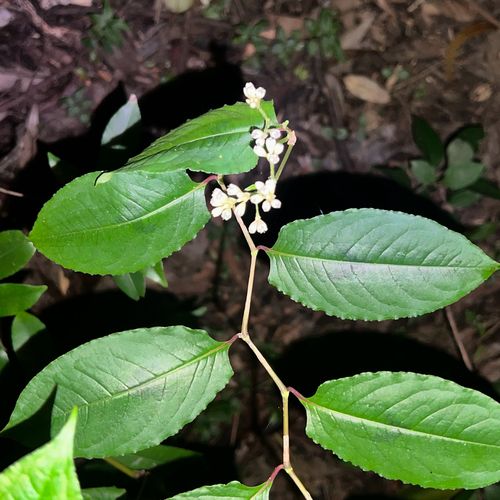
Cape ivy (Delairea odorata)

Cape ivy

Delairea odorata

Environmental weedVine / climber

How to spot it: Cape ivy is a long-lived vine that grows on the ground, on structures and over other plants. It can climb up trees high into the canopy where it can densely cover the vegetation looking like a green and yellow blanket. Leaves: glossy green fleshy 3-8 cm wide and 3-8 cm long strong smelling when crushed with 5-7 pointed lobes attached to stalks 1.5-7 cm long, often with a pair of kidney-shaped ... Flowers: yellow cylindrical and 2-3 mm in diameter sweet smelling made up of a dense cluster of…

Plant instead: Wonga wonga vine (Pandorea pandorana), Purple coral pea, false sarsaparilla, waraburra (Hardenbergia violacea), Hairy apple berry (Billardiera scandens), Climbing guinea flower (Hibbertia scandens), Old man's beard (Clematis aristata), Twining glycine (Glycine clandestina); Hibbertia scandens
How to control it

Overview: Follow up control work as cape ivy can quickly re-infest sites.

Manual: Plants can be hand pulled or dug out. To avoid damaging plants covered with cape ivy, cut stems at ground level and leave to dry out on trees and shrubs. Remove all stems that are in contact with the ground and dig out all root material.

Herbicide and timing: Spraying To limit off-target damage to plants covered with cape ivy: cut stems at waist height move intact stems away from native plants spray stems with recommended herbicide. Regrowth can be spot sprayed with herbicides.

Herbicide options listed by NSW WeedWise: Glyphosate 360 g/L - Spot spray evenly to cover all foliage.; Picloram 44.7 g/L + Aminopyralid 4.47 g/L - Rhizome application: prune the shoots to get access to the rhizome apply a 3-5 mm layer of gel across the cut ...

Disposal (general advice, not from WeedWise): bag seeds/fruit/tubers for general waste (not green bin) or as advised by council; never dump in bushland.

Always read the herbicide label or APVMA permit, and use a licensed operator where required.

Legal status
  • Listed by: Sydney North Sub-Regional Weeds Committee list (Hornsby, Ku-ring-gai, Lane Cove, North Sydney, Ryde, Willoughby + others)
  • General biosecurity duty applies to all land managers (Biosecurity Act 2015)

NSW WeedWise profile

Photo: Thomas Mesaglio, CC BY 4.0, via iNaturalist (research-grade observation)
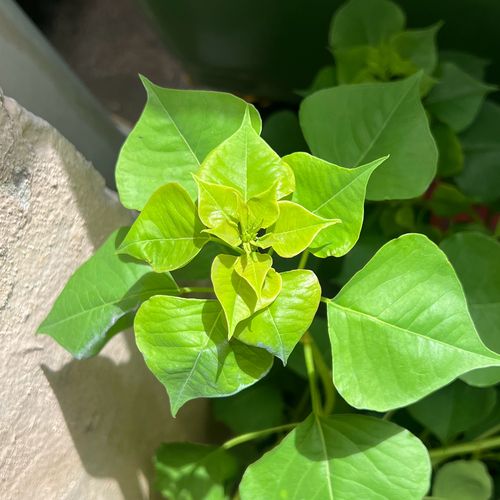
Cassia (Senna pendula var. glabrata)

Cassia

Senna pendula var. glabrata

Environmental weedShrub

How to spot it: Cassia is a perennial spreading or sprawling shrub 2–4 m tall. If supported by other plants it can grow up to 5m. The stems are usually upright but lean over when laden with flowers or pods. Leaves: are up to 8 cm long on stalks up to 4 cm long alternate along the stem consist of 3-6 pairs of opposite leaflets. Flowers: bright yellow and pea-like about 3 cm wide with 5 large petals on stalks up to 2.5 cm long in clusters at the tips of the branches usually present ... Fruit: cylindrical pods…

Plant instead: Sunshine wattle (Acacia terminalis), Sydney golden wattle (Acacia longifolia), White sally wattle, gossamer wattle (Acacia floribunda), Eggs and bacon (Dillwynia retorta) (yellow flowers)
How to control it

Overview: Successful weed control requires follow up after the initial efforts. This means looking for and killing regrowth or new seedlings. Using a combination of control methods is usually more successful. Control plants before they flower and set seed.

Manual: Pull or dig out small plants when soil is damp or soft. Dig out the roots so the plants do not reshoot. Mulching can suppress new growth.

Herbicide and timing: Spot spray Spot spraying is effective on seedlings and plants less than 2 m tall in dense infestations. Spray actively growing plants and ensure all of the foliage is covered. Cut stem This method is suitable for tall plants and for those growing close to desirable plants.

Herbicide options listed by NSW WeedWise: Glyphosate 360 g/L - Stem injection/cut stump application.; Glyphosate 360 g/L + Metsulfuron-methyl 600 g/kg - Spot spray application.; Metsulfuron-methyl 600 g/kg - Spot spray application.

Disposal: Dried seed pods can be burnt in a hot fire. Contact your local council for further advice on how to dispose of seed pods

Always read the herbicide label or APVMA permit, and use a licensed operator where required.

Legal status
  • Listed by: Sydney North Sub-Regional Weeds Committee list (Hornsby, Ku-ring-gai, Lane Cove, North Sydney, Ryde, Willoughby + others); Lane Cove common weeds
  • General biosecurity duty applies to all land managers (Biosecurity Act 2015)

NSW WeedWise profile

Photo: Will Cornwell, CC BY 4.0, via iNaturalist (research-grade observation)
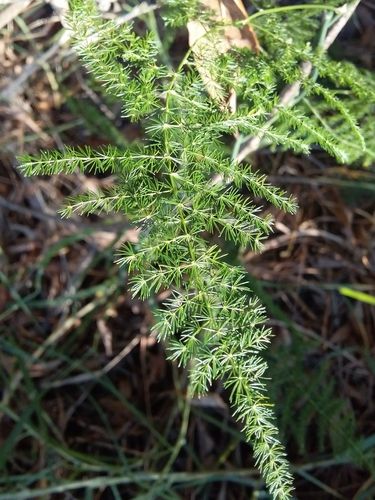
Castor oil plant (Ricinus communis)

Castor oil plant

Ricinus communis

Environmental weedShrub

How to spot it: Castor oil plant is a fast-growing shrub usually 3 m tall (occasionally up to 12 m). It is a perennial plant unless it is growing in areas with regular severe frosts where it will die in winter. There is a lot of variation in this plant. Leaves: dark red-brown, turning green-blue when older 10-40 cm in diameter star shaped with toothed edges divided into 7-9 lobes glossy and hairless with prominent midveins ... Flowers: clustered in spikes at the end of stems red (female) or creamy-yellow…

Plant instead: Bleeding heart, native poplar (Homalanthus populifolius) (fast pioneer with large leaves), Large-leaf hop-bush (Dodonaea triquetra), White sally wattle, gossamer wattle (Acacia floribunda)
How to control it

Overview: Wear protective clothing and equipment to avoid any contact with the plant, including eye and respiratory protection.

Manual: Young plants can be pulled out or dug up quite easily. Larger plants can be removed if the soil is damp. It is important to remove as much of the roots as possible to stop the plant from re-growing. Contact your local council for advice on disposal.

Herbicide and timing: If possible, spray before plants set seed. If plants have fruit, collect and dispose of the fruit. If there are too many to collect follow up control of seedlings will be needed. Check controlled areas within one month of treatment.

Herbicide options listed by NSW WeedWise: Glyphosate 360 g/L - Spray seedlings and coppice shoots.; Picloram 44.7 g/L + Aminopyralid 4.47 g/L - Cut the stem close to the ground (10 cm or less). Apply a 3–5 mm layer of gel onto stems less than 2 cm ...; Triclopyr 600 g/L - Basal bark application for plants up to 5 cm basal diameter.

Disposal (general advice, not from WeedWise): bag seeds/fruit/tubers for general waste (not green bin) or as advised by council; never dump in bushland.

Always read the herbicide label or APVMA permit, and use a licensed operator where required.

Legal status
  • Listed by: Sydney North Sub-Regional Weeds Committee list (Hornsby, Ku-ring-gai, Lane Cove, North Sydney, Ryde, Willoughby + others)
  • General biosecurity duty applies to all land managers (Biosecurity Act 2015)

NSW WeedWise profile

Photo: Isaiah Findley, CC0 1.0, via iNaturalist (research-grade observation)
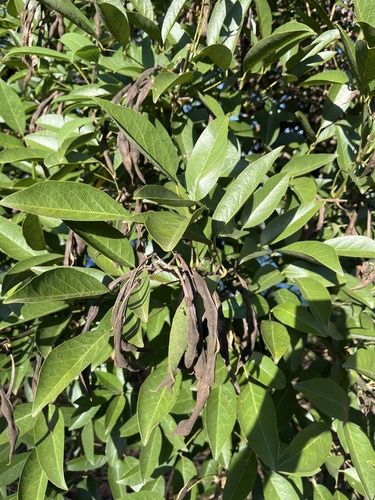
Cat's claw creeper (Dolichandra unguis-cati)

Cat's claw creeper

Dolichandra unguis-cati

State priorityVine / climber

How to spot it: Cat's claw creeper is a woody vine with many stems. It can climb up to 30 m high on trees and other structures as well as creep along the ground forming dense mats. Plants may be well established before they start to flower. Leaves: opposite usually in groups of two leaflets (occasionally up to 5 in young plants) on the end of a stalk with a tendril at the end of the stalk between the leaflets ... Flowers: yellow often with orange lines in the tube 4–8 cm long with 2 cm long petals…

Plant instead: Wonga wonga vine (Pandorea pandorana), Purple coral pea, false sarsaparilla, waraburra (Hardenbergia violacea), Hairy apple berry (Billardiera scandens), Climbing guinea flower (Hibbertia scandens), Old man's beard (Clematis aristata), Twining glycine (Glycine clandestina)
How to control it

Overview: Successful weed control relies on follow up after the initial efforts. This means looking for and killing regrowth or new seedlings. Using a combination of control methods is usually more successful..

Manual: When : Year-round. Follow up : Before the vine begins climbing other plants, keep checking and treating for at least 5 years. Pull stems away from any trees or buildings they are using to climb up.

Herbicide and timing: Spraying When : Whenever new growth is present. Follow-up : Before regrowth begins climbing too high. Where possible, when the vines have not grown too high, pull cat’s claw creeper down from desirable plants as it may be difficult to spray the leaves of the vine without also spraying the host.

Herbicide options listed by NSW WeedWise: Glyphosate 360 g/L - Spray to kill regrowth; Picloram 44.7 g/L + Aminopyralid 4.47 g/L - Cut the stem close to the ground (10 cm or less). Apply a 3–5 mm layer of gel onto stems less than 2 cm ...

Disposal: Tubers should be removed from the site as they can resprout. Contact your local council for advice on disposal.

Always read the herbicide label or APVMA permit, and use a licensed operator where required.

Legal status
  • STATE PRIORITY - CONTAINMENT AND/OR ASSET PROTECTION
  • REGIONAL PRIORITY (Greater Sydney) - ASSET PROTECTION
  • WeedWise Greater Sydney duty -> Prohibition on certain dealings: Must not be imported into the state, sold, bartered, exchanged or offered for sale.
  • WeedWise Greater Sydney duty -> Regional Recommended Measure: Land managers should mitigate the risk of the plant being introduced to their land. Land managers should mitigate spread of the plant from their land. A person should not buy, sell, move, carry or release the plant into the environment.
  • Listed by: Sydney North Sub-Regional Weeds Committee list (Hornsby, Ku-ring-gai, Lane Cove, North Sydney, Ryde, Willoughby + others); Lane Cove common weeds; Sydney Weeds Committees garden-escape guide
  • General biosecurity duty applies to all land managers (Biosecurity Act 2015)

NSW WeedWise profile

Photo: Greg Tasney, CC BY-SA 4.0, via iNaturalist (research-grade observation)
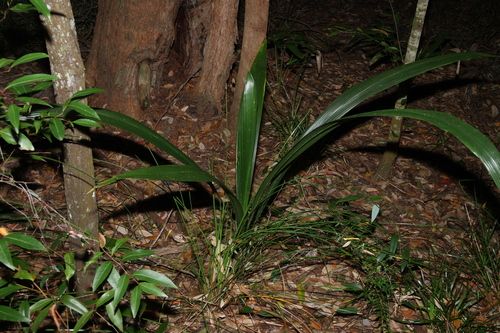
Chinese celtis (Celtis sinensis)

Chinese celtis

Celtis sinensis

Environmental weedHerb / groundcover

How to spot it: Chinese celtis are large trees usually 10-15 m tall (occasionally up to 20 m), with spreading, moderately dense crowns. They are deciduous to semi-deciduous and drop their leaves in late winter to early spring in northern NSW. Leaves: 4.5–9.0 cm long and 3.0–4.5 cm wide egg-shaped with a pointed tip bluntly toothed along the edges towards the top of the leaf on stalks 5-6 mm long alternate on the stem. Flowers: greenish with 4 petals that are about 2 mm long only present for a short time.…

Plant instead: Blueberry ash, ash quandong, blue (Elaeocarpus reticulatus), Forest oak (Allocasuarina torulosa), Water gum, kanooka, kanuka (Tristaniopsis laurina), Cheese tree (Glochidion ferdinandi), New south wales christmas-bush, christmas bush (Ceratopetalum gummiferum) (small); Turpentine (Syncarpia glomulifera) or Sydney red gum, rusty gum, smooth-barked apple (Angophora costata) for large sites
How to control it

Overview: Successful weed control relies on follow up after the initial efforts. This means looking for and killing regrowth or new seedlings. Using a combination of control methods is usually more successful.

Manual: By hand Hand pull seedlings up to 30 cm high. Small isolated plants may be dug out. Cut down larger trees and dig out the stump so that the tree cannot regrow. Be careful not to move fruit and seeds to new areas when removing trees.

Herbicide and timing: Chemical control is most effective when plants are actively growing. Do not spray when the tree is losing leaves going into the winter months. Spraying Plants up to 2 m tall can be sprayed. Apply to all leaves of young plants to the point of visible wetness.

Herbicide options listed by NSW WeedWise: Glyphosate 360 g/L - Spray seedlings and coppice shoots.; Fluroxypyr 333 g/L - Basal bark application, for plants up to 2m high; Picloram 44.7 g/L + Aminopyralid 4.47 g/L - Cut stump for small plants: Apply a 3–5 mm layer of gel onto stems less than 2 cm diameter.

Disposal: Contact your local council for advice on how to dispose of the fruit.

Always read the herbicide label or APVMA permit, and use a licensed operator where required.

Legal status
  • Listed by: Sydney North Sub-Regional Weeds Committee list (Hornsby, Ku-ring-gai, Lane Cove, North Sydney, Ryde, Willoughby + others); Willoughby: exempt undesirable species (remove without permit)
  • General biosecurity duty applies to all land managers (Biosecurity Act 2015)

NSW WeedWise profile

Photo: Thomas Mesaglio, CC BY 4.0, via iNaturalist (research-grade observation)
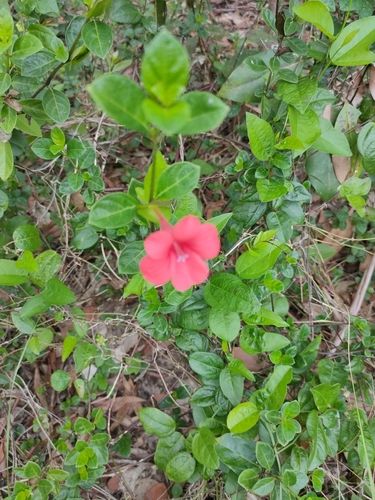
Chinese knotweed (Persicaria chinensis)

Chinese knotweed

Persicaria chinensis

Regional priorityVine / climber

How to spot it: Chinese knotweed is an upright, climbing or shrubby plant. As a shrub it gets to 1m tall but can grow much higher if there are other plants to support it. Leaves: yellow-green, with reddish middle vein smooth and soft 4-15 cm long and 2-8 cm wide oval-shaped with wavy edges sometimes have a darker green v-shaped spot near the base. Flowers: white or pale pink in clusters of 1-3 flowers on stalks tubular or cup shaped with petals joined together. Fruit: three-sided black and fleshy 2.8-4 mm long and 2-3 mm wide

Plant instead: Spiny-headed mat-rush, honey reed (Lomandra longifolia), Sedge (Carex maculata), Juncus usitatus, Water gum, kanooka, kanuka (Tristaniopsis laurina), Black wattle, callicoma, silver-leaf butterwood (Callicoma serratifolia), Grey myrtle, ironwood (Backhousia myrtifolia)
How to control it

Herbicide and timing: Spot spray Spray actively growing plants. Ensure that all of the foliage is covered with the herbicide mix. Splatter gun Splatter guns can be used for dense infestations of weeds that are difficult to reach.

Herbicide options listed by NSW WeedWise: Glyphosate 360 g/L - Spot spray; Metsulfuron-methyl 600 g/kg - Spot spray.; Dicamba 750 g/L - Knapsack spray. Apply early summer. Follow label instructions as per creeping knotweed.

Disposal: Contact your local council for advice on disposal

Always read the herbicide label or APVMA permit, and use a licensed operator where required.

Legal status
  • REGIONAL PRIORITY (Greater Sydney) - ERADICATION
  • WeedWise Greater Sydney duty -> Regional Recommended Measure: Land managers should mitigate the risk of the plant being introduced to their land. Land managers should eradicate the plant from the land and keep the land free of the plant.
  • General biosecurity duty applies to all land managers (Biosecurity Act 2015)

NSW WeedWise profile

Photo: James K. Douch, CC BY-SA 4.0, via iNaturalist (research-grade observation)

Chinese tallow tree (Triadica sebifera)

Chinese tallow tree

Triadica sebifera

Environmental weedHerb / groundcover

How to spot it: Chinese tallow trees are deciduous and grow up to 15 m high. The canopy has long, drooping branches up to 4–5 m wide. Leaves: dark green above paler below, turning yellow, orange, purple and red before falling from the tree in autumn heart-shaped with a pointed tip 3–8 cm wide and 3–7.5 cm long ... Flowers: Individual plants may have just male flowers or both male and female flowers. Where present, female flowers are at the base of the cluster. Fruit: hard rounded capsules green when young,…

Plant instead: Blueberry ash, ash quandong, blue (Elaeocarpus reticulatus), Forest oak (Allocasuarina torulosa), Water gum, kanooka, kanuka (Tristaniopsis laurina), Cheese tree (Glochidion ferdinandi), New south wales christmas-bush, christmas bush (Ceratopetalum gummiferum) (small); Turpentine (Syncarpia glomulifera) or Sydney red gum, rusty gum, smooth-barked apple (Angophora costata) for large sites (Chinese tallow is grown for autumn colour; no local native equivalent)
How to control it

Overview: Chinese tallow tree has a milky sap that is toxic to humans. Always wear protective clothing when treating plants.

Herbicide options listed by NSW WeedWise: Glyphosate 360 g/L + Metsulfuron-methyl 600 g/kg - Stem injection method.; Picloram 44.7 g/L + Aminopyralid 4.47 g/L - Cut stump for small plants: Apply a 3–5 mm layer of gel onto stems less than 2 cm diameter.

Disposal (general advice, not from WeedWise): bag seeds/fruit/tubers for general waste (not green bin) or as advised by council; never dump in bushland.

Always read the herbicide label or APVMA permit, and use a licensed operator where required.

Legal status
  • Listed by: Willoughby: exempt undesirable species (remove without permit)
  • General biosecurity duty applies to all land managers (Biosecurity Act 2015)

NSW WeedWise profile

Photo: James K. Douch, CC BY-SA 4.0, via iNaturalist (research-grade observation)

Climbing asparagus (Asparagus africanus)

Climbing asparagus

Asparagus africanus

State priorityVine / climber

How to spot it: Climbing asparagus is a scrambling shrub or vine with woody stems up to 12 m long It can smother the ground or reach up into the canopy of other vegetation. Flowers: white to greenish-white small with 6 petals 2.5 - 4 mm long single or in clusters of up to 6 at the base of leaf clusters mostly present in spring ... Fruit: round berries green when young and bright orange to orange-red when mature 5–6 mm in diameter single-seeded mostly present from ...

Plant instead: Wonga wonga vine (Pandorea pandorana), Purple coral pea, false sarsaparilla, waraburra (Hardenbergia violacea), Hairy apple berry (Billardiera scandens), Climbing guinea flower (Hibbertia scandens), Old man's beard (Clematis aristata), Twining glycine (Glycine clandestina); Wombat berry (Eustrephus latifolius) (native look-alike, spineless)
How to control it

Overview: Successful weed control requires follow up after the initial efforts. This means looking for and killing regrowth or new seedlings. Using a combination of control methods is usually more successful.

Manual: By hand Very small seedlings can be hand pulled. Ensure all of the crown is removed. Crowning This method involves digging out the entire crown that sits just below the surface of the soil. The roots are left in the soil.

Herbicide and timing: Spot spraying Spray plants that are actively growing. Apply the herbicide mix to all of the foliage. Cut stump/scrape stem Cut the stems as close to the ground as possible. Apply herbicide to the remaining stems and to all of the crown within 15 seconds.

Herbicide options listed by NSW WeedWise: Glyphosate 360 g/L - Spot spray application, best done between flowering and berries forming.; Fluroxypyr 200 g/L - Spot spray mid-June to late August.; Fluroxypyr 333 g/L - Spot spray application

Disposal (general advice, not from WeedWise): bag seeds/fruit/tubers for general waste (not green bin) or as advised by council; never dump in bushland.

Always read the herbicide label or APVMA permit, and use a licensed operator where required.

Legal status
  • STATE PRIORITY - CONTAINMENT AND/OR ASSET PROTECTION
  • REGIONAL PRIORITY (Greater Sydney) - ERADICATION
  • WeedWise Greater Sydney duty -> Prohibition on certain dealings: Must not be imported into the state, sold, bartered, exchanged or offered for sale.
  • WeedWise Greater Sydney duty -> Regional Recommended Measure: The plant should be eradicated from the land and the land kept free of the plant. Notify local control authority if found.
  • General biosecurity duty applies to all land managers (Biosecurity Act 2015)

NSW WeedWise profile

Photo: Tony van Kampen, CC BY 4.0, via iNaturalist (research-grade observation)

Climbing asparagus fern (Asparagus plumosus)

Climbing asparagus fern

Asparagus plumosus

State priorityVine / climber

How to spot it: Climbing asparagus fern is a long-lived, occasionally spiny, branching vine with wiry, climbing stems. It scrambles over other plants and can grow to around 5 metres. Flowers: greenish to white bell-shaped with 6 petals that curve backwards 5-7 mm wide and 3-4 mm long single or in pairs on the end of branches present from ... Fruit: rounded berries 4-5 mm in diameter green, then black when ripe ripe from autumn to winter.

Plant instead: Wonga wonga vine (Pandorea pandorana), Purple coral pea, false sarsaparilla, waraburra (Hardenbergia violacea), Hairy apple berry (Billardiera scandens), Climbing guinea flower (Hibbertia scandens), Old man's beard (Clematis aristata), Twining glycine (Glycine clandestina); Wombat berry (Eustrephus latifolius)
How to control it

Overview: Successful weed control requires follow up after the initial efforts. This means looking for and killing regrowth or new seedlings. Using a combination of control methods is usually more successful. Because of their hardy roots plants can re-sprout.

Manual: By hand Seedlings and small plants can be hand pulled. A knife or trowel can help ease the plant out of the ground. Remove all roots, including the crown, or the plant can regrow.

Herbicide and timing: Spot spraying Spray plants that are actively growing. Apply the herbicide mix to all of the foliage. Cut stump Cut the stems as close to the ground as possible. Apply herbicide to the remaining stems and to all of the crown within 15 seconds.

Herbicide options listed by NSW WeedWise: Glyphosate 360 g/L - Spot spray application, best done between flowering and berries forming.; Fluroxypyr 200 g/L - Spot spray mid-June to late August.; Fluroxypyr 333 g/L - Spot spray application

Disposal (general advice, not from WeedWise): bag seeds/fruit/tubers for general waste (not green bin) or as advised by council; never dump in bushland.

Always read the herbicide label or APVMA permit, and use a licensed operator where required.

Legal status
  • STATE PRIORITY - CONTAINMENT AND/OR ASSET PROTECTION
  • WeedWise Greater Sydney duty -> Prohibition on certain dealings: Must not be imported into the state, sold, bartered, exchanged or offered for sale.
  • Listed by: Sydney North Sub-Regional Weeds Committee list (Hornsby, Ku-ring-gai, Lane Cove, North Sydney, Ryde, Willoughby + others)
  • General biosecurity duty applies to all land managers (Biosecurity Act 2015)

NSW WeedWise profile

Photo: insiderelic, CC0 1.0, via iNaturalist (research-grade observation)

Cockspur coral tree (Erythrina crista-galli)

Cockspur coral tree

Erythrina crista-galli

Environmental weedTree

How to spot it: Cockspur coral is a small tree or shrub trees that can grow to 6 m tall. They lose their leaves in winter. Leaves: Made up of three leaflets which are: 3–6 cm long and 2–5 cm wide oval with a narrow tip and smooth edges on a stalk 5–10 cm long hairless. Flowers: scarlet-red 4–5 cm long pea-shaped with the largest petal bent backwards when the flower is fully open in clusters 8–30 cm long at the ends of ... Fruit: large curved pods 8–22 cm long green when young, dark brown or black when mature…

Plant instead: Blueberry ash, ash quandong, blue (Elaeocarpus reticulatus), Forest oak (Allocasuarina torulosa), Water gum, kanooka, kanuka (Tristaniopsis laurina), Cheese tree (Glochidion ferdinandi), New south wales christmas-bush, christmas bush (Ceratopetalum gummiferum) (small); Turpentine (Syncarpia glomulifera) or Sydney red gum, rusty gum, smooth-barked apple (Angophora costata) for large sites; Ceratopetalum gummiferum for red colour
How to control it

Overview: Successful weed control relies on follow up after the initial efforts. This means looking for and killing regrowth or new seedlings. Using a combination of control methods is usually more successful.

Manual: By hand Hand-pull or dig out small seedlings.

Herbicide and timing: Cut stump method Cut trunks or stems and apply herbicide to the stump within 15 seconds of cutting. Dispose of cut sections or check regularly for sprouting.

Herbicide options listed by NSW WeedWise: Picloram 100 g/L + Triclopyr 300 g/L + Aminopyralid 8 g/L - Spray plants less than 1.5 metres tall from October to May. Spray reshooting cut limbs.; Triclopyr 300 g/L + Picloram 100 g/L - This permit is only for Mid North Coast, Northern Rivers and Far North Coast of NSW.; Glyphosate 360 g/L - Cut stump/drill/axe cut/inject

Disposal (general advice, not from WeedWise): bag seeds/fruit/tubers for general waste (not green bin) or as advised by council; never dump in bushland.

Always read the herbicide label or APVMA permit, and use a licensed operator where required.

Legal status
  • Listed by: Willoughby: exempt undesirable species (remove without permit); Sydney Weeds Committees garden-escape guide
  • General biosecurity duty applies to all land managers (Biosecurity Act 2015)

NSW WeedWise profile

Photo: Richard Fuller, CC0 1.0, via iNaturalist (research-grade observation)

Cocos palm (Syagrus romanzoffiana)

Cocos palm

Syagrus romanzoffiana

Environmental weedTree

How to spot it: Cocos palms are a large, single stemmed palm with an average height of 12 m. Plants can flower all year round but mostly flower in spring and summer. Old fruit and dead leaves hang on the plant, giving it an untidy look. Leaves: There are 7 to 25 leaves in a spiral coming from the top of the trunk (crown). Leaves are up to 5 m long and have a thick main stalk. Each stalk has 300-500 leaflets. Flowers: grow in groups of 3, with 1 female and 2 male flowers male flowers are cream - pale yellow…

Plant instead: Tree ferns/palms not in local lists; use Turpentine (Syncarpia glomulifera), Blueberry ash, ash quandong, blue (Elaeocarpus reticulatus), Water gum, kanooka, kanuka (Tristaniopsis laurina) as feature trees
How to control it

Herbicide and timing: Small plants can be spot sprayed.

Herbicide options listed by NSW WeedWise: Picloram 100 g/L + Triclopyr 300 g/L + Aminopyralid 8 g/L - Use a knapsack or handgun to spray plants less than 1.5 metres tall. Apply from October to May.; Triclopyr 300 g/L + Picloram 100 g/L - Use a knapsack or handgun to spray plants less than 1.5 metres tall. Apply from October to May.; Glyphosate 360 g/L - Spot spray (for smaller plants). For general weed control in Domestic areas (Home gardens), Commercial, ...

Disposal (general advice, not from WeedWise): bag seeds/fruit/tubers for general waste (not green bin) or as advised by council; never dump in bushland.

Always read the herbicide label or APVMA permit, and use a licensed operator where required.

Legal status
  • Listed by: Willoughby: exempt undesirable species (remove without permit)
  • General biosecurity duty applies to all land managers (Biosecurity Act 2015)

NSW WeedWise profile

Photo: Greg Tasney, CC BY-SA 4.0, via iNaturalist (research-grade observation)

Coral creeper (Barleria repens)

Coral creeper

Barleria repens

Regional priorityVine / climber

How to spot it: Coral creeper is a perennial scrambling herb that usually grows up to 0.7 m tall. If it climbs over taller plants it can reach up to 2 m. Leaves: dark green and shiny oval with a pointed tip up to 60 mm long and 25 mm wide sparsely hairy on the lower side and hairy along the margins prominently veined on stalks ... Flowers: tubular with 5 spreading lobes red, salmon or pinkish up to 50 mm long single or occasionally in groups of 2 or 3 produced in late summer and autumn. Fruit: are club-shaped…

Plant instead: Ivy-leaved violet (Viola hederacea), Kidney weed, yilibili (d'harawal) (Dichondra repens), Native wandering jew / scurvy weed (Commelina cyanea), Pastel flower (Pseuderanthemum variabile), Whiteroot (Lobelia purpurascens), Creeping beard grass (Oplismenus imbecillis), Common maidenhair (Adiantum aethiopicum)
How to control it

Herbicide and timing: Larger infestations can be spot sprayed when plants are actively growing. Use caution when spraying coral creeper that is close to native plants.

Herbicide options listed by NSW WeedWise: Fluroxypyr 200 g/L - Spot spray; Fluroxypyr 333 g/L - Spot spray; Glyphosate 360 g/L - Spot spray

Disposal (general advice, not from WeedWise): bag seeds/fruit/tubers for general waste (not green bin) or as advised by council; never dump in bushland.

Always read the herbicide label or APVMA permit, and use a licensed operator where required.

Legal status
  • REGIONAL PRIORITY (Greater Sydney) - ERADICATION
  • WeedWise Greater Sydney duty -> Regional Recommended Measure: Land managers should mitigate the risk of the plant being introduced to their land. Land managers should eradicate the plant from the land and keep the land free of the plant.
  • General biosecurity duty applies to all land managers (Biosecurity Act 2015)

NSW WeedWise profile

Photo: Tony van Kampen, CC BY 4.0, via iNaturalist (research-grade observation)

Corky passionfruit (Passiflora suberosa)

Corky passionfruit

Passiflora suberosa

Environmental weedVine / climber

How to spot it: Corky passionfruit is a slender, climbing or creeping vine with distinct passionfruit flowers. They have lots or tightly coiled tendrils that grow out of leaf forks. Leaves: dark green with pointy tips usually with 3 lobes (sometimes no lobes) 3-10 cm long alternate along stems on stalks 5-20 mm long with small glands halfway along the leaf ... Flowers: similar looking to edible passionfruit flowers 10-30 mm wide a ring of yellow or white threads with a purple base sitting above pale green…

Plant instead: Native passionfruit (Passiflora herbertiana) (native passionfruit), Wonga wonga vine (Pandorea pandorana), Purple coral pea, false sarsaparilla, waraburra (Hardenbergia violacea), Hairy apple berry (Billardiera scandens), Climbing guinea flower (Hibbertia scandens), Old man's beard (Clematis aristata), Twining glycine (Glycine clandestina)
How to control it

Overview: Corky passionfruit can be controlled by: hand pulling slashing or removal of above ground growth herbicides. Removing plants before they seed is the most effective way to control them.

Manual: Seedlings and small patches of corky passionfruit can be hand pulled or dug out if the roots are not too deep. This can be done year-round but will be easiest when the soil is damp. Try not to break the stem off from the roots because the plant can regrow.

Herbicide and timing: Spot spraying Spray actively growing plants. Ensure that all of the foliage is covered with the herbicide mix. Basal barking Apply herbicide mixed with diesel to cover the lower stem, all the way around the plant.

Herbicide options listed by NSW WeedWise: Picloram 100 g/L + Triclopyr 300 g/L + Aminopyralid 8 g/L - Thoroughly cover the foliage of plants up to 1.5 m tall via knapsack or handgun. Apply from October to May.; Triclopyr 300 g/L + Picloram 100 g/L - Thoroughly cover the foliage of plants up to 1.5 m tall via knapsack or handgun. Apply from October to May.; Fluroxypyr 200 g/L - Spot spray actively growing plants.

Disposal (general advice, not from WeedWise): bag seeds/fruit/tubers for general waste (not green bin) or as advised by council; never dump in bushland.

Always read the herbicide label or APVMA permit, and use a licensed operator where required.

Legal status
  • Listed by: Sydney North Sub-Regional Weeds Committee list (Hornsby, Ku-ring-gai, Lane Cove, North Sydney, Ryde, Willoughby + others); BioNet: named threat to BGHF
  • General biosecurity duty applies to all land managers (Biosecurity Act 2015)

NSW WeedWise profile

Photo: Tony van Kampen, CC BY 4.0, via iNaturalist (research-grade observation)

Cotoneaster (Cotoneaster glaucophyllus)

Cotoneaster

Cotoneaster glaucophyllus

Environmental weedShrub

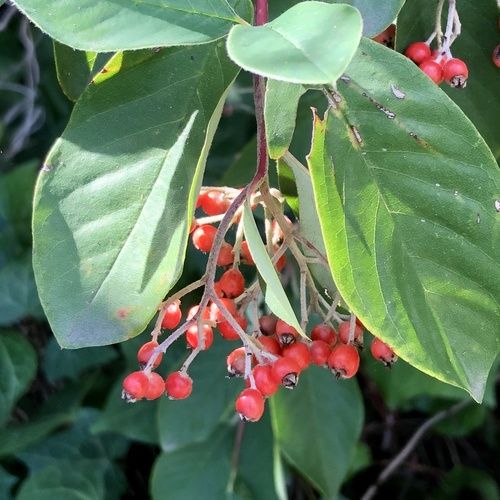
How to spot it: Cotoneaster is a large upright or arching evergreen shrub that grows to about 3m tall. It has clusters of small berries in autumn and winter. Leaves: dark green above light green-grey underneath, with white hairs 20–80 mm long and 15–40 mm wide oval or egg shaped with smooth surfaces and edges. Flowers: white with five petals 5 mm wide in clusters of 20–60 along branches on 2–4 mm long stalks. Fruit: red when mature 7–8 mm in diameter round in clusters each with 2- 5 seeds.

Plant instead: Blueberry ash, ash quandong, blue (Elaeocarpus reticulatus), Lilly pilly, midjuburi (cadigal) (Acmena smithii), Grey myrtle, ironwood (Backhousia myrtifolia), Wild yellow jasmine (Pittosporum revolutum), Large mock-olive, large-leaved olive (Notelaea longifolia), Muttonwood (Myrsine variabilis); Elaeocarpus reticulatus (berries for birds)
How to control it

Overview: Successful weed control relies on follow up after the initial efforts. This means looking for and killing regrowth or new seedlings. Using a combination of control methods is usually more successful.

Manual: By hand Hand-pull or dig out seedlings throughout the year.

Herbicide and timing: Cut stump method When: Just after fruiting in autumn. Cut trunks or stems, and apply herbicide to the stump within 15 seconds of cutting. Stem injection When: Spring or early summer, before fruit mature in early autumn.

Herbicide options listed by NSW WeedWise: Picloram 100 g/L + Triclopyr 300 g/L + Aminopyralid 8 g/L - Use a knapsack or handgun to spray plants less than 1.5 metres tall. Apply from October to May.; Triclopyr 300 g/L + Picloram 100 g/L - Use a knapsack or handgun to spray plants less than 1.5 metres tall. Apply from October to May.; Glyphosate 360 g/L - Cut stump or drill/axe cut/inject.

Disposal (general advice, not from WeedWise): bag seeds/fruit/tubers for general waste (not green bin) or as advised by council; never dump in bushland.

Always read the herbicide label or APVMA permit, and use a licensed operator where required.

Legal status
  • Listed by: Willoughby: exempt undesirable species (remove without permit); Sydney Weeds Committees garden-escape guide
  • General biosecurity duty applies to all land managers (Biosecurity Act 2015)

NSW WeedWise profile

Photo: James K. Douch, CC BY-SA 4.0, via iNaturalist (research-grade observation)

Crofton weed (Ageratina adenophora)

Crofton weed

Ageratina adenophora

Environmental weedShrub

How to spot it: Crofton weed is an erect, perennial multi-stemmed shrub 1–2 m tall. Leaves: dark green 4–12 cm long and 3–9 cm wide triangular to diamond shaped with a pointed tip and broad base toothed along the edges slightly hairy or hairless slightly ... Flowers: white 5-8 mm in diameter in clusters on the end of stems present in spring.

Plant instead: Rice flower, white dogwood, pill flower, sago bush (Ozothamnus diosmifolius), Australian indigo, duwabili (d'harawal) (Indigofera australis), Sandfly zieria, smithian zieria, dr smith's zieria (Zieria smithii), Pastel flower (Pseuderanthemum variabile) (moist sites)
How to control it

Overview: Successful weed control relies on follow up after the initial efforts. This means looking for and killing regrowth or new seedlings. Using a combination of control methods is usually more successful.

Manual: By hand Pull or dig out small areas of scattered plants. Remove crowns to prevent regrowth. Slashing Slashing can control heavy infestations on accessible land. Regular slashing will reduce flowering, seedset, vigour and density of the infestations.

Herbicide and timing: Spray actively growing plants before they start flowering. Check labels for specific timing. A combination of slashing and chemical application can be used to eradicate Crofton weed. Spraying can be in combination with slashing. After slashing, wait till plants are 15 - 40 cm tall and then spray.

Herbicide options listed by NSW WeedWise: Fluroxypyr 140 g/L + Aminopyralid 10 g/L - Spot spray application. Apply to actively growing plants from October to April; Fluroxypyr 200 g/L - Apply to actively growing seedlings and young plants up to flowering.; Fluroxypyr 333 g/L - Spray actively growing seedlings and young plants up to flowering.

Disposal (general advice, not from WeedWise): bag seeds/fruit/tubers for general waste (not green bin) or as advised by council; never dump in bushland.

Always read the herbicide label or APVMA permit, and use a licensed operator where required.

Legal status
  • Listed by: Sydney North Sub-Regional Weeds Committee list (Hornsby, Ku-ring-gai, Lane Cove, North Sydney, Ryde, Willoughby + others); BioNet: named threat to BGHF
  • General biosecurity duty applies to all land managers (Biosecurity Act 2015)

NSW WeedWise profile

Photo: Thomas Mesaglio, CC BY 4.0, via iNaturalist (research-grade observation)
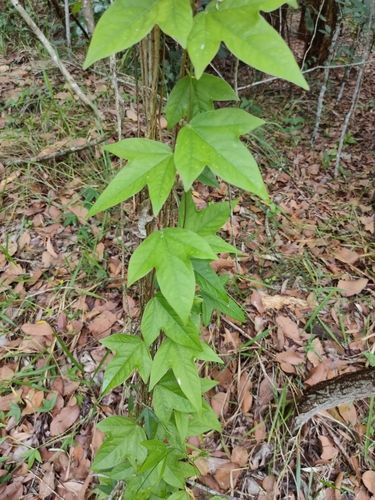
Dipogon (Dipogon lignosus)

Dipogon

Dipogon lignosus

Environmental weedVine / climber

How to spot it: Dipogon is a vigorous, twining perennial herb with stems to 3 m long. Leaves are in groups of 3 leaflets. Leaflets are oval to diamond shaped, 3–6 cm long and up to 4 cm wide. They are paler on the underside.

Plant instead: Purple coral pea, false sarsaparilla, waraburra (Hardenbergia violacea), Dusky coral pea (Kennedia rubicunda), Twining glycine (Glycine clandestina)
How to control it

Manual: Hand-pull or dig out seedlings and small plants. Remove as much of the roots as possible. Larger climbing plants can be cut and the upper parts left in the canopy to dry out. The roots will need to be dug. Check sites for regrowth.

Herbicide and timing: Spot spraying Apply to actively growing plants. Cover all of the foliage with the herbicide mixture. Splatter gun Splatter-guns use small amounts of concentrated herbicide. They spray large droplets that limit spray drift.

Herbicide options listed by NSW WeedWise: Fluroxypyr 200 g/L - Spot spray; Fluroxypyr 333 g/L - Spot spray; Glyphosate 360 g/L - Spot spray

Disposal (general advice, not from WeedWise): bag seeds/fruit/tubers for general waste (not green bin) or as advised by council; never dump in bushland.

Always read the herbicide label or APVMA permit, and use a licensed operator where required.

Legal status
  • General biosecurity duty applies to all land managers (Biosecurity Act 2015)

NSW WeedWise profile

Photo: Thomas Mesaglio, CC BY 4.0, via iNaturalist (research-grade observation)
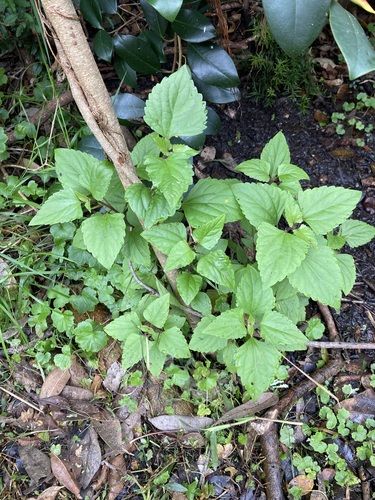
European hackberry (Celtis australis)

European hackberry

Celtis australis

Environmental weedTree

How to spot it: European Hackberry is a deciduous tree up to 20 m tall. It has a single straight trunk and a wide canopy. It is often planted as a shade or street tree. It can live for hundreds of years. Leaves: dark grey-green, turning yellow in autumn oval – spear shaped with serrated edges 4-10 cm long and 1-4 cm wide rough on the top and hairy underneath alternate along ... Flowers: very small and difficult to see greenish yellow in the base of leaf stalks are either male (in clusters) or bisexual (single…

Plant instead: Blueberry ash, ash quandong, blue (Elaeocarpus reticulatus), Forest oak (Allocasuarina torulosa), Water gum, kanooka, kanuka (Tristaniopsis laurina), Cheese tree (Glochidion ferdinandi), New south wales christmas-bush, christmas bush (Ceratopetalum gummiferum) (small); Turpentine (Syncarpia glomulifera) or Sydney red gum, rusty gum, smooth-barked apple (Angophora costata) for large sites
How to control it

Manual: Hand pull or dig up small seedlings. Large trees may be cut down and the stump dug up and removed. Care should be taken to avoid moving fruit to uninfested areas when manually removing mature trees.

Herbicide and timing: Cut stump Cut trunks or stems and apply herbicide within 15 seconds. Basal barking Apply herbicide mixed with diesel to cover all the way around the lower stem or trunk. Stem injection. Drill or make cuts into the sapwood in a ring all the way around the trunk.

Herbicide options listed by NSW WeedWise: Fluroxypyr 200 g/L - Basal bark; Fluroxypyr 333 g/L - Basal bark; Glyphosate 360 g/L - Cut stump or stem injection.

Disposal: Check with your local council for information about safely disposing fruit or plant parts.

Always read the herbicide label or APVMA permit, and use a licensed operator where required.

Legal status
  • Listed by: Willoughby: exempt undesirable species (remove without permit)
  • General biosecurity duty applies to all land managers (Biosecurity Act 2015)

NSW WeedWise profile

Photo: Greg Tasney, CC BY-SA 4.0, via iNaturalist (research-grade observation)

Firethorn (Pyracantha species)

Firethorn

Pyracantha species

Environmental weedShrub

How to spot it: Firethorns are evergreen spiny shrubs or small trees. They have leaves of different shapes and sizes on the one plant. All species have white flowers that are present in spring and summer. They produce small, round fruit that matures in autumn.

Plant instead: Blackthorn, boxthorn, sweet bursaria, kurwan (d'harawal) (Bursaria spinosa), Blueberry ash, ash quandong, blue (Elaeocarpus reticulatus), Needlebush (Hakea sericea)
How to control it

Overview: Successful weed control requires follow up after the initial efforts. This means looking for and killing regrowth or new seedlings. Using a combination of control methods is usually more successful. Wear appropriate protective clothing to protect against the sharp spines.

Herbicide and timing: Basal barking Apply herbicide mixed with diesel to cover the lower stem, all the way around the base of the plant. Cut stump method Cut trunks or stems and apply herbicide to the stump within 15 seconds of cutting.

Herbicide options listed by NSW WeedWise: Fluroxypyr 200 g/L - Basal bark; Fluroxypyr 333 g/L - Basal bark; Glyphosate 360 g/L - Cut stump or stem injection

Disposal (general advice, not from WeedWise): bag seeds/fruit/tubers for general waste (not green bin) or as advised by council; never dump in bushland.

Always read the herbicide label or APVMA permit, and use a licensed operator where required.

Legal status
  • General biosecurity duty applies to all land managers (Biosecurity Act 2015)

NSW WeedWise profile

Photo: Matthew Lincoln, CC BY 4.0, via iNaturalist (research-grade observation)

Fireweed (Senecio madagascariensis)

Fireweed

Senecio madagascariensis

State priorityHerb / groundcover

How to spot it: Fireweed is an annual or biennial herb 10–60 cm tall. It is erect with many branches. Flowering is mostly from spring to autumn but times vary for different parts of NSW. Leaves: bright green fleshy and narrow 2–7 cm long and 3–10 mm wide smooth, toothed or lobed on the edges stalkless and clasped around the stem alternate along the stems. Flowers: small, yellow and daisy-like with up to 15 petals 1–2 cm in diameter in clusters at the ends of branches emerging from a small cup of modified leaves ...

Plant instead: Button everlasting (Coronidium scorpioides), Forest goodenia, ivy goodenia (Goodenia hederacea), Brachyscome (native daisies)
How to control it

Overview: Detailed control information is availble in the Fireweed (Senecio madagascariensis) National Best Practice Management Manual 2023. Link availble above under More Information.

Herbicide and timing: Herbicides are most effective in combination with healthy, competitive pastures. The best time to treat fireweed with herbicide is late autumn. This controls the peak numbers of seedlings and young plants. By late winter herbicide treatments are much less effective.

Herbicide options listed by NSW WeedWise: Bromoxynil 200 g/L + 2,4-D amine 625 g/L - Spray actively growing plants. Only for use in pastures. See all conditions and critical comments on the ...; Aminocyclopyrachlor 240 g/L - Spot spray with a handgun, hand-held sprayer or backpack sprayer.; Bromoxynil 200 g/L - Boom spray fire weed in pastures. See label for critical comments.

Disposal (general advice, not from WeedWise): bag seeds/fruit/tubers for general waste (not green bin) or as advised by council; never dump in bushland.

Always read the herbicide label or APVMA permit, and use a licensed operator where required.

Legal status
  • STATE PRIORITY - CONTAINMENT AND/OR ASSET PROTECTION
  • WeedWise Greater Sydney duty -> Prohibition on certain dealings: Must not be imported into the state, sold, bartered, exchanged or offered for sale.
  • General biosecurity duty applies to all land managers (Biosecurity Act 2015)

NSW WeedWise profile

Photo: Martin Hannan-Jones, CC BY 4.0, via iNaturalist (research-grade observation)

Fishbone fern (Nephrolepis cordifolia (weedy exotic forms))

Fishbone fern

Nephrolepis cordifolia (weedy exotic forms)

Environmental weedHerb / groundcover

How to spot it: Erect sword-like fronds 30-90 cm with many small, evenly spaced leaflets (fishbone pattern); spreads by wiry runners and forms small round tubers on roots; dense colonies under trees and on rock walls.

Plant instead: Prickly rasp fern (Doodia aspera), Gristle fern, soft water fern (Blechnum cartilagineum), Rainbow fern (Calochlaena dubia), Common maidenhair (Adiantum aethiopicum), Spiny-headed mat-rush, honey reed (Lomandra longifolia)
How to control it

Always read the herbicide label or APVMA permit, and use a licensed operator where required.

Legal status
  • Not a state or regional priority weed. Listed by: Hornsby: named threat to BGHF. CAUTION: PlantNET treats Nephrolepis cordifolia as present in NSW and taxonomy of native vs exotic forms is unresolved; Sydney garden escapes are generally treated as exotic - confirm ID.

Photo: Alesha Teitzel, CC BY 4.0, via iNaturalist (research-grade observation)

Flax-leaf broom (Genista linifolia)

Flax-leaf broom

Genista linifolia

State priorityShrub

How to spot it: An evergreen shrub growing to 3 m high. Stems consists of one main stem with many branches above brownish-green in colour ridged covered in fine short ‘woolly’ grey hairs when young, becoming less hairy with age Leaves groups of 3 leaflets are arranged ...

Plant instead: Tick bush (Kunzea ambigua), Leptospermum trinervium (Flaky-barked tea-tree, slender tea-tree (Gaudium trinervium)), Hairpin banksia (Banksia spinulosa), Red spider flower (Grevillea speciosa), Large-leaf hop-bush (Dodonaea triquetra), Rice flower, white dogwood, pill flower, sago bush (Ozothamnus diosmifolius); Eggs and bacon (Dillwynia retorta), Bronze bush-pea, hairy bush-pea (Pultenaea villosa) (yellow pea flowers)
How to control it

Overview: Preference for control should be given to young plants before they reach reproductive maturity. Different methods of control will be required depending where the infestation occurs – native vegetation, plantation or pasture.

Herbicide options listed by NSW WeedWise: Picloram 100 g/L + Triclopyr 300 g/L + Aminopyralid 8 g/L - Spray spring to mid summer prior to pod formation. Agricultural non-crop areas, Commercial and industrial ...; Picloram 240 g/L + Triclopyr 750 g/L - Spring to mid-summer prior to podding. Apply as a thorough foliage spray.; Picloram 44.7 g/L + Aminopyralid 4.47 g/L - Cut the stems close to the ground (10 cm or less). Apply a 3–5 mm layer of gel onto stems less than 2 cm ...

Disposal (general advice, not from WeedWise): bag seeds/fruit/tubers for general waste (not green bin) or as advised by council; never dump in bushland.

Always read the herbicide label or APVMA permit, and use a licensed operator where required.

Legal status
  • STATE PRIORITY - CONTAINMENT AND/OR ASSET PROTECTION
  • WeedWise Greater Sydney duty -> Prohibition on certain dealings: Must not be imported into the state, sold, bartered, exchanged or offered for sale.
  • General biosecurity duty applies to all land managers (Biosecurity Act 2015)

NSW WeedWise profile

Photo: Jacob Moore, CC BY 4.0, via iNaturalist (research-grade observation)

Fountain grass (Cenchrus setaceus)

Fountain grass

Cenchrus setaceus

Environmental weedGrass / bamboo

How to spot it: Fountain grass is a tufted perennial grass to 0.9 m high. Long narrow leaf blade to 3.5 mm wide and 60 cm long, with small forward directed teeth on leaf margins and the upper surface. The flower heads resemble pink to purple bottle brushes 6 to 30 cm long.

Plant instead: Spiny-headed mat-rush, honey reed (Lomandra longifolia), Blue flax-lily (Dianella caerulea), Kangaroo grass (Themeda triandra), Tussock grass (Poa affinis), Rough saw-sedge (Gahnia aspera), Weeping grass (Microlaena stipoides); Themeda triandra for feathery seed heads
How to control it

Overview: Fountain grass is difficult to eliminate. Control may need to be repeated several times a year. The long-lived seeds make continued monitoring after treatment is essential. Control should initially be directed to outlying populations followed by treatment of the core area.

Herbicide options listed by NSW WeedWise: Flupropanate 745 g/L - Selective broadacre control; Glyphosate 360 g/L - Non-selective broadacre control

Disposal (general advice, not from WeedWise): bag seeds/fruit/tubers for general waste (not green bin) or as advised by council; never dump in bushland.

Always read the herbicide label or APVMA permit, and use a licensed operator where required.

Legal status
  • Listed by: Sydney North Sub-Regional Weeds Committee list (Hornsby, Ku-ring-gai, Lane Cove, North Sydney, Ryde, Willoughby + others)
  • General biosecurity duty applies to all land managers (Biosecurity Act 2015)

NSW WeedWise profile

Photo: Rob Beattie, CC BY 4.0, via iNaturalist (research-grade observation)

Foxtail fern (Asparagus densiflorus)

Foxtail fern

Asparagus densiflorus

State priorityHerb / groundcover

How to spot it: The cultivar Meyersii is a spreading ground cover with upright stems. It has dense foliage that look like foxtails. Leaves: bright green short needle-like. Flowers: very small white or pale pink fragrant. Fruit: shiny round berries green ripening to orange-red up to 1 cm wide with a single black seed.

Plant instead: Spiny-headed mat-rush, honey reed (Lomandra longifolia), Blue flax-lily (Dianella caerulea), Prickly rasp fern (Doodia aspera), Gristle fern, soft water fern (Blechnum cartilagineum)
How to control it

Manual: Very small plants can be hand pulled. Ensure all of the crown is removed. Dispose of the crown and fruit. Crowning Crowning is a technique of digging out the entire crown that sits just below the surface of the soil. The roots and tubers are left in the soil.

Herbicide and timing: Cut stump (gouge and paint) Cut the stems then gouge out a section of the crown with a knife. Apply the herbicide to the gouged crown immediately. Spot spraying Spot spray larger infestations, regrowth, or seedlings. Use a penetrant in coastal areas as ground asparagus forms a waxy coating.

Herbicide options listed by NSW WeedWise: Fluroxypyr 333 g/L - Spot spray.; Glyphosate 360 g/L - Spot spray application.; Metsulfuron-methyl 600 g/kg - Spot spray application.

Disposal: Bag and burn the crown and any fruiting stems including green fruit. Ask your local council for alternative disposal methods.

Always read the herbicide label or APVMA permit, and use a licensed operator where required.

Legal status
  • STATE PRIORITY - CONTAINMENT AND/OR ASSET PROTECTION
  • WeedWise Greater Sydney duty -> Prohibition on certain dealings: Must not be imported into the state, sold, bartered, exchanged or offered for sale.
  • General biosecurity duty applies to all land managers (Biosecurity Act 2015)

NSW WeedWise profile

Photo: insiderelic, CC0 1.0, via iNaturalist (research-grade observation)

Giant devil's fig (Solanum chrysotrichum)

Giant devil's fig

Solanum chrysotrichum

Regional priorityTree

How to spot it: Giant devil's fig is a shrub or small tree up to 4 m tall. It has prickly stems and leaves, which are very hairy when young. Small, white flowers grow in clusters from autumn to spring. It has shallow roots. Leaves: lobed, with 7–13 lobes per leaf 17–30 cm long and 12–20 cm wide hairy underneath alternate along stem on stalks 3–7 cm long. Flowers: white star-shaped 30–45 mm wide grow in clusters of up to 50. Fruit: round berry 10–15 mm diameter yellow or orange-yellow have lots of pale…

Plant instead: Blueberry ash, ash quandong, blue (Elaeocarpus reticulatus), Lilly pilly, midjuburi (cadigal) (Acmena smithii), Grey myrtle, ironwood (Backhousia myrtifolia), Wild yellow jasmine (Pittosporum revolutum), Large mock-olive, large-leaved olive (Notelaea longifolia), Muttonwood (Myrsine variabilis)
How to control it

Overview: Giant devil’s fig can be controlled by physical removal and herbicides. Gloves and protective clothing should be worn to prevent prickle injuries.

Manual: Seedlings and small plants can be dug out with a mattock. Larger plants can be cut down and the roots dug up.

Herbicide and timing: Spot spraying Plants can be spot sprayed with herbicides. Spraying will not kill the seeds in fruit so it is important to collect the fruit and dispose of it. Contact your local council for advice on how to dispose of the fruit. Cut stump Cut the stump and then quickly apply the herbicide gel.

Herbicide options listed by NSW WeedWise: Glyphosate 360 g/L + Metsulfuron-methyl 600 g/kg - Spray actively growing plants, ensure all of the foliage is covered. For use in riparian areas.; Picloram 100 g/L + Triclopyr 300 g/L + Aminopyralid 8 g/L - For urban bushlands and forests. Spot spray to cover all foliage and stems as incomplete application will ...; Triclopyr 300 g/L + Picloram 100 g/L + Metsulfuron-methyl 600 g/kg - Spray actively growing plants, ensure all of the foliage is covered. For urban bushlands and forests.

Disposal (general advice, not from WeedWise): bag seeds/fruit/tubers for general waste (not green bin) or as advised by council; never dump in bushland.

Always read the herbicide label or APVMA permit, and use a licensed operator where required.

Legal status
  • REGIONAL PRIORITY (Greater Sydney) - ERADICATION
  • WeedWise Greater Sydney duty -> Regional Recommended Measure: Land managers should mitigate the risk of the plant being introduced to their land. Land managers should eradicate the plant from the land and keep the land free of the plant.
  • General biosecurity duty applies to all land managers (Biosecurity Act 2015)

NSW WeedWise profile

Photo: Greg Tasney, CC BY-SA 4.0, via iNaturalist (research-grade observation)

Giant reed (Arundo donax)

Giant reed

Arundo donax

Regional priorityGrass / bamboo

How to spot it: Giant reed is a clumping perennial grass up to 8 m tall. Leaves: green, sometimes variegated with whitish markings up to 100 cm long and 8 cm wide attached to the stem with ribbed sheath a pointed at the tip alternate along the stem.

Plant instead: Spiny-headed mat-rush, honey reed (Lomandra longifolia), Sedge (Carex maculata), Juncus usitatus, Water gum, kanooka, kanuka (Tristaniopsis laurina), Black wattle, callicoma, silver-leaf butterwood (Callicoma serratifolia), Grey myrtle, ironwood (Backhousia myrtifolia)
How to control it

Overview: Successful weed control requires follow up after the initial efforts. This means looking for and killing regrowth or new seedlings. Using a combination of control methods is usually more successful.

Manual: Digging out plants can be effective for small infestations. All rhizomes must be removed. This technique can be more selective than using herbicides and can prevent damage to nearby native plants.

Herbicide and timing: Spraying Spray actively growing plants, cover all the foliage. The plants can be very tall therefore, it can be more efficient to cut the plants at ground level, then wait for approximately 6 weeks to spray the regrowth. Cut stump method Cut stems between 5 and 10 cm above the ground.

Herbicide options listed by NSW WeedWise: Glyphosate 360 g/L - Spot spray.

Disposal (general advice, not from WeedWise): bag seeds/fruit/tubers for general waste (not green bin) or as advised by council; never dump in bushland.

Always read the herbicide label or APVMA permit, and use a licensed operator where required.

Legal status
  • REGIONAL PRIORITY (Greater Sydney) - ASSET PROTECTION
  • WeedWise Greater Sydney duty -> Regional Recommended Measure: Land managers should mitigate the risk of the plant being introduced to their land. Land managers should mitigate spread of the plant from their land. A person should not buy, sell, move, carry or release the plant into the environment.
  • General biosecurity duty applies to all land managers (Biosecurity Act 2015)

NSW WeedWise profile

Photo: insiderelic, CC0 1.0, via iNaturalist (research-grade observation)

Glory lily (Gloriosa superba)

Glory lily

Gloriosa superba

Regional priorityVine / climber

How to spot it: Glory lily is a perennial herb with climbing stems up to 4 m long. It has tendrils on the leaf tips that clasp onto other plants and structures helping the plant climb. Leaves: 6–20 cm long and 1.5–4 cm wide spear shaped with tendrils at the tip 10–20 mm long shiny and hairless with many parallel veins stalkless 45–75 mm wide solitary, on ... Flowers: The flowers have 6 prominent stamens that are below the petals. The stamens are 30–70 mm long with bright yellow or orange anthers on the tips.…

Plant instead: Wonga wonga vine (Pandorea pandorana), Dusky coral pea (Kennedia rubicunda), Purple coral pea, false sarsaparilla, waraburra (Hardenbergia violacea)
How to control it

Overview: Successful weed control relies on follow up after the initial efforts. This means looking for and killing regrowth or new seedlings. Using a combination of control methods is usually more successful. Wear protective clothing and avoid skin contact with plants.

Manual: By hand Small seedlings can be dug out.

Herbicide and timing: Glory lily usually requires follow-up herbicide treatments to kill the plants. Spot spraying Apply to all foliage to the point of visible wetness. Cut stem/stem scraping method Cut stems and apply herbicide to the stem within 15 seconds of cutting.

Herbicide options listed by NSW WeedWise: Glyphosate 360 g/L - Spray regrowth evenly to cover all of the foliage. For use in urban bushlands, native forests and coastal ...; Glyphosate 360 g/L + Metsulfuron-methyl 600 g/kg - Spot spray.

Disposal (general advice, not from WeedWise): bag seeds/fruit/tubers for general waste (not green bin) or as advised by council; never dump in bushland.

Always read the herbicide label or APVMA permit, and use a licensed operator where required.

Legal status
  • REGIONAL PRIORITY (Greater Sydney) - ERADICATION
  • WeedWise Greater Sydney duty -> Regional Recommended Measure: Land managers should mitigate the risk of the plant being introduced to their land. Land managers should eradicate the plant from the land and keep the land free of the plant.
  • Listed by: Sydney Weeds Committees garden-escape guide
  • General biosecurity duty applies to all land managers (Biosecurity Act 2015)

NSW WeedWise profile

Photo: Bethlea Bell, CC0 1.0, via iNaturalist (research-grade observation)

Green cestrum (Cestrum parqui)

Green cestrum

Cestrum parqui

Regional priorityShrub

How to spot it: Green cestrum is a shrub that grows 2–3 m high. It usually has many light-green, brittle stems. It sometimes grows into thickets. Established plants lose most of their leaves during winter and produce new growth in spring. Leaves: shiny, older leaves dark green, younger leaves lighter green up to 12 cm long and 3 cm wide lance-shaped and pointed at both ends smooth edges foul-smelling when crushed ... Flowers: greenish yellow or yellow trumpet-shaped with 5–7 small, triangular petals 2.0–2.5 cm…

Plant instead: Blueberry ash, ash quandong, blue (Elaeocarpus reticulatus), Lilly pilly, midjuburi (cadigal) (Acmena smithii), Grey myrtle, ironwood (Backhousia myrtifolia), Wild yellow jasmine (Pittosporum revolutum), Large mock-olive, large-leaved olive (Notelaea longifolia), Muttonwood (Myrsine variabilis); Coffee bush (Breynia oblongifolia), Hairy clerodendrum, downy chance tree (Clerodendrum tomentosum) (moist shade)
How to control it

Overview: Successful weed control relies on follow up after the initial efforts. This means looking for and killing regrowth or new seedlings. Using a combination of control methods is usually more successful. All parts of this green cestrum are poisonous.

Manual: Small seedlings can be pulled out or dug up. Ensure all parts of the plant, including the roots, are removed.

Herbicide and timing: Treat actively growing plants. Early spring for mature plants, autumn for new seedlings. Keep stock away from treated plants until the leaf material has disintegrated. The plants are still poisonous and the treatment makes the plant more palatable so stock are more likely to eat it.

Herbicide options listed by NSW WeedWise: Glyphosate 360 g/L - Cut stump or cut, scrape and paint. See permit for additional conditions.; Aminocyclopyrachlor 240 g/L - Basal bark application for plants with stems less than 15 cm diameter at the base.; Amitrole 250 g/L + Ammonium thiocyanate 220 g/L - Handgun application on active growth, before flowering.

Disposal: The roots can be burnt. In urban areas contact your local council for advice on disposal. Keep stock away from dead plant material as it remains poisonous.

Always read the herbicide label or APVMA permit, and use a licensed operator where required.

Legal status
  • REGIONAL PRIORITY (Greater Sydney) - ASSET PROTECTION
  • WeedWise Greater Sydney duty -> Regional Recommended Measure: Land managers should mitigate the risk of the plant being introduced to their land. Land managers should mitigate spread of the plant from their land. A person should not buy, sell, move, carry or release the plant into the environment.
  • Listed by: Sydney North Sub-Regional Weeds Committee list (Hornsby, Ku-ring-gai, Lane Cove, North Sydney, Ryde, Willoughby + others); Lane Cove common weeds
  • General biosecurity duty applies to all land managers (Biosecurity Act 2015)

NSW WeedWise profile

Photo: Thomas Mesaglio, CC BY 4.0, via iNaturalist (research-grade observation)
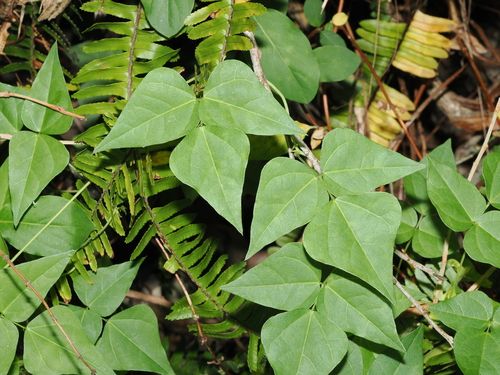
Ground asparagus (Asparagus aethiopicus)

Ground asparagus

Asparagus aethiopicus

State priorityVine / climber

How to spot it: Ground asparagus is a low growing, perennial scrambler with arching stems. It can form dense thickets that cover large areas. Flowers: white to pink with 6 tepals (that look like petals) about 5 mm in diameter in clusters of 4–8 spaced along a short stem present from spring to autumn. Fruit: a berry 5–9 mm wide green at first glossy red when mature usually with only one seed present throughout the year.

Plant instead: Prickly rasp fern (Doodia aspera), Rainbow fern (Calochlaena dubia), Gristle fern, soft water fern (Blechnum cartilagineum), Common maidenhair (Adiantum aethiopicum) (fern look); Blue flax-lily (Dianella caerulea) for pots/borders
How to control it

Overview: Successful weed control requires follow up after the initial efforts. This means looking for and killing regrowth or new seedlings. Using a combination of control methods is usually more successful.

Manual: Hand pulling Very small plants can be hand pulled. Ensure all of the crown is removed. Dispose of the crown and fruit. Crowning Crowning is a technique of digging out the entire crown that sits just below the surface of the soil.

Herbicide and timing: Cut stump (gouge and paint) Cut the stems then gouge out a section of the crown with a knife. Apply the herbicide to the gouged crown immediately. Spot spraying Spot spray larger infestations, regrowth, or seedlings. Use a penetrant in coastal areas as ground asparagus forms a waxy coating.

Herbicide options listed by NSW WeedWise: Glyphosate 360 g/L - Cut stump/scrape stem. For use in urban bushland, native forests and coastal reserves.; Fluroxypyr 200 g/L - Spot spray from mid June to late August.; Fluroxypyr 333 g/L - Spot spray from mid June to late August.

Disposal: Bag and burn the crown and any fruiting stems including green fruit. Ask your local council for alternative disposal methods.

Always read the herbicide label or APVMA permit, and use a licensed operator where required.

Legal status
  • STATE PRIORITY - CONTAINMENT AND/OR ASSET PROTECTION
  • WeedWise Greater Sydney duty -> Prohibition on certain dealings: Must not be imported into the state, sold, bartered, exchanged or offered for sale.
  • Listed by: Sydney North Sub-Regional Weeds Committee list (Hornsby, Ku-ring-gai, Lane Cove, North Sydney, Ryde, Willoughby + others); Lane Cove common weeds; BioNet: named threat to BGHF; Sydney Weeds Committees garden-escape guide
  • General biosecurity duty applies to all land managers (Biosecurity Act 2015)

NSW WeedWise profile

Photo: ttsquid, CC BY 4.0, via iNaturalist (research-grade observation)

Holly leaved senecio (Senecio glastifolius)

Holly leaved senecio

Senecio glastifolius

Regional priorityHerb / groundcover

How to spot it: Holly leaved senecio is an erect, branched, perennial (occasionally annual) herb, 50–150 cm high. Leaves: 3–15 cm long and1.0–2.5 cm wide irregularly toothed along the edges and sometimes with coarse prickly teeth at the base smaller and less toothed higher up the branches ... Flowers: daisy-like with 12-22 pink or mauve petals and yellow centres up to 6 cm in diameter present from spring to early summer.

Plant instead: Rice flower, white dogwood, pill flower, sago bush (Ozothamnus diosmifolius), Button everlasting (Coronidium scorpioides), Variable-leaved goodenia (Goodenia heterophylla)
How to control it

Overview: Check for and control new seedlings after rain events, fire or soil disturbance.

Manual: Pull or dig out plants. Remove all plant material from the site and dispose of it. Contact your local council for advice on how to dispose of this plant.

Herbicide options listed by NSW WeedWise: Fluroxypyr 200 g/L - Spot spray; Fluroxypyr 333 g/L - Spot spray; Glyphosate 360 g/L - Spot spray

Disposal (general advice, not from WeedWise): bag seeds/fruit/tubers for general waste (not green bin) or as advised by council; never dump in bushland.

Always read the herbicide label or APVMA permit, and use a licensed operator where required.

Legal status
  • REGIONAL PRIORITY (Greater Sydney) - ERADICATION
  • WeedWise Greater Sydney duty -> Regional Recommended Measure: Land managers should mitigate the risk of the plant being introduced to their land. Land managers should eradicate the plant from the land and keep the land free of the plant.
  • General biosecurity duty applies to all land managers (Biosecurity Act 2015)

NSW WeedWise profile

Photo: John Steel, CC BY 4.0, via iNaturalist (research-grade observation)

Honey locust (Gleditsia triacanthos)

Honey locust

Gleditsia triacanthos

Environmental weedTree

How to spot it: Honey locust is a long-lived, spreading, deciduous tree up to 20 m tall. The spines on the trunk and stems are distinctive and may be simple or branched. They are up to 10 cm long. Ornamental cultivars may have bright coloured foliage such as yellow leaves. Leaves: present from spring to autumn up to 20 cm long, on stalks 3–5 cm long made up of many leaflets which may be grouped together in different arrangements: divided into 5–15 ... Flowers: creamy yellow or greenish with small petals (up to…

Plant instead: Blueberry ash, ash quandong, blue (Elaeocarpus reticulatus), Forest oak (Allocasuarina torulosa), Water gum, kanooka, kanuka (Tristaniopsis laurina), Cheese tree (Glochidion ferdinandi), New south wales christmas-bush, christmas bush (Ceratopetalum gummiferum) (small); Turpentine (Syncarpia glomulifera) or Sydney red gum, rusty gum, smooth-barked apple (Angophora costata) for large sites
How to control it

Overview: Weed control relies on follow up after the initial efforts. This means looking for and killing regrowth or new seedlings. Using a combination of control methods is usually more successful. Clearing any vegetation along waterways may require consent before any work begins.

Manual: If bulldozers are used to break honey locust trees at or above ground level the plants will regrow from stumps and roots. Deep ploughing or spot spraying is needed to treat regrowth.

Herbicide and timing: Spot spraying Spraying is effective for seedlings and small trees up to 2 m tall. Spray actively growing plants, . covering all of the foliage evenly. Basal barking Measure the diameter of the stem to determine the herbicide rate.

Herbicide options listed by NSW WeedWise: Fluroxypyr 333 g/L - Foliar application, up to 2 m in height.; Picloram 44.7 g/L + Aminopyralid 4.47 g/L - Cut the stem close to the ground (10 cm or less). Apply a 3–5 mm layer of gel onto stems less than 2 cm ...; Triclopyr 240 g/L + Picloram 120 g/L - Basal bark application for plants with stems less than 5 cm diameter at the base.

Disposal (general advice, not from WeedWise): bag seeds/fruit/tubers for general waste (not green bin) or as advised by council; never dump in bushland.

Always read the herbicide label or APVMA permit, and use a licensed operator where required.

Legal status
  • Listed by: Willoughby: exempt undesirable species (remove without permit)
  • General biosecurity duty applies to all land managers (Biosecurity Act 2015)

NSW WeedWise profile

Photo: Thomas Mesaglio, CC BY 4.0, via iNaturalist (research-grade observation)
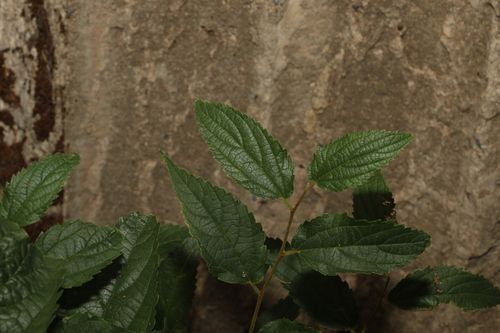
Indian hawthorn (Rhaphiolepis indica)

Indian hawthorn

Rhaphiolepis indica

Environmental weedShrub

How to spot it: Indian Hawthorn is a small shrub 1-2 m tall. The leaves are 3-7 cm long and 0.5-3cm wide with sharply toothed edges. The flowers are present in spring. They have 5 white to pink petals and the 5 sepals are often red though they may not be present.

Plant instead: Blueberry ash, ash quandong, blue (Elaeocarpus reticulatus), Lilly pilly, midjuburi (cadigal) (Acmena smithii), Grey myrtle, ironwood (Backhousia myrtifolia), Wild yellow jasmine (Pittosporum revolutum), Large mock-olive, large-leaved olive (Notelaea longifolia), Muttonwood (Myrsine variabilis); Leptospermum trinervium
How to control it

Manual: Dig or pull out small seedlings. Contact your local council for advice on how to dispose of fruit if removing fruiting plants.

Herbicide options listed by NSW WeedWise: Glyphosate 360 g/L - Cut stump application

Disposal (general advice, not from WeedWise): bag seeds/fruit/tubers for general waste (not green bin) or as advised by council; never dump in bushland.

Always read the herbicide label or APVMA permit, and use a licensed operator where required.

Legal status
  • Listed by: Sydney Weeds Committees garden-escape guide
  • General biosecurity duty applies to all land managers (Biosecurity Act 2015)

NSW WeedWise profile

Photo: no such thing As a weed, CC0 1.0, via iNaturalist (research-grade observation)

Japanese honeysuckle (Lonicera japonica)

Japanese honeysuckle

Lonicera japonica

Environmental weedVine / climber

How to spot it: Japanese honeysuckle is a woody climber. It scrambles over the ground and can climb up to 10 m high in trees and can form mats over 1 m thick. It is semidecidous in cold climates. Leaves: dark green and shiny above and yellowish green below mostly 3–8 cm long and 1–4 cm wide oval or oblong with pointed tips (often lobed on seedlings) smooth on the edges ... Flowers: white, often tinged pink or purple on the outer side, yellowing with age tubular (3-5 cm long) with 2 lips, the upper lip has 4…

Plant instead: Wonga wonga vine (Pandorea pandorana), Purple coral pea, false sarsaparilla, waraburra (Hardenbergia violacea), Hairy apple berry (Billardiera scandens), Climbing guinea flower (Hibbertia scandens), Old man's beard (Clematis aristata), Twining glycine (Glycine clandestina); Headache vine, guwalyari (d'harawal) (Clematis glycinoides) (fragrant)
How to control it

Overview: Successful weed control relies on follow up after the initial efforts. This means looking for and killing regrowth or new seedlings. Using a combination of control methods is usually more successful.

Manual: By hand Small seedlings can be hand pulled. Larger plants will need to be dug out to remove the crown and roots. Contact your local council for disposal advice. Slashing Mowing limits growth and spread of Japanese honeysuckle but does not eradicate it.

Herbicide and timing: Follow-up treatments for regrowth are often required. Spraying Apply herbicide when the plants are actively growing. Ensure that all the leaves are covered. If the thicket is dense, cut back or burn the vine and then spray the regrowth.

Herbicide options listed by NSW WeedWise: Picloram 100 g/L + Triclopyr 300 g/L + Aminopyralid 8 g/L - Thoroughly cover the foliage of plants up to 1.5 m tall via knapsack or handgun. Apply from October to May.; Triclopyr 300 g/L + Picloram 100 g/L - Thoroughly cover the foliage via knapsack or handgun. Only use on plants up to 1.5 m tall and apply from ...; Glyphosate 360 g/L - Cut stump application

Disposal (general advice, not from WeedWise): bag seeds/fruit/tubers for general waste (not green bin) or as advised by council; never dump in bushland.

Always read the herbicide label or APVMA permit, and use a licensed operator where required.

Legal status
  • Listed by: Sydney North Sub-Regional Weeds Committee list (Hornsby, Ku-ring-gai, Lane Cove, North Sydney, Ryde, Willoughby + others)
  • General biosecurity duty applies to all land managers (Biosecurity Act 2015)

NSW WeedWise profile

Photo: Caleb Catto, CC BY 4.0, via iNaturalist (research-grade observation)

Jasmine (Jasminum polyanthum)

Jasmine

Jasminum polyanthum

Environmental weedVine / climber

How to spot it: Jasmine is a vigorous fast-growing evergreen climber with stems up to 10 m long. The leaves are divided into 5-9 leaflets with leaflets up to 7 cm long and 2.5 cm wide. The fragrant flowers are white on top with pink or red on the underside.

Plant instead: Headache vine, guwalyari (d'harawal) (Clematis glycinoides), Old man's beard (Clematis aristata) (white, fragrant), Wonga wonga vine (Pandorea pandorana), Purple coral pea, false sarsaparilla, waraburra (Hardenbergia violacea)
How to control it

Manual: Small plants can be dug out. Ensure that as much of the plant is removed and that stems are disposed of where they cannot resprout.

Herbicide options listed by NSW WeedWise: Fluroxypyr 200 g/L - Spot spray; Fluroxypyr 333 g/L - Spot spray; Glyphosate 360 g/L - Spot spray

Disposal (general advice, not from WeedWise): bag seeds/fruit/tubers for general waste (not green bin) or as advised by council; never dump in bushland.

Always read the herbicide label or APVMA permit, and use a licensed operator where required.

Legal status
  • Listed by: Sydney North Sub-Regional Weeds Committee list (Hornsby, Ku-ring-gai, Lane Cove, North Sydney, Ryde, Willoughby + others)
  • General biosecurity duty applies to all land managers (Biosecurity Act 2015)

NSW WeedWise profile

Photo: Bryce Watts-Parker, CC BY 4.0, via iNaturalist (research-grade observation)

Kei apple (Dovyalis afra (WeedWise; GSRSWMP Appendix lists Dovyalis caffra, body table Dovyalis afra))

Kei apple

Dovyalis afra (WeedWise; GSRSWMP Appendix lists Dovyalis caffra, body table Dovyalis afra)

Regional priorityTree

How to spot it: Kei apple is a dense shrub or small tree with a branched crown that usually grows up to 6 m tall. Plants are either male or female. Young branches have sharp spines up to 6 cm long. Leaves: dark green 2-5 cm long and 1–3 cm wide waxy obviously veined on both leaf surfaces alternate along young stems. Flowers: are creamish green male flowers are 3 mm long and in clusters of 5–10 female flowers are either solitary or in groups of up to 3 are present in late ... Fruit: fleshy and contain 5–15…

Plant instead: Blueberry ash, ash quandong, blue (Elaeocarpus reticulatus), Lilly pilly, midjuburi (cadigal) (Acmena smithii), Grey myrtle, ironwood (Backhousia myrtifolia), Wild yellow jasmine (Pittosporum revolutum), Large mock-olive, large-leaved olive (Notelaea longifolia), Muttonwood (Myrsine variabilis); Blackthorn, boxthorn, sweet bursaria, kurwan (d'harawal) (Bursaria spinosa) (prickly)
How to control it

Overview: When controlling Kei apple, wear gloves, sturdy clothes and shoes and other personal protective equipment to avoid injuries from the spines.

Manual: Small plants can be hand pulled or dug out.

Herbicide and timing: Spot spraying Spray actively growing plants. Apply herbicide to all of the foliage to the point of visible wetness. Basal barking Spray or paint the bark around the stem from ground level to 30 cm high all the way around the plants. Wet thoroughly to the point of runoff.

Herbicide options listed by NSW WeedWise: Fluroxypyr 200 g/L - Basal bark; Fluroxypyr 333 g/L - Basal bark; Glyphosate 360 g/L - Cut stump or stem injection.

Disposal (general advice, not from WeedWise): bag seeds/fruit/tubers for general waste (not green bin) or as advised by council; never dump in bushland.

Always read the herbicide label or APVMA permit, and use a licensed operator where required.

Legal status
  • REGIONAL PRIORITY (Greater Sydney) - ERADICATION
  • WeedWise Greater Sydney duty -> Regional Recommended Measure: Land managers should mitigate the risk of the plant being introduced to their land. Land managers should eradicate the plant from the land and keep the land free of the plant.
  • General biosecurity duty applies to all land managers (Biosecurity Act 2015)

NSW WeedWise profile

Photo: insiderelic, CC0 1.0, via iNaturalist (research-grade observation)

Kikuyu grass (Cenchrus clandestinus (syn. Pennisetum clandestinum))

Kikuyu grass

Cenchrus clandestinus (syn. Pennisetum clandestinum)

Environmental weedGrass / bamboo

How to spot it: Vigorous mat-forming lawn grass spreading by thick runners above and below ground; bright green, hairy leaf sheaths; flowers hidden in leaf sheaths (stamens visible as white threads after mowing). (PlantNET: rhizomatous and stoloniferous perennial.)

Plant instead: Weeping grass (Microlaena stipoides) (shade lawn), Kidney weed, yilibili (d'harawal) (Dichondra repens), Ivy-leaved violet (Viola hederacea); or replace lawn edge with Spiny-headed mat-rush, honey reed (Lomandra longifolia), Blue flax-lily (Dianella caerulea), Kangaroo grass (Themeda triandra) meadow
How to control it

Always read the herbicide label or APVMA permit, and use a licensed operator where required.

Legal status
  • Not a state or regional priority weed. Listed by: Hornsby: named threat to BGHF. General biosecurity duty applies.

Photo: Harry Rose, CC0 1.0, via iNaturalist (research-grade observation)

Lantana (Lantana camara)

Lantana

Lantana camara

State priorityVine / climber

How to spot it: Lantana is a shrub 2 – 4 m high or scrambler that can climb up to 15 m high into trees. There are many different cultivars which are usually divided into five types: Pink lantana—large, pale green leaves with a velvety texture White lantana—small, tough ... Leaves: yellow green to dark green on top paler on the underside usually 2.5-10 cm long and 1.5-4.5 cm wide oval shaped with a rounded or heart-shaped base and bluntly pointed ... Fruit: round berries with one seed shiny, dark purple-black…

Plant instead: Blackthorn, boxthorn, sweet bursaria, kurwan (d'harawal) (Bursaria spinosa), Needlebush (Hakea sericea), Prickly moses (Acacia ulicifolia), Gorse bitter pea (Daviesia ulicifolia) (prickly bird shelter); Coffee bush (Breynia oblongifolia), Large-leaf hop-bush (Dodonaea triquetra), Rice flower, white dogwood, pill flower, sago bush (Ozothamnus diosmifolius), Tick bush (Kunzea ambigua). Replace in stages to keep small-bird habitat.
How to control it

Overview: Successful weed control takes time and follow up efforts to monitor and suppress weeds. A combination of control methods is usually needed. To control lantana: gradually control sections of large infestations, starting at the edges (do as much at a time as you can follow up) dry ...

Manual: When: year round, after rain when soil is moist. Follow-up: within 3 to 6 months. Hand pulling can work on small infestations, isolated plants and in steep areas that machinery cannot access. The best time is after rain when soil is moist.

Herbicide and timing: Pink flowered lantana is easier to control with herbicide. Red flowered varieties are harder to kill. Spraying leaves Small plants less than 2 m can be sprayed at any time of the year as long as they are actively growing. Stressed plants don’t take up much herbicide.

Herbicide options listed by NSW WeedWise: Aminocyclopyrachlor 240 g/L - Spot spray with a handgun, hand-held or backpack sprayer.; Dichlorprop 600 g/L - Spot spray application, completely wet all leaves and stems.; Fluroxypyr 140 g/L + Aminopyralid 10 g/L - Spray actively growing plants. Low rate for seedlings and regrowth 0.5–1.2 m high.

Disposal (general advice, not from WeedWise): bag seeds/fruit/tubers for general waste (not green bin) or as advised by council; never dump in bushland.

Always read the herbicide label or APVMA permit, and use a licensed operator where required.

Legal status
  • STATE PRIORITY - CONTAINMENT AND/OR ASSET PROTECTION
  • WeedWise Greater Sydney duty -> Prohibition on certain dealings: Must not be imported into the state, sold, bartered, exchanged or offered for sale.
  • Listed by: Sydney North Sub-Regional Weeds Committee list (Hornsby, Ku-ring-gai, Lane Cove, North Sydney, Ryde, Willoughby + others); Hornsby: named threat to BGHF; BioNet: named threat to BGHF; Sydney Weeds Committees garden-escape guide
  • General biosecurity duty applies to all land managers (Biosecurity Act 2015)

NSW WeedWise profile

Photo: Matt B, CC BY 4.0, via iNaturalist (research-grade observation)

Leaf cactus (Pereskia aculeata)

Leaf cactus

Pereskia aculeata

State priorityVine / climber

How to spot it: Leaf cactus is a spiny, perennial, climbing shrub that attaches itself to other plants and tangles around trees like a vine. It can reach up to 12 m into the canopy. Leaves: green or yellowish on top sometimes pinkish or purplish on the underneath up to 11 cm long and 5 cm wide oval or oblong with pointed tips waxy and slightly succulent on ... Flowers: white or pale yellow, sometimes aging to pink up to 5.5 cm wide fragrantly scented spiny usually grouped together in bunches present in summer…

Plant instead: Wonga wonga vine (Pandorea pandorana), Purple coral pea, false sarsaparilla, waraburra (Hardenbergia violacea), Hairy apple berry (Billardiera scandens), Climbing guinea flower (Hibbertia scandens), Old man's beard (Clematis aristata), Twining glycine (Glycine clandestina)
How to control it

Overview: Successful weed control relies on follow up after the initial efforts. This means looking for and killing regrowth or new seedlings. Using a combination of control methods is usually more successful.

Manual: Small individual plants may be dug up. Dispose of plants appropriately. Manual removal of anything apart from very small plants is extremely difficult because leaf cactus: is extremely spiny and risky to work with tangles around native vegetation up to 12 m ...

Herbicide and timing: Spraying Apply herbicide to actively growing plants. Ensure that all parts of the plant are covered with the herbicide mix. Re-treatment may be necessary, particularly with large clumps.

Herbicide options listed by NSW WeedWise: Picloram 100 g/L + Triclopyr 300 g/L + Aminopyralid 8 g/L - Follow the label instructions as per Prickly pear (common), smooth tree pear.; Triclopyr 300 g/L + Picloram 100 g/L - Follow the label instructions as per prickly pear common. Spot spray application.; Triclopyr 600 g/L - Follow the label instructions as per common prickly pear (Opuntia spp.). Spray actively growing plants.

Disposal: To dispose of cactus bury them at 1 m deep or burn in a hot fire. Check disposal sites regularly. Alternatively contact your local council for disposal advice.

Always read the herbicide label or APVMA permit, and use a licensed operator where required.

Legal status
  • STATE PRIORITY - CONTAINMENT AND/OR ASSET PROTECTION
  • REGIONAL PRIORITY (Greater Sydney) - ERADICATION
  • WeedWise Greater Sydney duty -> Regional Recommended Measure: Land managers should mitigate the risk of the plant being introduced to their land. Land managers should eradicate the plant from the land and keep the land free of the plant.
  • General biosecurity duty applies to all land managers (Biosecurity Act 2015)

NSW WeedWise profile

Photo: Ben Machado, CC BY 4.0, via iNaturalist (research-grade observation)

Long-leaf willow primrose (Ludwigia longifolia)

Long-leaf willow primrose

Ludwigia longifolia

Environmental weedShrub

How to spot it: Long-leaf willow primrose is an upright annual shrub up to 3 m tall that grows in wet areas and in water. Leaves: long and thin with a pointed tip 10–20 cm long and 0.5–2.5 cm wide larger lower down and smaller higher up the stem stalkless alternate on the stems. Flowers: yellow with 4 (or rarely 5) petals each 2.0–2.5 cm long and 4 red or green sepals single in the junctions of upper leaves present from summer–winter.

Plant instead: Spiny-headed mat-rush, honey reed (Lomandra longifolia), Sedge (Carex maculata), Juncus usitatus, Water gum, kanooka, kanuka (Tristaniopsis laurina), Black wattle, callicoma, silver-leaf butterwood (Callicoma serratifolia), Grey myrtle, ironwood (Backhousia myrtifolia)
How to control it

Overview: Successful weed control relies on follow up after the initial efforts. This means looking for and killing regrowth or new seedlings. Using a combination of control methods is usually more successful.

Manual: Seedlings can be pulled or dug out. Avoid breaking the plant and leaving behind pieces that could start new infestations. It is best to remove plants before they set seed to avoid spreading the seeds.

Herbicide and timing: Spot spraying When : Apply herbicides from 1 September till 30 June or before flowering. Apply to all foliage to the point of visible wetness. Once plants have been killed by herbicides, follow up burning can be useful.

Herbicide options listed by NSW WeedWise: Glyphosate 360 g/L - Handgun spray application. Follow the label instructions for Ludwigia peruviana.

Disposal: Plants can be destroyed by burning or deep burial. Contact your local council for further advice on how to dispose of this weed.

Always read the herbicide label or APVMA permit, and use a licensed operator where required.

Legal status
  • Listed by: Sydney North Sub-Regional Weeds Committee list (Hornsby, Ku-ring-gai, Lane Cove, North Sydney, Ryde, Willoughby + others); Sydney Weeds Committees garden-escape guide
  • General biosecurity duty applies to all land managers (Biosecurity Act 2015)

NSW WeedWise profile

Photo: Petra Holland, CC BY 4.0, via iNaturalist (research-grade observation)

Ludwigia (Ludwigia peruviana)

Ludwigia

Ludwigia peruviana

Regional priorityAquatic

How to spot it: Ludwigia is an upright perennial shrub up to 3 m tall. It is deciduous in cooler climates and evergreen in warmer tropical climates. It can form floating islands on the water surface. Leaves: usually 4–12 cm long and 1–3 cm wide oval to lance-shaped with a pointed tip and narrow base hairy prominently veined usually alternate along the stem. Flowers: bright yellow single, growing in the fork of upper leaves usually with 4 petals (sometimes 5 or 6), each up to 3 cm wide and long surrounded by 4 ...

Plant instead: Spiny-headed mat-rush, honey reed (Lomandra longifolia), Sedge (Carex maculata), Juncus usitatus, Water gum, kanooka, kanuka (Tristaniopsis laurina), Black wattle, callicoma, silver-leaf butterwood (Callicoma serratifolia), Grey myrtle, ironwood (Backhousia myrtifolia)
How to control it

Overview: Successful weed control relies on follow up after the initial efforts. This means looking for and killing regrowth or new seedlings. Using a combination of control methods is usually more successful.

Manual: Seedlings can be pulled or dug out. Avoid breaking the plant and leaving behind pieces that could start new infestations. It is best to remove plants before they set seed to avoid spreading the seeds. Follow up with herbicide may be required.

Herbicide and timing: Spraying When using glyphosate, spray when the plant is actively growing at or beyond the early bloom stage of growth but before autumn change of colour. Apply to all foliage to the point of visible wetness. The permit has restrictions on who can use it. Check the permit before use.

Herbicide options listed by NSW WeedWise: Glyphosate 360 g/L - Spray actively growing plants at or beyond the early bloom stage of growth but before autumn change of ...; Picloram 44.7 g/L + Aminopyralid 4.47 g/L - Cut the stems close to the ground (10 cm or less). Apply a 3–5 mm layer of gel onto stems less than 2 cm ...

Disposal: Plants can be destroyed by burning or deep burial. Contact your local council for further advice on how to dispose of this weed.

Always read the herbicide label or APVMA permit, and use a licensed operator where required.

Legal status
  • REGIONAL PRIORITY (Greater Sydney) - ASSET PROTECTION
  • WeedWise Greater Sydney duty -> Regional Recommended Measure: Land managers should mitigate the risk of the plant being introduced to their land. Land managers should mitigate spread of the plant from their land. A person should not buy, sell, move, carry or release the plant into the environment.
  • Listed by: Sydney North Sub-Regional Weeds Committee list (Hornsby, Ku-ring-gai, Lane Cove, North Sydney, Ryde, Willoughby + others)
  • General biosecurity duty applies to all land managers (Biosecurity Act 2015)

NSW WeedWise profile

Photo: Thomas Mesaglio, CC BY 4.0, via iNaturalist (research-grade observation)
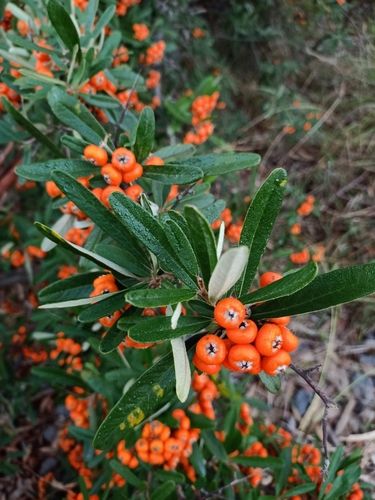
Madeira vine (Anredera cordifolia)

Madeira vine

Anredera cordifolia

State priorityVine / climber

How to spot it: Madeira vine is a perennial twining vine. It flowers in late summer and autumn. Leaves: bright green fleshy heart-shaped 2–15 cm long and 2–10 cm wide hairless and sometimes glossy on stalks 5–15 mm long alternate along the stem. Flowers: white or cream starshaped with 5 petals up to 6 mm long fragrant clustered on drooping flower spikes 6–30 cm long growing from the upper leaf axils.

Plant instead: Wonga wonga vine (Pandorea pandorana), Purple coral pea, false sarsaparilla, waraburra (Hardenbergia violacea), Hairy apple berry (Billardiera scandens), Climbing guinea flower (Hibbertia scandens), Old man's beard (Clematis aristata), Twining glycine (Glycine clandestina)
How to control it

Overview: Successful weed control relies on follow-up after the initial efforts. This means looking for and killing regrowth or new plants. Using a combination of control methods is usually more successful.

Manual: By hand Dig up tubers and collect all plant parts for smaller or immature infestation sites. Dispose of tubers, leaves and stems, as they will regrow when in contact with the soil or if they are exposed to any sunlight.

Herbicide options listed by NSW WeedWise: Glyphosate 360 g/L - Stem scraping application.; Glyphosate 360 g/L + Metsulfuron-methyl 600 g/kg - Spot spray for seedling control.; Fluroxypyr 200 g/L - Apply at times of active growth. Avoid drift on to desirable plants.

Disposal: Madeira vine can be composted. Choose compost sites in areas that can easily be inspected and sprayed if needed.

Always read the herbicide label or APVMA permit, and use a licensed operator where required.

Legal status
  • STATE PRIORITY - CONTAINMENT AND/OR ASSET PROTECTION
  • WeedWise Greater Sydney duty -> Prohibition on certain dealings: Must not be imported into the state, sold, bartered, exchanged or offered for sale.
  • Listed by: Sydney North Sub-Regional Weeds Committee list (Hornsby, Ku-ring-gai, Lane Cove, North Sydney, Ryde, Willoughby + others); Lane Cove common weeds
  • General biosecurity duty applies to all land managers (Biosecurity Act 2015)

NSW WeedWise profile

Photo: Will Cornwell, CC BY 4.0, via iNaturalist (research-grade observation)

Ming asparagus fern (Asparagus macowanii)

Ming asparagus fern

Asparagus macowanii

Regional priorityFern

How to spot it: Ming asparagus fern is a shrub with erect stems that usually grow 1–2.5 m tall, but can grow to 3 m tall. Flowers: white to cream with 6 petals (each 3 mm long) on short stalks about 5 mm long in dense clusters fragrant abundant for a short period in spring or ... Fruit: round to oval berries containing 1 or 2 seeds 7–10 mm in diameter green when young, purple to pinkish-red, then dark reddish ...

Plant instead: Prickly rasp fern (Doodia aspera), Common maidenhair (Adiantum aethiopicum), Rainbow fern (Calochlaena dubia), Blue flax-lily (Dianella caerulea)
How to control it

Overview: Successful weed control requires follow up after the initial efforts. This means looking for and killing regrowth or new seedlings. Using a combination of control methods is usually more successful.

Herbicide and timing: Spot spraying Spray plants when they are actively growing. Follow-up may be needed because the thin cladodes provide little surface area for herbicide uptake.

Herbicide options listed by NSW WeedWise: Glyphosate 360 g/L - Spot spray application; Metsulfuron-methyl 600 g/kg - Spot spray application; Picloram 44.7 g/L + Aminopyralid 4.47 g/L - Rhizome application: prune the shoots to get access to the rhizome apply a 3-5 mm layer of gel across the cut ...

Disposal: Ming asparagus fern may be composted but compost material should not contain any fruit. Regular turning and covering the plants in black plastic can help the compost process.

Always read the herbicide label or APVMA permit, and use a licensed operator where required.

Legal status
  • REGIONAL PRIORITY (Greater Sydney) - ERADICATION
  • WeedWise Greater Sydney duty -> Regional Recommended Measure: Land managers should mitigate the risk of the plant being introduced to their land. Land managers should eradicate the plant from the land and keep the land free of the plant.
  • General biosecurity duty applies to all land managers (Biosecurity Act 2015)

NSW WeedWise profile

Photo: Greg Tasney, CC BY-SA 4.0, via iNaturalist (research-grade observation)

Moonflower (Ipomoea alba)

Moonflower

Ipomoea alba

Environmental weedVine / climber

How to spot it: Moonflower is an annual or perennial climbing plant with twining stems. Leaves: 7–11 cm long and 5–10 cm wide heart-shaped or with 3 shallow lobes on stalks (petioles) 7–11 cm long sometimes slightly fleshy alternate on the stem. Flowers: white with 5 cream to greenish-yellow bands trumpet-shaped with 5 lobes, the tube is 8–14 cm long and the flower is 7–11 cm in diameter open at ...

Plant instead: Wonga wonga vine (Pandorea pandorana), Purple coral pea, false sarsaparilla, waraburra (Hardenbergia violacea), Hairy apple berry (Billardiera scandens), Climbing guinea flower (Hibbertia scandens), Old man's beard (Clematis aristata), Twining glycine (Glycine clandestina)
How to control it

Overview: Successful weed control relies on follow up after the initial efforts. This means looking for and killing regrowth or new seedlings. Using a combination of control methods is usually more successful. Physical removal

Manual: Seedlings and small plants can be hand pulled or removed by a hoe. For larger vines cut the stems at ground level and then dig out as much of the roots as possible. Dispose of plants because the stems can regrow if they are in contact with the ground.

Herbicide and timing: Spot spraying Spray actively growing plants and ensure that all of the foliage is covered with the herbicide mix. For plants growing over trees or shrubs cut stems about waist height move intact stems away from native plants spray all of the foliage that is still connected to the soil.

Herbicide options listed by NSW WeedWise: Picloram 100 g/L + Triclopyr 300 g/L + Aminopyralid 8 g/L - Thoroughly cover the foliage of plants up to 1.5 m tall via knapsack or handgun. Apply from October to May.; Triclopyr 300 g/L + Picloram 100 g/L - Thoroughly cover the foliage of plants up to 1.5 m tall via knapsack or handgun. Apply from October to May.; Glyphosate 360 g/L - Spot spray: Urban bushland, forests and coastal reserves. See permit for critical comments.

Disposal: Contact your local council for advice on how to dispose of this plant.

Always read the herbicide label or APVMA permit, and use a licensed operator where required.

Legal status
  • Listed by: Sydney Weeds Committees garden-escape guide
  • General biosecurity duty applies to all land managers (Biosecurity Act 2015)

NSW WeedWise profile

Photo: Tony van Kampen, CC BY 4.0, via iNaturalist (research-grade observation)

Morning glory - coastal (Ipomoea cairica)

Morning glory - coastal

Ipomoea cairica

Environmental weedVine / climber

How to spot it: Coastal morning glory is a perennial vine with twining stems. It can grow up to 5 m into the canopy. Leaves: lobed with 5–7 deep lobes almost to the base 4–9 cm long and wide hairless or slightly hairy on stalks 2–5 cm long alternate along the stem. Flowers: violet purple or pink (occasionally white) with a darker throat funnel shaped with 5 fused petals 3.5–6 cm long and 6–8 cm in diameter hairless ... Fruit: a capsule green at first, then brown when mature 9–11 mm in diameter divided into…

Plant instead: Wonga wonga vine (Pandorea pandorana), Purple coral pea, false sarsaparilla, waraburra (Hardenbergia violacea), Hairy apple berry (Billardiera scandens), Climbing guinea flower (Hibbertia scandens), Old man's beard (Clematis aristata), Twining glycine (Glycine clandestina)
How to control it

Overview: Successful weed control relies on follow up after the initial efforts. This means looking for and killing regrowth or new seedlings. Using a combination of control methods is usually more successful.

Manual: Hand pulling Small plants and seedlings can be hand pulled. Sometimes larger plants can be pulled out in soft sandy soils. Cutting and digging Climbing stems can be cut and left above the ground to dry out and die.

Herbicide options listed by NSW WeedWise: Picloram 100 g/L + Triclopyr 300 g/L + Aminopyralid 8 g/L - Thoroughly cover the foliage of plants up to 1.5 m tall via knapsack or handgun. Apply from October to May.; Triclopyr 300 g/L + Picloram 100 g/L - Thoroughly cover the foliage of plants up to 1.5 m tall via knapsack or handgun. Apply from October to May.; Glyphosate 360 g/L - Spot-spray for seedling control.

Disposal (general advice, not from WeedWise): bag seeds/fruit/tubers for general waste (not green bin) or as advised by council; never dump in bushland.

Always read the herbicide label or APVMA permit, and use a licensed operator where required.

Legal status
  • Listed by: Sydney North Sub-Regional Weeds Committee list (Hornsby, Ku-ring-gai, Lane Cove, North Sydney, Ryde, Willoughby + others)
  • General biosecurity duty applies to all land managers (Biosecurity Act 2015)

NSW WeedWise profile

Photo: Colin Meurk, CC BY-SA 4.0, via iNaturalist (research-grade observation)

Morning glory - purple (Ipomoea indica)

Morning glory - purple

Ipomoea indica

Environmental weedVine / climber

How to spot it: Purple morning glory is a scrambling perennial vine with long, twining stems, It grows quickly and can reach up to 15 m high into tree canopies. Leaves: 4–17 cm long and 3–15 cm wide heart shaped or with 3 deep lobes pointed at the tips hairy on both sides with short hairs on the upper side and silky dense hairs ... Flowers: blue to purple with a darker coloured throat in the morning then fading to pink in the afternoon funnel shaped with 5 fused petals 5.5–7.5 cm long ...

Plant instead: Wonga wonga vine (Pandorea pandorana), Purple coral pea, false sarsaparilla, waraburra (Hardenbergia violacea), Hairy apple berry (Billardiera scandens), Climbing guinea flower (Hibbertia scandens), Old man's beard (Clematis aristata), Twining glycine (Glycine clandestina)
How to control it

Overview: Successful weed control relies on follow up after the initial efforts. This means looking for and killing regrowth or new seedlings. Using a combination of control methods is usually more successful.

Manual: Climbing stems can be cut and left hanging to wither and die. Make sure no cut stems have contact with the soil. Dig out the roots carefully as they will regrow from parts left in the ground.

Herbicide and timing: Spot spraying Apply to actively growing plants. Cover all of the foliage with the herbicide mix. This method is best for low growing vines. Stem scraping This method reduces the risk of damaging the plants that the vines are growing over.

Herbicide options listed by NSW WeedWise: Picloram 100 g/L + Triclopyr 300 g/L + Aminopyralid 8 g/L - Thoroughly cover the foliage of plants up to 1.5 m tall via knapsack or handgun. Apply from October to May.; Triclopyr 300 g/L + Picloram 100 g/L - Thoroughly cover the foliage of plants up to 1.5 m tall via knapsack or handgun. Apply from October to May.; Glyphosate 360 g/L - Spot-spray for seedling control.

Disposal: Contact your local council for advice on how to dispose of this plant

Always read the herbicide label or APVMA permit, and use a licensed operator where required.

Legal status
  • Listed by: Sydney North Sub-Regional Weeds Committee list (Hornsby, Ku-ring-gai, Lane Cove, North Sydney, Ryde, Willoughby + others); Lane Cove common weeds; Sydney Weeds Committees garden-escape guide
  • General biosecurity duty applies to all land managers (Biosecurity Act 2015)

NSW WeedWise profile

Photo: insiderelic, CC0 1.0, via iNaturalist (research-grade observation)

Moth vine (Araujia sericifera)

Moth vine

Araujia sericifera

Environmental weedVine / climber

How to spot it: Moth vine is a long-lived vine with twining stems that can climb 6-10 m on plants and other structures. The leaf cover is very dense. Leaves: dull, dark green or grey-grey on top, whitish-green below triangular or arrow-shaped 3-11 cm long and 1-6 cm wide thick and leathery slightly hairy on top and sparsely ... Flowers: tube-shaped spreading to 5 petals creamy-white or pink, sometimes with darker pink streaks inside 8-20 mm long and 20-25 mm wide in clusters of 2-5 ... Fruit: egg or…

Plant instead: Wonga wonga vine (Pandorea pandorana), Purple coral pea, false sarsaparilla, waraburra (Hardenbergia violacea), Hairy apple berry (Billardiera scandens), Climbing guinea flower (Hibbertia scandens), Old man's beard (Clematis aristata), Twining glycine (Glycine clandestina)
How to control it

Overview: Take care to avoid contact with the milky sap that is released when the plant is damaged. Wear gloves and other personal protective equipment. Plants produce hundreds of seeds which can live for up to 5 years so follow up work will be needed.

Manual: Seedlings and small plants can be hand pulled or dug out. This is easiest when the soil is damp and loose. If possible remove roots from at least 10 cm below ground to avoid regrowth of the plant.

Herbicide options listed by NSW WeedWise: Glyphosate 360 g/L - Spot spray seedling plants. For use in urban bushland, native forests and coastal reserves.; Glyphosate 360 g/L + Metsulfuron-methyl 600 g/kg - Spot spray plants. See permit for conditions and critical use comments.; Metsulfuron-methyl 600 g/kg - Spot spray. See permit for conditions and critical use comments.

Disposal: Contact your local council for advice on how to dispose of moth vine fruit.

Always read the herbicide label or APVMA permit, and use a licensed operator where required.

Legal status
  • Listed by: Sydney North Sub-Regional Weeds Committee list (Hornsby, Ku-ring-gai, Lane Cove, North Sydney, Ryde, Willoughby + others); Lane Cove common weeds; Sydney Weeds Committees garden-escape guide
  • General biosecurity duty applies to all land managers (Biosecurity Act 2015)

NSW WeedWise profile

Photo: Caleb Catto, CC BY 4.0, via iNaturalist (research-grade observation)

Mysore thorn (Caesalpinia decapetala)

Mysore thorn

Caesalpinia decapetala

Regional priorityVine / climber

How to spot it: Mysore thorn is a prickly, perennial evergreen shrub up to 4 m tall. It can grow up to 20 m high when climbing over supporting vegetation or buildings. Leaves: 7–40 cm long fern-like and made up of 4 –10 pairs of primary leaf segments, which are further divided into 5 -12 pairs of small leaflets. Flowers: yellow or pale yellow (occasionally white) up to 3 cm wide with 5 petals on stalks up to 2.5 cm long in spike-like clusters 5–25 cm long at the tip ...

Plant instead: Wonga wonga vine (Pandorea pandorana), Purple coral pea, false sarsaparilla, waraburra (Hardenbergia violacea), Hairy apple berry (Billardiera scandens), Climbing guinea flower (Hibbertia scandens), Old man's beard (Clematis aristata), Twining glycine (Glycine clandestina); Blackthorn, boxthorn, sweet bursaria, kurwan (d'harawal) (Bursaria spinosa)
How to control it

Overview: Be careful of the prickles when controlling this plant. Ensure that protective clothing is worn to protect your skin and eyes.

Manual: By hand Dig up small plants. Remove all the roots to avoid regrowth. By machinery Larger plants and infestations can be removed by machinery if this will not damage native vegetation. Remove as much of the roots as possible.

Herbicide and timing: In dense infestations check for regrowth and follow up with further applications. Spot spraying Spray actively growing plants. Cover all the foliage with the herbicide mixture. Cut stump method Cut trunks or stems and apply herbicide to the stump within 15 seconds of cutting.

Herbicide options listed by NSW WeedWise: Metsulfuron-methyl 300 g/kg + Aminopyralid 375 g/kg - Thoroughly spray all the foliage and stems until wet. See list on label for suitable wetting agents.; Metsulfuron-methyl 600 g/kg - Spray to thoroughly wet all foliage, but not to cause run off.; Picloram 44.7 g/L + Aminopyralid 4.47 g/L - Cut the stump then apply a 3–5 mm layer of gel for stems less than 20 mm diameter.

Disposal (general advice, not from WeedWise): bag seeds/fruit/tubers for general waste (not green bin) or as advised by council; never dump in bushland.

Always read the herbicide label or APVMA permit, and use a licensed operator where required.

Legal status
  • REGIONAL PRIORITY (Greater Sydney) - PREVENTION
  • WeedWise Greater Sydney duty -> Regional Recommended Measure: The plant should be eradicated from the land and the land kept free of the plant. The plant should not be bought, sold, grown, carried or released into the environment.
  • General biosecurity duty applies to all land managers (Biosecurity Act 2015)

NSW WeedWise profile

Photo: Gordon Cocks, CC BY 4.0, via iNaturalist (research-grade observation)

Ochna (Ochna serrulata)

Ochna

Ochna serrulata

Environmental weedShrub

How to spot it: Ochna is an evergreen perennial shrub that grows 2–3 m tall. The black berries on the red sepals look like Micky Mouse’s face. Leaves: light to dark green and sometimes bronze on new growth usually darker green on top and lighter underneath (mature leaves) narrow and oblong 2–10 cm long and up to 2.5 cm ... Flowers: have 5 yellow petals, each up to 10 mm long have 5 green sepals (leaf-like structures) up to 8 mm long which curve backwards and turn red, staying on ... Fruit: green turning black…

Plant instead: Coffee bush (Breynia oblongifolia), Wild yellow jasmine (Pittosporum revolutum), Muttonwood (Myrsine variabilis), Large mock-olive, large-leaved olive (Notelaea longifolia), Grey myrtle, ironwood (Backhousia myrtifolia) (hedge)
How to control it

Overview: Successful weed control relies on follow up after the initial efforts. This means looking for and killing regrowth or new seedlings. Using a combination of control methods is usually more successful.

Manual: By hand Do not try to pull out plants as they will break off where the root kinks and the plant will regrow. Dig out small plants and seedlings (under 20 cm tall) if the soil is sandy or soft enough. Remove as much of the roots as possible.

Herbicide and timing: When: Anytime but best during warm wet summers. Follow-up: When regrowth appears. Ochna is very hardy and more than one treatment is often needed. Spot spraying Spraying is best for plants below knee high. Apply to all foliage to the point of visible wetness.

Herbicide options listed by NSW WeedWise: Picloram 100 g/L + Triclopyr 300 g/L + Aminopyralid 8 g/L - Spray plants up to 1.5 m tall from October to May. See permit for more critical use comments.; Triclopyr 300 g/L + Picloram 100 g/L - Spray plants up to 1.5 m tall from October to May. See permit for more critical use comments.; Glyphosate 360 g/L - Spot spray. Apply to seedlings/ coppice shoots and shrubs.

Disposal: For advice about the best way to dispose of ochna fruit, contact your local council weed officer.

Always read the herbicide label or APVMA permit, and use a licensed operator where required.

Legal status
  • Listed by: Sydney North Sub-Regional Weeds Committee list (Hornsby, Ku-ring-gai, Lane Cove, North Sydney, Ryde, Willoughby + others); Lane Cove common weeds; BioNet: named threat to BGHF; Sydney Weeds Committees garden-escape guide
  • General biosecurity duty applies to all land managers (Biosecurity Act 2015)

NSW WeedWise profile

Photo: Niko Ioannidis, CC BY 4.0, via iNaturalist (research-grade observation)

Oleander (Nerium oleander)

Oleander

Nerium oleander

Environmental weedShrub

How to spot it: Oleander is an evergreen multi-stemmed shrub up to 8 m high and 3 m wide. The leathery leaves are up to 20 cm long and 3 cm wide. The flowers are usually pink but may be white or red. The fruit is dry reddish brown and up to 15 cm long and 1 cm wide.

Plant instead: Tick bush (Kunzea ambigua), Leptospermum trinervium (Flaky-barked tea-tree, slender tea-tree (Gaudium trinervium)), Hairpin banksia (Banksia spinulosa), Red spider flower (Grevillea speciosa), Large-leaf hop-bush (Dodonaea triquetra), Rice flower, white dogwood, pill flower, sago bush (Ozothamnus diosmifolius)
How to control it

Overview: Use gloves and other personal protective equipment to protect from this poisonous plant.

Manual: Remove the entire plant including the roots. Cut back all the stems to access the stump and roots. Dig out as much of the root system as possible. New shoots will grow from roots left behind.

Herbicide and timing: Basal barking Basal barking can be used for plants with stems up to 5 cm in diameter at the base. Liberally spray the bark all the way around the stem from ground level to 30 cm high. Wet thoroughly to the point of runoff. Apply to dry stems as wet stems can repel the mixture.

Herbicide options listed by NSW WeedWise: Picloram 44.7 g/L + Aminopyralid 4.47 g/L - Cut stump application. Apply a 3–5 mm layer of gel to stems with a diameter less than 20 mm.; Triclopyr 240 g/L + Picloram 120 g/L - Basal bark application for plants with stems up to 5 cm diameter at the base.

Disposal: Contact your local council for advice on disposal. Never burn oleander as the smoke is poisonous.

Always read the herbicide label or APVMA permit, and use a licensed operator where required.

Legal status
  • Listed by: Willoughby: exempt undesirable species (remove without permit)
  • General biosecurity duty applies to all land managers (Biosecurity Act 2015)

NSW WeedWise profile

Photo: Thomas Mesaglio, CC BY 4.0, via iNaturalist (research-grade observation)
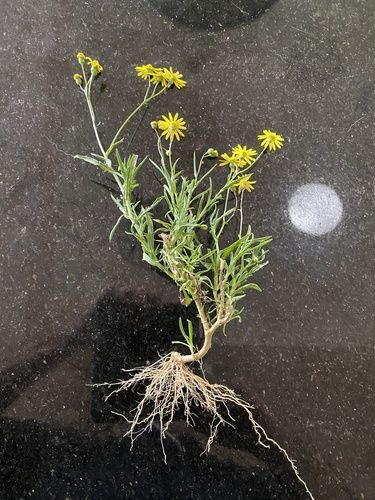
Pampas grass (Cortaderia species)

Pampas grass

Cortaderia species

Regional priorityGrass / bamboo

How to spot it: Pampas grass is a perennial grass that grows in clumps up to 1.5 m wide. There are two species in NSW: Common pampas grass ( Cortaderia selloana ), which is up to 6 m tall when in flower. Leaves: dark to dull green, up to 2 m long and 3 cm wide, erect or arching (common pampas) bright or bluish green up to 2 m long and 2 cm wide, arching (pink pampas) finely ...

Plant instead: Spiny-headed mat-rush, honey reed (Lomandra longifolia), Blue flax-lily (Dianella caerulea), Kangaroo grass (Themeda triandra), Tussock grass (Poa affinis), Rough saw-sedge (Gahnia aspera), Weeping grass (Microlaena stipoides); Gahnia aspera or Lomandra longifolia for bold clumps
How to control it

Overview: Successful weed control relies on follow up after the initial efforts. This means looking for and killing regrowth or new seedlings. Using a combination of control methods is usually more successful.

Manual: By hand Small plants can be dug out. This is easiest after rain when soil is moist. Remove all the roots and rhizomes. Wear long sleeves and gloves as protection from the sharp leaves.

Herbicide and timing: Spaying Spray actively growing plants. Ensure all of the foliage is covered. Taller plants require a higher rate of herbicide. Slashing followed by spraying Avoid slashing seeding plants.

Herbicide options listed by NSW WeedWise: Glyphosate 360 g/L - Spray using a handgun or knapsack. Treat actively growing plants, before flowering, spring to autumn.

Disposal: Whole plants of just the seed heads can be dried then burnt. Contact your local council for further advice on how to dispose of pampas grass.

Always read the herbicide label or APVMA permit, and use a licensed operator where required.

Legal status
  • REGIONAL PRIORITY (Greater Sydney) - ASSET PROTECTION
  • WeedWise Greater Sydney duty -> Regional Recommended Measure: Land managers should mitigate the risk of the plant being introduced to their land. Land managers should mitigate spread of the plant from their land. A person should not buy, sell, move, carry or release the plant into the environment.
  • Listed by: Sydney North Sub-Regional Weeds Committee list (Hornsby, Ku-ring-gai, Lane Cove, North Sydney, Ryde, Willoughby + others)
  • General biosecurity duty applies to all land managers (Biosecurity Act 2015)

NSW WeedWise profile

Photo: Kym Nicolson, CC BY 4.0, via iNaturalist (research-grade observation)

Panic veldtgrass (Ehrharta erecta)

Panic veldtgrass

Ehrharta erecta

Environmental weedGrass / bamboo

How to spot it: Tufted, soft, bright green grass to 0.6 m (PlantNET) with broad flat leaves and open seed heads; seeds prolifically almost year round in moist shade; very common in North Shore gardens and bush edges.

Plant instead: Weeping grass (Microlaena stipoides), Creeping beard grass (Oplismenus imbecillis), Bordered panic (Entolasia marginata), Ivy-leaved violet (Viola hederacea), Pastel flower (Pseuderanthemum variabile)
How to control it

Always read the herbicide label or APVMA permit, and use a licensed operator where required.

Legal status
  • Not a state or regional priority weed. Listed by: BioNet: named threat to BGHF. General biosecurity duty applies.

Photo: Jon Sullivan, CC BY 4.0, via iNaturalist (research-grade observation)

Pellitory (Parietaria judaica)

Pellitory

Parietaria judaica

Environmental weedHerb / groundcover

How to spot it: Pellitory is a much-branched perennial herb, that grows up to 1.0 m. It may be upright or spreading. The stems have four-angles and are greenish-brown or reddish-brown. The leaves and stems are covered in curled hairs that feel sticky.

Plant instead: Kidney weed, yilibili (d'harawal) (Dichondra repens), Ivy-leaved violet (Viola hederacea), Mulga fern / poison rock fern (Cheilanthes sieberi), Necklace fern (Asplenium flabellifolium) (walls and crevices)
How to control it

Overview: Wear personal protective clothing and equipment to avoid touching or inhaling plant parts.

Herbicide options listed by NSW WeedWise: Glyphosate 360 g/L - Apply to actively growing plants before flowering. Re-treatments may be required to control seedlings.

Disposal: Plants can be killed by burning. Contact your local council for further advice on how to dispose pellitory.

Always read the herbicide label or APVMA permit, and use a licensed operator where required.

Legal status
  • Listed by: Sydney North Sub-Regional Weeds Committee list (Hornsby, Ku-ring-gai, Lane Cove, North Sydney, Ryde, Willoughby + others); Lane Cove common weeds
  • General biosecurity duty applies to all land managers (Biosecurity Act 2015)

NSW WeedWise profile

Photo: Josh, CC BY 4.0, via iNaturalist (research-grade observation)

Privet - broad-leaf (Ligustrum lucidum)

Privet - broad-leaf

Ligustrum lucidum

Environmental weedTree

How to spot it: Broad-leaf privet is an evergreen shrub or tree with a single trunk and many branches that form a rounded canopy. They usually grows 4-10 m tall, though maybe up to 15 m when cultivated. Leaves: dark green and glossy on top pale green with prominent veins underneath oval-shaped with a pointed tip 4–13 cm long and 3–6 cm wide hairless opposite along the stem. Flowers: cream or white up to 6 mm in diameter tubular at the base with 4 petal-like lobes that curl backwards sickly sweet smelling in…

Plant instead: Blueberry ash, ash quandong, blue (Elaeocarpus reticulatus), Forest oak (Allocasuarina torulosa), Water gum, kanooka, kanuka (Tristaniopsis laurina), Cheese tree (Glochidion ferdinandi), New south wales christmas-bush, christmas bush (Ceratopetalum gummiferum) (small); Turpentine (Syncarpia glomulifera) or Sydney red gum, rusty gum, smooth-barked apple (Angophora costata) for large sites; Elaeocarpus reticulatus, Lilly pilly, midjuburi (cadigal) (Acmena smithii), Grey myrtle, ironwood (Backhousia myrtifolia), Wild yellow jasmine (Pittosporum revolutum), Large mock-olive, large-leaved olive (Notelaea longifolia), Muttonwood (Myrsine variabilis) (hedges)
How to control it

Overview: Successful weed control requires follow up after the initial efforts. This means looking for and killing regrowth or new seedlings. Using a combination of control methods is usually more successful. Controlling spread

Manual: Broad-leaf privet is easy to pull up when it has a stem diameter of less than 2–3 cm, particularly after rain. Larger plants may be dug out.

Herbicide and timing: Spot spraying Spray actively growing plants up to 3 m tall. Cover all the foliage evenly. Splatter gun Spray actively growing plants up to 3 m tall. Splatter-guns use small amounts of concentrated herbicide. They spray large droplets that limit spray drift.

Herbicide options listed by NSW WeedWise: Glyphosate 360 g/L - Stem injection. Apply 1 mL/cut for trees with trunk diameter 25 cm or less at the base.; Glyphosate 700 g/kg - Capsule herbicide: See critical comments on the label for details on how to apply and seal the capsule in the ...; Metsulfuron-methyl 300 g/kg + Aminopyralid 375 g/kg - Handgun application. Apply to bushes up to 3 m high. Complete foliar spray coverage is essential for control.

Disposal (general advice, not from WeedWise): bag seeds/fruit/tubers for general waste (not green bin) or as advised by council; never dump in bushland.

Always read the herbicide label or APVMA permit, and use a licensed operator where required.

Legal status
  • Listed by: Sydney North Sub-Regional Weeds Committee list (Hornsby, Ku-ring-gai, Lane Cove, North Sydney, Ryde, Willoughby + others); Lane Cove common weeds; Willoughby: exempt undesirable species (remove without permit); BioNet: named threat to BGHF
  • General biosecurity duty applies to all land managers (Biosecurity Act 2015)

NSW WeedWise profile

Photo: tobyyy, CC BY-SA 4.0, via iNaturalist (research-grade observation)

Privet - European (Ligustrum vulgare)

Privet - European

Ligustrum vulgare

Environmental weedShrub

How to spot it: European privet is a deciduous or semi-deciduous, multi-stemmed shrub up to 5 m tall. Leaves: dark green and shiny on both sides narrow, wedge-shaped at the base and pointed at the tip 2–6 cm long and 0.8–2.5 cm wide hairless opposite along the stem. Flowers: white or cream tubular with 4 lobes up to 2 mm long strongly scented 3–4 mm long present in spring and summer. Fruit: berries, usually with 2 seeds but may have up to 4 shiny black to blue-black when ripe (some varieties have green, white or ...

Plant instead: Blueberry ash, ash quandong, blue (Elaeocarpus reticulatus), Lilly pilly, midjuburi (cadigal) (Acmena smithii), Grey myrtle, ironwood (Backhousia myrtifolia), Wild yellow jasmine (Pittosporum revolutum), Large mock-olive, large-leaved olive (Notelaea longifolia), Muttonwood (Myrsine variabilis)
How to control it

Overview: Successful weed control requires follow up after the initial efforts. This means looking for and killing regrowth or new seedlings. Using a combination of control methods is usually more successful.

Manual: Privet can re-establish from seeds or plant parts after physical removal. To limit reinfestation: minimise soil disturbance where possible revegetate bare areas with suitable species check for and treat new plants.

Herbicide and timing: Spot spraying Spray actively growing plants up to 3 m tall. Cover all the foliage evenly. Splatter gun Spray actively growing plants up to 3 m tall. Splatter-guns use small amounts of concentrated herbicide. They spray large droplets that limit spray drift.

Herbicide options listed by NSW WeedWise: Glyphosate 360 g/L - Stem injection. Apply 1 mL/cut for trees with trunk diameter 25 cm or less at the base.; Glyphosate 700 g/kg - Capsule herbicide: See critical comments on the label for details on how to apply and seal the capsule in the ...; Metsulfuron-methyl 300 g/kg + Aminopyralid 375 g/kg - Handgun application. Apply to bushes up to 3 m high. Complete foliar spray coverage is essential for control.

Disposal (general advice, not from WeedWise): bag seeds/fruit/tubers for general waste (not green bin) or as advised by council; never dump in bushland.

Always read the herbicide label or APVMA permit, and use a licensed operator where required.

Legal status
  • Listed by: Willoughby: exempt undesirable species (remove without permit)
  • General biosecurity duty applies to all land managers (Biosecurity Act 2015)

NSW WeedWise profile

Photo: Carl Ramirez, CC BY 4.0, via iNaturalist (research-grade observation)

Privet - narrow-leaf (Ligustrum sinense)

Privet - narrow-leaf

Ligustrum sinense

Environmental weedShrub

How to spot it: Small-leaf privet is a densely branched multi-stemmed evergreen shrub about 3–5 m (occasionally growing up to 7 m). In colder areas it may lose leaves through winter. Leaves: dull green oval-shaped wavy along the edges pointed or round at the tip 20–50 mm long and 15–25 mm wide covered in fine hairs underneath opposite along the stem at right ... Flowers: white with mauve to purple anthers tubular with 0.5–2 mm long tubes and 3.5 mm lobes in clusters very fragrant mostly produced in spring but can ...

Plant instead: Blueberry ash, ash quandong, blue (Elaeocarpus reticulatus), Lilly pilly, midjuburi (cadigal) (Acmena smithii), Grey myrtle, ironwood (Backhousia myrtifolia), Wild yellow jasmine (Pittosporum revolutum), Large mock-olive, large-leaved olive (Notelaea longifolia), Muttonwood (Myrsine variabilis); Coffee bush (Breynia oblongifolia), Lance-leaf beard-heath (Leucopogon lanceolatus) (fine-leaved hedge)
How to control it

Overview: Wide dispersal of seed by birds cannot be controlled; therefore controlling the spread of privet requires the removal of seed trees and young seedlings before they produce seed. Successful weed control requires follow up after the initial efforts.

Manual: These methods will reduce the seeding capacity of a large infestations but will not eradicate it. Follow-up with herbicide control or manual removal. Revegetate treated areas with trees, shrubs, ground covers or pastures and repeatedly hand-weeded or slashed.

Herbicide and timing: Spraying Spraying is suitable for plants up to 3 m tall and those in dense infestations when there is no risk of spraying desirable vegetation. Spray actively growing plants that are not under any heat or moisture stress. Completely cover all the foliage for successful control.

Herbicide options listed by NSW WeedWise: Glyphosate 360 g/L - Stem injection. Apply 1 mL/cut for trees with trunk diameter 25 cm or less at the base.; Glyphosate 700 g/kg - Capsule herbicide: See critical comments on the label for details on how to apply and seal the capsule in the ...; Metsulfuron-methyl 300 g/kg + Aminopyralid 375 g/kg - Handgun application. Apply to bushes up to 3 m high. Complete foliar spray coverage is essential for control.

Disposal (general advice, not from WeedWise): bag seeds/fruit/tubers for general waste (not green bin) or as advised by council; never dump in bushland.

Always read the herbicide label or APVMA permit, and use a licensed operator where required.

Legal status
  • Listed by: Sydney North Sub-Regional Weeds Committee list (Hornsby, Ku-ring-gai, Lane Cove, North Sydney, Ryde, Willoughby + others); Lane Cove common weeds; Willoughby: exempt undesirable species (remove without permit); BioNet: named threat to BGHF
  • General biosecurity duty applies to all land managers (Biosecurity Act 2015)

NSW WeedWise profile

Photo: O.Neate, CC BY-SA 4.0, via iNaturalist (research-grade observation)

Rhizomatous bamboo (Phyllostachys species)

Rhizomatous bamboo

Phyllostachys species

Environmental weedGrass / bamboo

How to spot it: Rhizomatous bamboos are perennial grass plants that grow 2–6 m tall and can live for many years. There are two species that have naturalised in NSW: Golden bamboo or fishpole bamboo ( Phyllostachys aurea ) Black bamboo ( Phyllostachys nigra ). Leaves: There are 2 types of leaves. Foliage leaves grow on branches from the main stem and are: are lance shaped 7–10 cm long and up to1.5 cm wide (black bamboo) 5–15 cm long ...

Plant instead: Blueberry ash, ash quandong, blue (Elaeocarpus reticulatus), Lilly pilly, midjuburi (cadigal) (Acmena smithii), Grey myrtle, ironwood (Backhousia myrtifolia), Wild yellow jasmine (Pittosporum revolutum), Large mock-olive, large-leaved olive (Notelaea longifolia), Muttonwood (Myrsine variabilis); Spiny-headed mat-rush, honey reed (Lomandra longifolia), Rough saw-sedge (Gahnia aspera) (screening clumps)
How to control it

Overview: Successful weed control relies on follow up after the initial efforts. This means looking for and killing regrowth or new plants. Using a combination of control methods is usually more successful. Regularly check control sites for regrowth.

Manual: By hand Plants can be manually removed by digging out the base of the plant and removing all the rhizomes and roots. By machine Large infestations can be removed by excavators. Permits may be required if the bamboo is close to waterways or native vegetation.

Herbicide and timing: Spot spraying Apply the herbicide mix to actively growing plants. Ensure that all of the foliage is covered with the herbicide. Cut stump method Cut each individual stem close to the ground and apply herbicide to the stump within 15 seconds.

Herbicide options listed by NSW WeedWise: Glyphosate 360 g/L - Spot spray regrowth at 0.5 m tall. For use in urban bushland, native forests and coastal reserves.

Disposal: Stems and leaves can be mulched. Contact your local council for further advice on disposal.

Always read the herbicide label or APVMA permit, and use a licensed operator where required.

Legal status
  • General biosecurity duty applies to all land managers (Biosecurity Act 2015)

NSW WeedWise profile

Photo: Thomas Mesaglio, CC BY 4.0, via iNaturalist (research-grade observation)
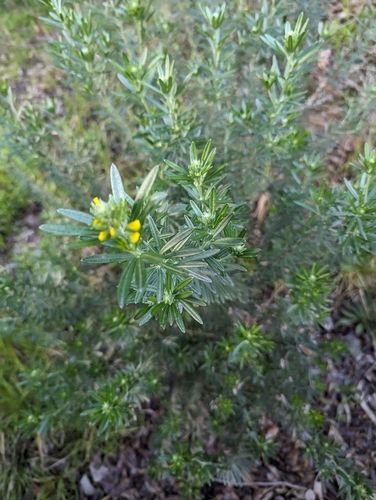
Rhus tree (Toxicodendron succedaneum)

Rhus tree

Toxicodendron succedaneum

Environmental weedTree

How to spot it: Rhus is a small, deciduous tree 5–8 m tall. If unpruned it forms a spreading crown on a single trunk. Trunks are covered in smooth, grey bark. Leaves: 20–35 cm long divided into 9–15 leaflets (mostly 11) leaflets are: bright green on top often greyish underneath because of a waxy bloom on the leaf surface bright red in ... Flowers: small creamy white, creamy yellow, or yellowish-green in large clusters 8–15 cm long present among new leaves in spring and early summer. Fruit: pale brown or fawn…

Plant instead: Blueberry ash, ash quandong, blue (Elaeocarpus reticulatus), Forest oak (Allocasuarina torulosa), Water gum, kanooka, kanuka (Tristaniopsis laurina), Cheese tree (Glochidion ferdinandi), New south wales christmas-bush, christmas bush (Ceratopetalum gummiferum) (small); Turpentine (Syncarpia glomulifera) or Sydney red gum, rusty gum, smooth-barked apple (Angophora costata) for large sites; Ceratopetalum gummiferum
How to control it

Overview: Successful weed control relies on follow up after the initial efforts. This means looking for and killing regrowth or new seedlings. Using a combination of control methods is usually more successful. Take extreme care to avoid skin contact with both living and dead plants.

Manual: Physical removal carries a high risk of allergic reaction. Wear personal protective equipment. Dig out the entire plant to discourage suckering. The best time to remove plants is in winter because the sap levels are lowest when the tree has no leaves.

Herbicide and timing: Cut stump method Cut trunks or stems and apply herbicide to the stump within 15 seconds of cutting. Bag and dispose of any brushes used to paint the stumps. Stem injection Treat in summer when the tree is actively growing.

Herbicide options listed by NSW WeedWise: Glyphosate 360 g/L - Stem injection technique, as per label. Use 1 m L for trees under 25 cm at the base and 2 mL for trees 25-60 ...; Glyphosate 700 g/kg - Capsule herbicide: See critical comments on the label for details on how to apply and seal the capsule in the ...; Picloram 44.7 g/L + Aminopyralid 4.47 g/L - Cut stump for small plants: Apply a 3–5 mm layer of gel onto stems less than 2 cm diameter.

Disposal: Bury or dispose of all plant material to landfill. Do not mulch or chip any part of the plant. The toxic resin remains active for months, even after weathering.

Always read the herbicide label or APVMA permit, and use a licensed operator where required.

Legal status
  • Listed by: Sydney North Sub-Regional Weeds Committee list (Hornsby, Ku-ring-gai, Lane Cove, North Sydney, Ryde, Willoughby + others)
  • General biosecurity duty applies to all land managers (Biosecurity Act 2015)

NSW WeedWise profile

Photo: Carl Ramirez, CC BY 4.0, via iNaturalist (research-grade observation)

Scotch broom (Cytisus scoparius subsp. scoparius)

Scotch broom

Cytisus scoparius subsp. scoparius

State priorityShrub

How to spot it: Scotch broom is an upright shrub that usually grows 1.0-2.5 m tall but can be up to 4 m high. Plants can live for decades and may be deciduous in some conditions. Leaves: dark green usually in groups of three leaflets with the middle leaf longer than the outer two 5–20 mm long and 1.5–8 mm wide oval to lance shaped hairy on the underside ... Flowers: yellow and pea-like 2–2.5 cm long single or in pairs mostly present from spring to early summer.

Plant instead: Eggs and bacon (Dillwynia retorta), Bronze bush-pea, hairy bush-pea (Pultenaea villosa), Graceful bush-pea (Pultenaea flexilis), Sweet wattle (Acacia suaveolens)
How to control it

Overview: Integrated management programs are essential for long-term control. This involves using a combination of control methods to get the best possible results. Repeated removal of above-ground growth, by slashing, grazing or fire, will suppress plants but will not destroy them.

Manual: Physical removal is easiest after rain when soil is moist. Check sites within 6 months for regrowth. Check earlier if there are fires or soil disturbances that can cause seeds to sprout. By hand Plants may be dug out by hand.

Herbicide options listed by NSW WeedWise: Glyphosate 360 g/L - Cut stump or stem inject method. Use the higher rate for plants with a stem diameter greater than 5 cm.; Picloram 100 g/L + Triclopyr 300 g/L + Aminopyralid 8 g/L - Spray the lower rate when plants are actively growing mid-summer to pod formation.; Picloram 44.7 g/L + Aminopyralid 4.47 g/L - Cut stump for small plants: Apply a 3–5 mm layer of gel onto stems less than 2 cm diameter.

Disposal: Plants can be burnt or contact your local council for other disposal advice.

Always read the herbicide label or APVMA permit, and use a licensed operator where required.

Legal status
  • STATE PRIORITY - CONTAINMENT AND/OR ASSET PROTECTION
  • REGIONAL PRIORITY (Greater Sydney) - ASSET PROTECTION
  • WeedWise Greater Sydney duty -> Prohibition on certain dealings: Must not be imported into the state, sold, bartered, exchanged or offered for sale.
  • WeedWise Greater Sydney duty -> Regional Recommended Measure: Land managers should mitigate the risk of the plant being introduced to their land. Land managers should mitigate spread of the plant from their land. A person should not buy, sell, move, carry or release the plant into the environment.
  • General biosecurity duty applies to all land managers (Biosecurity Act 2015)

NSW WeedWise profile

Photo: insiderelic, CC0 1.0, via iNaturalist (research-grade observation)

Sicklethorn (Asparagus falcatus)

Sicklethorn

Asparagus falcatus

Regional priorityVine / climber

How to spot it: Sicklethorn is a robust woody climber that grows over other plants. Foliage is present year-round with most growth occurring from autumn to spring. Flowers: white with 6 petals (2.5–3.5 mm long) on short stalks fragrant in elongated clusters 1.5 – 3 cm long present from spring to early summer. Fruit: round berries with 1–3 seeds bright red when mature 7–10 mm in diameter mostly produced from summer to autumn, though sometimes ...

Plant instead: Wonga wonga vine (Pandorea pandorana), Purple coral pea, false sarsaparilla, waraburra (Hardenbergia violacea), Hairy apple berry (Billardiera scandens), Climbing guinea flower (Hibbertia scandens), Old man's beard (Clematis aristata), Twining glycine (Glycine clandestina)
How to control it

Manual: Hand pulling Small plants can be hand pulled however ensure all the crown is removed. Crowning Crowning is a technique of digging out the entire crown that sits just below the surface of the soil. The roots and tubers are left in the soil.

Herbicide and timing: Cut stump This method can be applied to the crown or the stems. Cut all the stems horizontally at the base where they meet the rhizomes (crown). Apply the herbicide across the cut surface of the rhizomes.

Herbicide options listed by NSW WeedWise: Glyphosate 360 g/L - Spot spray application; Metsulfuron-methyl 600 g/kg - Spot spray application; Picloram 44.7 g/L + Aminopyralid 4.47 g/L - Rhizome application: prune the shoots to get access to the rhizome apply a 3-5 mm layer of gel across the cut ...

Disposal: When dry, the crown and any fruiting stems can be incinerated. Ask your local council for alternative disposal methods.

Always read the herbicide label or APVMA permit, and use a licensed operator where required.

Legal status
  • REGIONAL PRIORITY (Greater Sydney) - CONTAINMENT
  • WeedWise Greater Sydney duty -> Regional Recommended Measure: Central Coast Council is classified as the core infestation area. An exclusion zone is established for the rest of the region. Whole of region: Land managers should mitigate the risk of the plant being introduced to their land.
  • General biosecurity duty applies to all land managers (Biosecurity Act 2015)

NSW WeedWise profile

Photo: insiderelic, CC0 1.0, via iNaturalist (research-grade observation)

Singapore daisy (Sphagneticola trilobata)

Singapore daisy

Sphagneticola trilobata

Regional priorityHerb / groundcover

How to spot it: Singapore daisy is a creeping, perennial herb that forms dense mats. It can be up to 70 cm tall when flowering. Leaves: glossy dark green above, paler underneath 3–11 cm long and 2–8 cm wide fleshy usually with 3 pointed lobes toothed along the edges in opposite pairs along the stem. Flowers: yellow–orange daisies up to 3 cm wide made up of 4–14 petals with finely toothed tips on stalks 3–14 cm long (one per stalk) present year round ...

Plant instead: Climbing guinea flower (Hibbertia scandens), Kidney weed, yilibili (d'harawal) (Dichondra repens), Ivy-leaved violet (Viola hederacea), Forest goodenia, ivy goodenia (Goodenia hederacea), Brachyscome (local native daisy)
How to control it

Overview: Successful weed control relies on follow up after the initial efforts. This means looking for and killing regrowth or new seedlings. Using a combination of control methods is usually more successful.

Manual: By hand Hand pull or dig out as much of the plant as possible. Dispose of the material carefully as new plants can grow from very small parts and from seeds in the soil. Repeated hand pulling or follow up with a registered herbicide is often necessary.

Herbicide and timing: Spot spraying Spray actively growing plants. Apply herbicide to all of the foliage to the point of visible wetness.

Herbicide options listed by NSW WeedWise: Glyphosate 360 g/L + Metsulfuron-methyl 600 g/kg - Spot spray application.; Metsulfuron-methyl 600 g/kg - Spot spray; Aminocyclopyrachlor 240 g/L - Spot spray with a handgun, hand-held sprayer or backpack sprayer.

Disposal (general advice, not from WeedWise): bag seeds/fruit/tubers for general waste (not green bin) or as advised by council; never dump in bushland.

Always read the herbicide label or APVMA permit, and use a licensed operator where required.

Legal status
  • REGIONAL PRIORITY (Greater Sydney) - ASSET PROTECTION
  • WeedWise Greater Sydney duty -> Regional Recommended Measure: Land managers should mitigate the risk of the plant being introduced to their land. Land managers should mitigate spread of the plant from their land. A person should not buy, sell, move, carry or release the plant into the environment.
  • General biosecurity duty applies to all land managers (Biosecurity Act 2015)

NSW WeedWise profile

Photo: Martin Hannan-Jones, CC BY 4.0, via iNaturalist (research-grade observation)

Skunk vine (Paederia foetida)

Skunk vine

Paederia foetida

Regional priorityVine / climber

How to spot it: Skunk vine is a twining perennial vine. It can smother the ground and climb over other plants and structures. Plants may be evergreen or deciduous. Leaves: green to dark green on top and sparsely covered in bristly hairs lighter green underneath, veins lined with transparent, bristly hairs fringed with sharp stiff hairs ... Flowers: white to cream outside and dark purplish red inside funnel-shaped with 4 or 5 lobes 7–11 mm long covered in soft hairs on the outside Fruit: a round capsule with…

Plant instead: Wonga wonga vine (Pandorea pandorana), Purple coral pea, false sarsaparilla, waraburra (Hardenbergia violacea), Hairy apple berry (Billardiera scandens), Climbing guinea flower (Hibbertia scandens), Old man's beard (Clematis aristata), Twining glycine (Glycine clandestina)
How to control it

Overview: Skunk vine’s extensive network of stems, make it difficult to control. Control may need to be repeated to be successful. Combining several control options may be the most effective way to kill skunk vine.

Manual: Seedlings and small plants can be hand pulled or dug out. This is easiest when soil is damp and loose. Remove as much of the roots as possible and do not leave any stems in contact with the soil as they will regrow.

Herbicide and timing: Spot spraying Spray actively growing plants, cover all the foliage. When spraying skunk vine that is smothering native or other desirable plants: cut the stems of skunk vine at waist height leave upper parts to die move lower intact stems away from native plants and spray these stems and leaves.

Herbicide options listed by NSW WeedWise: Fluroxypyr 200 g/L - Spot spray; Fluroxypyr 333 g/L - Spot spray; Glyphosate 360 g/L - Spot spray

Disposal (general advice, not from WeedWise): bag seeds/fruit/tubers for general waste (not green bin) or as advised by council; never dump in bushland.

Always read the herbicide label or APVMA permit, and use a licensed operator where required.

Legal status
  • REGIONAL PRIORITY (Greater Sydney) - ERADICATION
  • WeedWise Greater Sydney duty -> Regional Recommended Measure: Land managers should mitigate the risk of the plant being introduced to their land. Land managers should eradicate the plant from the land and keep the land free of the plant.
  • General biosecurity duty applies to all land managers (Biosecurity Act 2015)

NSW WeedWise profile

Photo: yajapin, CC BY 4.0, via iNaturalist (research-grade observation)

Snakefeather (Asparagus scandens)

Snakefeather

Asparagus scandens

State priorityVine / climber

How to spot it: Snakefeather is a perennial, low growing herb with twining stems that can climb up to 3 m high. Flowers: white to pinkish on short stalks singular or in groups of 1–3 usually present from late autumn to spring. Fruit: glossy round berries, usually with only one seed orange-red when ripe 5–7 mm in diameter mostly present in spring but can be ...

Plant instead: Wonga wonga vine (Pandorea pandorana), Purple coral pea, false sarsaparilla, waraburra (Hardenbergia violacea), Hairy apple berry (Billardiera scandens), Climbing guinea flower (Hibbertia scandens), Old man's beard (Clematis aristata), Twining glycine (Glycine clandestina)
How to control it

Overview: Successful weed control relies on follow-up after the initial efforts. This means looking for and killing regrowth or new seedlings. Using a combination of control methods is usually more successful. Check infested sites regularly, plants as small as 10 cm high can produce fruit.

Manual: Hand pulling Seedlings can be hand pulled. Crowning Crowning is a technique of digging out the entire crown that sits just below the surface of the soil. The roots and tubers are left in the soil.

Herbicide and timing: Cut stump This method can be applied to the crown or the stems. Cut all the stems horizontally at the base where they meet the rhizomes (crown). Apply the herbicide across the cut surface of the rhizomes.

Herbicide options listed by NSW WeedWise: Fluroxypyr 200 g/L - Spot spray mid-June to late August.; Fluroxypyr 333 g/L - Spot spray mid-June to late August.; Glyphosate 360 g/L - Spot spray.

Disposal: Snakefeather plants can be buried at least one metre deep to prevent reshooting. Crowns and rhizomes can be placed in a black plastic bag and left out in the sun to heat up until they are no longer ...

Always read the herbicide label or APVMA permit, and use a licensed operator where required.

Legal status
  • STATE PRIORITY - CONTAINMENT AND/OR ASSET PROTECTION
  • WeedWise Greater Sydney duty -> Prohibition on certain dealings: Must not be imported into the state, sold, bartered, exchanged or offered for sale.
  • General biosecurity duty applies to all land managers (Biosecurity Act 2015)

NSW WeedWise profile

Photo: Sofia Zvolanek, CC BY 4.0, via iNaturalist (research-grade observation)

Spanish broom (Spartium junceum)

Spanish broom

Spartium junceum

Regional priorityHerb / groundcover

How to spot it: Spanish broom grows up to 5 m high. Its yellow flowers are pea-like and sweetly fragrant.

Plant instead: Eggs and bacon (Dillwynia retorta), Graceful bush-pea (Pultenaea flexilis), White wattle (Acacia linifolia)
How to control it

Herbicide options listed by NSW WeedWise: Fluroxypyr 200 g/L - Spot spray; Fluroxypyr 333 g/L - Spot spray; Glyphosate 360 g/L - Spot spray

Disposal (general advice, not from WeedWise): bag seeds/fruit/tubers for general waste (not green bin) or as advised by council; never dump in bushland.

Always read the herbicide label or APVMA permit, and use a licensed operator where required.

Legal status
  • REGIONAL PRIORITY (Greater Sydney) - PREVENTION
  • WeedWise Greater Sydney duty -> Regional Recommended Measure: Land managers should mitigate the risk of the plant being introduced to their land. Land managers should eradicate the plant from the land and keep the land free of the plant.
  • General biosecurity duty applies to all land managers (Biosecurity Act 2015)

NSW WeedWise profile

Photo: herbie-hancock, CC BY 4.0, via iNaturalist (research-grade observation)

Taiwan lily (Lilium formosanum)

Taiwan lily

Lilium formosanum

Environmental weedBulb / lily

How to spot it: Taiwan lily is a perennial herb up to 2 m tall. It has thin leaves that are up to 15 cm long and 1 cm wide. The leaves are alternate along the stem and the leaves higher up the stem are smaller than those below.

Plant instead: Blue flax-lily (Dianella caerulea), Pale vanilla-lily (Arthropodium milleflorum), Silky purple-flag (Patersonia sericea)
How to control it

Herbicide options listed by NSW WeedWise: Glyphosate 360 g/L + Metsulfuron-methyl 600 g/kg - Spot spray application between flowering and fruiting.; Metsulfuron-methyl 600 g/kg - Spot spray application between flowering and fruiting.; Picloram 44.7 g/L + Aminopyralid 4.47 g/L - Prune all of the shoots horizontally at the rhizome. Apply a 3–5 mm layer of gel across the cut surface on ...

Disposal (general advice, not from WeedWise): bag seeds/fruit/tubers for general waste (not green bin) or as advised by council; never dump in bushland.

Always read the herbicide label or APVMA permit, and use a licensed operator where required.

Legal status
  • Listed by: Sydney Weeds Committees garden-escape guide
  • General biosecurity duty applies to all land managers (Biosecurity Act 2015)

NSW WeedWise profile

Photo: James K. Douch, CC BY-SA 4.0, via iNaturalist (research-grade observation)

Trad (Tradescantia fluminensis)

Trad

Tradescantia fluminensis

Environmental weedCactus / succulent

How to spot it: Trad is a slightly succulent groundcover that forms very dense mats. It is usually perennial but sometimes annual. Leaves: dark green and shiny with prominent midveins 2.5–5.5 cm long and 1–2.5 cm wide oval to lance shaped with a pointed tip attached to the stem via a sheath that has fine ... Flowers: white with 3 petals, each 7–10 mm long, and 3 green sepals (leaf-like structures) under the petals on stalks 1–2 cm long present in spring–summer, ... Fruit: capsules about 2 mm long not known to…

Plant instead: Ivy-leaved violet (Viola hederacea), Kidney weed, yilibili (d'harawal) (Dichondra repens), Native wandering jew / scurvy weed (Commelina cyanea), Pastel flower (Pseuderanthemum variabile), Whiteroot (Lobelia purpurascens), Creeping beard grass (Oplismenus imbecillis), Common maidenhair (Adiantum aethiopicum) (Commelina cyanea is the native look-alike)
How to control it

Overview: Successful weed control relies on follow up after the initial efforts. This means looking for and killing regrowth or new seedlings. Using a combination of control methods is usually more successful.

Manual: By hand Small infestations can be pulled out, but all stems and roots must be removed to avoid re-growth. Raking and Rolling Thick patches can be raked and rolled into bundles where there are no desirable plants.

Herbicide and timing: Combine herbicide with a wetting agent. Repeated follow-up treatments are required. Spot spraying Spraying is suitable for dense infestations that are not too close to other desirable plants. Apply herbicide to actively growing plants. Ensure that all the foliage is covered.

Herbicide options listed by NSW WeedWise: Glyphosate 360 g/L - Spray evenly to cover all of the foliage. For use in urban bushland, forests and coastal reserves.; Aminocyclopyrachlor 240 g/L - Spot spray with a handgun, hand-held sprayer or backpack sprayer.; Fluroxypyr 200 g/L - Foliar application. Re-treatment necessary. Young plants up to and including flowering.

Disposal: Disposal of all plant parts carefully. In hot weather bundles of trad can be covered by plastic sheets for 2-6 weeks. Ensure that the trad is in a flood free area that will not be disturbed.

Always read the herbicide label or APVMA permit, and use a licensed operator where required.

Legal status
  • Listed by: Sydney North Sub-Regional Weeds Committee list (Hornsby, Ku-ring-gai, Lane Cove, North Sydney, Ryde, Willoughby + others); Lane Cove common weeds; Sydney Weeds Committees garden-escape guide
  • General biosecurity duty applies to all land managers (Biosecurity Act 2015)

NSW WeedWise profile

Photo: Harry Rose, CC0 1.0, via iNaturalist (research-grade observation)

Tree-of-heaven (Ailanthus altissima)

Tree-of-heaven

Ailanthus altissima

Environmental weedTree

How to spot it: Tree-of-heaven is a deciduous tree or shrub that can grow up to 20 m high. It suckers from the shallow roots and forms multiple stems. Leaves: usually 20–35 cm long, though may be up to 100 cm long alternate along the stem made up of 9-21 leaflets (can be up to 41) which are: dark green, turning yellow and ... Flowers: white or greenish yellow very small with 5 petals (each 2-4 mm long) woolly at the base present in late spring and summer. Fruit: yellow to green, turning reddish as they mature…

Plant instead: Blueberry ash, ash quandong, blue (Elaeocarpus reticulatus), Forest oak (Allocasuarina torulosa), Water gum, kanooka, kanuka (Tristaniopsis laurina), Cheese tree (Glochidion ferdinandi), New south wales christmas-bush, christmas bush (Ceratopetalum gummiferum) (small); Turpentine (Syncarpia glomulifera) or Sydney red gum, rusty gum, smooth-barked apple (Angophora costata) for large sites
How to control it

Overview: Wear protective clothing to protect your skin and eyes from sap. If allergic to the pollen, do not control the trees when flowering.

Manual: Dig or pull out young seedlings by hand. Remove and dispose of all the roots. It is difficult to remove all the roots in older plants once the taproot has developed.

Herbicide and timing: Spraying Spot spray small plants that are too big to be removed by hand. Apply herbicide to actively growing plants. Ensure that all of the foliage is covered with herbicide. Basal barking Use basal bark application for plants with stems up to 10 cm diameter at the base.

Herbicide options listed by NSW WeedWise: Hexazinone 250 g/L - For use on bushes up to 3 m tall. Do not apply near desirable trees.; Metsulfuron-methyl 600 g/kg + Glyphosate 360 g/L - Spray actively growing trees.; Metsulfuron-methyl 600 g/kg - Spray actively growing trees, thoroughly wet all of the foliage but not to the point of run-off.

Disposal (general advice, not from WeedWise): bag seeds/fruit/tubers for general waste (not green bin) or as advised by council; never dump in bushland.

Always read the herbicide label or APVMA permit, and use a licensed operator where required.

Legal status
  • Listed by: Willoughby: exempt undesirable species (remove without permit)
  • General biosecurity duty applies to all land managers (Biosecurity Act 2015)

NSW WeedWise profile

Photo: Billie, CC0 1.0, via iNaturalist (research-grade observation)

Turkey rhubarb (Rumex sagittatus)

Turkey rhubarb

Rumex sagittatus

Environmental weedVine / climber

How to spot it: Turkey rhubarb is a perennial climber or creeper. The stems die back in winter in colder areas, and under drought conditions. New shoots grow from the roots in warmer weather. Leaves: bright green 2–10 cm long and 1–7 cm wide arrow-shaped soft, slightly fleshy and hairless on stalks as long or longer than the leaf alternate along the stem. Flowers: green to whitish or purplish small with petals about 1 mm long in large, multi-branched clusters present from late spring to autumn. Fruit: small…

Plant instead: Wonga wonga vine (Pandorea pandorana), Purple coral pea, false sarsaparilla, waraburra (Hardenbergia violacea), Hairy apple berry (Billardiera scandens), Climbing guinea flower (Hibbertia scandens), Old man's beard (Clematis aristata), Twining glycine (Glycine clandestina)
How to control it

Overview: Successful weed control relies on follow up after the initial efforts. This means looking for and controlling regrowth or new seedlings.

Manual: By hand Move the leaf litter away from the base of the plant and dig down until you reach the tuber. Remove the tubers and rhizomes. Bag and dispose of the plant including flowerheads and fruit.

Herbicide and timing: Spraying Apply the herbicide mix to actively growing plants. Ensure that the herbicide covers all the foliage. Scrape and paint Cut the stems about 40 cm from the ground. Lightly scrape the stem and paint the exposed area with concentrated herbicide within 15 seconds.

Herbicide options listed by NSW WeedWise: Glyphosate 360 g/L - Spot spray application

Disposal (general advice, not from WeedWise): bag seeds/fruit/tubers for general waste (not green bin) or as advised by council; never dump in bushland.

Always read the herbicide label or APVMA permit, and use a licensed operator where required.

Legal status
  • Listed by: Sydney North Sub-Regional Weeds Committee list (Hornsby, Ku-ring-gai, Lane Cove, North Sydney, Ryde, Willoughby + others); Lane Cove common weeds
  • General biosecurity duty applies to all land managers (Biosecurity Act 2015)

NSW WeedWise profile

Photo: Harry Rose, CC0 1.0, via iNaturalist (research-grade observation)

Tussock paspalum (Paspalum quadrifarium)

Tussock paspalum

Paspalum quadrifarium

Environmental weedHerb / groundcover

How to spot it: Tussock paspalum grows in large bluish-green tufts reaching 2 m high. The leaves are up to 70 cm long and 9 mm wide and are sometimes rolled inwards. They are hairless except near the ligule.

Plant instead: Spiny-headed mat-rush, honey reed (Lomandra longifolia), Blue flax-lily (Dianella caerulea), Kangaroo grass (Themeda triandra), Tussock grass (Poa affinis), Rough saw-sedge (Gahnia aspera), Weeping grass (Microlaena stipoides)
How to control it

Manual: Single plants or small infestations can be dug out by hand.

Herbicide options listed by NSW WeedWise: Glyphosate 360 g/L - Spot spray application; Flupropanate 745 g/L - Knapsack spot spray when plants are actively growing, preferably November to April.

Disposal (general advice, not from WeedWise): bag seeds/fruit/tubers for general waste (not green bin) or as advised by council; never dump in bushland.

Always read the herbicide label or APVMA permit, and use a licensed operator where required.

Legal status
  • Listed by: Sydney North Sub-Regional Weeds Committee list (Hornsby, Ku-ring-gai, Lane Cove, North Sydney, Ryde, Willoughby + others)
  • General biosecurity duty applies to all land managers (Biosecurity Act 2015)

NSW WeedWise profile

Photo: Thomas Mesaglio, CC BY 4.0, via iNaturalist (research-grade observation)
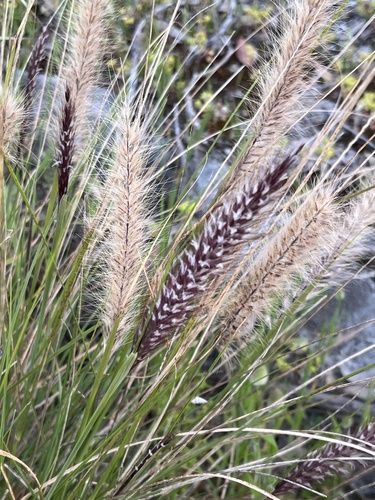
Umbrella tree (Schefflera actinophylla)

Umbrella tree

Schefflera actinophylla

Environmental weedHerb / groundcover

How to spot it: Umbrella trees often have multiple trunks and grow up to 10 m tall. They sometimes grow as an epiphyte on larger rainforest trees. They have large leaves on long stalks with leaflets that radiate outwards a bit like an umbrella.. Leaves: alternate along the stem on stalks 15–40 cm long made up of 7–16 leaflets radiating from the end of the leaf stalk, each leaflet is: dark green, glossy and leathery oval ... Flowers: red 1–2 cm in diameter in clusters at the top of the plant along several…

Plant instead: Blueberry ash, ash quandong, blue (Elaeocarpus reticulatus), Forest oak (Allocasuarina torulosa), Water gum, kanooka, kanuka (Tristaniopsis laurina), Cheese tree (Glochidion ferdinandi), New south wales christmas-bush, christmas bush (Ceratopetalum gummiferum) (small); Turpentine (Syncarpia glomulifera) or Sydney red gum, rusty gum, smooth-barked apple (Angophora costata) for large sites
How to control it

Overview: Successful weed control relies on follow up after the initial efforts. This means looking for and killing regrowth or new seedlings. Using a combination of control methods is usually more successful.

Manual: Very small seedlings can be pulled out in moist soft soil. Small trees may be dug out.

Herbicide and timing: Spot spraying Apply herbicide mix to actively growing seedlings or small trees. Ensure that all of the foliage is covered with the herbicide mix. Cut stump method This method is suitable for larger trees. Cut the trunk, if there are multiple stems cut all of them close to the ground.

Herbicide options listed by NSW WeedWise: Picloram 100 g/L + Triclopyr 300 g/L + Aminopyralid 8 g/L - Use a knapsack or handgun to spray plants less than 1.5 metres tall. Apply from October to May.; Triclopyr 300 g/L + Picloram 100 g/L - Use a knapsack or handgun to spray plants less than 1.5 metres tall. Apply from October to May.; Glyphosate 360 g/L - Spray seedlings and coppice shoots. For use in urban bushlands, forest and coastal reserves.

Disposal (general advice, not from WeedWise): bag seeds/fruit/tubers for general waste (not green bin) or as advised by council; never dump in bushland.

Always read the herbicide label or APVMA permit, and use a licensed operator where required.

Legal status
  • Listed by: Willoughby: exempt undesirable species (remove without permit)
  • General biosecurity duty applies to all land managers (Biosecurity Act 2015)

NSW WeedWise profile

Photo: Isaiah Findley, CC0 1.0, via iNaturalist (research-grade observation)
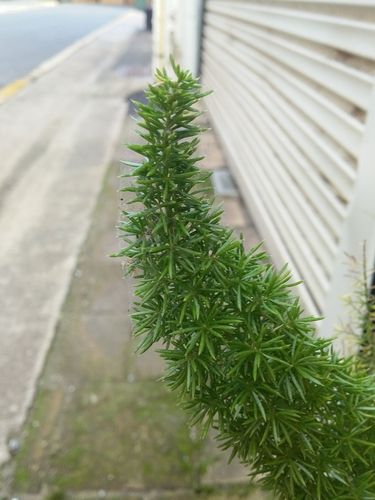
Water hyacinth (Eichhornia crassipes)

Water hyacinth

Eichhornia crassipes

State priorityAquatic

How to spot it: Water hyacinth is a floating water plant. In cool areas, the leaves die off during frosts but the crowns survive and regrow the following spring. Leaves: bright green, sometimes rusty yellow on their edges glossy, smooth and hairless and have obvious veins. Leaf shape changes depending on the density of infestations. Flowers: light bluish-purple or dark blue with six distinct petals (the upper petal is darker purple with a yellow mark in the centre) 4–7 cm long and 4–6 cm ... Fruit: a capsule…

Plant instead: Not a garden plant. For ponds/rain gardens use local natives such as Juncus usitatus, Indian pennywort, gotu cola (Centella asiatica), Sedge (Carex maculata) and Spiny-headed mat-rush, honey reed (Lomandra longifolia) on margins (from a local native nursery).
How to control it

Overview: Successful weed control relies on follow up after the initial efforts. This means regularly looking for any new plants or plant fragments and controlling them. Using a combination of control methods is usually more successful.

Manual: Remove plants before flowering and seed set. A mass of water hyacinth removed from the water can take up to 12 months to break down. Contact your local council for advice on how to dispose of this weed.

Herbicide and timing: Water hyacinth is usually treated with handgun power sprays from a boat or the bank. Some large infestations have been aerially sprayed. Treatments with herbicides should be carried out early in the growing season (generally in spring).

Herbicide options listed by NSW WeedWise: Metsulfuron-methyl 600 g/kg - Only for enclosed water bodies (excluding within 400 m of potable water supply).; Amitrole 250 g/L - Apply immediately prior to flowering. For use in aquatic areas: drains and channels, margins of streams, ...; Diquat 200 g/L - Small areas: spray to wet weeds thoroughly. About 1 mL of product should be sufficient to treat 1 square ...

Disposal (general advice, not from WeedWise): bag seeds/fruit/tubers for general waste (not green bin) or as advised by council; never dump in bushland.

Always read the herbicide label or APVMA permit, and use a licensed operator where required.

Legal status
  • STATE PRIORITY - ERADICATION AND/OR CONTAINMENT (biosecurity zone)
  • REGIONAL PRIORITY (Greater Sydney) - ASSET PROTECTION
  • WeedWise Greater Sydney duty -> Prohibition on certain dealings: Must not be imported into the state, sold, bartered, exchanged or offered for sale.
  • WeedWise Greater Sydney duty -> Biosecurity Zone: The Water Hyacinth Biosecurity Zone applies to all land within the State, except for the following regions: Greater Sydney or North Coast, North West (but only the local government area of Moree Plains), Hunter (but only in the local government areas of City ...
  • WeedWise Greater Sydney duty -> Regional Recommended Measure: Land managers should mitigate the risk of the plant being introduced to their land. Land managers should mitigate spread of the plant from their land. A person should not buy, sell, move, carry or release the plant into the environment.
  • Listed by: Sydney Weeds Committees garden-escape guide
  • General biosecurity duty applies to all land managers (Biosecurity Act 2015)

NSW WeedWise profile

Photo: Mark Clarke, CC BY 4.0, via iNaturalist (research-grade observation)
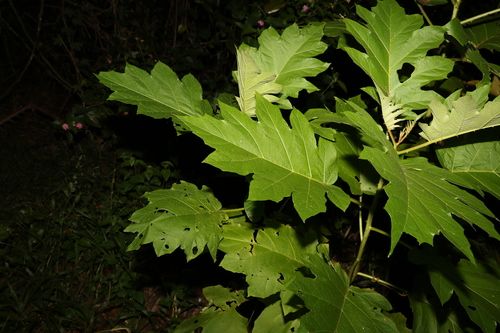
Willows (Salix species)

Willows

Salix species

State priorityShrub

How to spot it: Willows are deciduous trees or shrubs. They have small seeds with long, silky hairs attached to one end like a parachute, which help them spread. The seeds are usually short-lived, from days to a few weeks.

Plant instead: Spiny-headed mat-rush, honey reed (Lomandra longifolia), Sedge (Carex maculata), Juncus usitatus, Water gum, kanooka, kanuka (Tristaniopsis laurina), Black wattle, callicoma, silver-leaf butterwood (Callicoma serratifolia), Grey myrtle, ironwood (Backhousia myrtifolia)
How to control it

Overview: Successful weed control requires follow up after the initial efforts. This means looking for and killing regrowth or new seedlings. Using a combination of control methods is usually more successful. Clearing any vegetation along waterways may cause erosion or stream instability.

Manual: By hand Dig out or hand pull rooted branches and small seedlings up to 0.5 m tall. Small roots left in the ground do not usually regrow. By machine Only use large machinery such as excavators or bulldozers to remove larger trees and root systems in dry areas.

Herbicide and timing: Spraying Spray willows less than 2 m tall. Cover all of the foliage with herbicide. Only spray plants with clean foliage because silt on the leaves can reduce herbicide uptake. Do not spray in autumn if the leaves have started to fall.

Herbicide options listed by NSW WeedWise: Glyphosate 360 g/L - Spray to wet all foliage. Use the higher rate for trees 1–2 m high.; Picloram 44.7 g/L + Aminopyralid 4.47 g/L - Cut stump for small plants: Apply a 3–5 mm layer of gel onto stems less than 2 cm diameter.; Triclopyr 240 g/L + Picloram 120 g/L - Cut stump application for plants with a basal stem greater than 10 cm in diameter. Need to treat all stems.

Disposal: Trees killed by stem injection should be left for 12 months before they are cut and removed. Plants should not be chipped unless they have been treated with herbicide.

Always read the herbicide label or APVMA permit, and use a licensed operator where required.

Legal status
  • STATE PRIORITY - CONTAINMENT AND/OR ASSET PROTECTION
  • WeedWise Greater Sydney duty -> Prohibition on certain dealings: Must not be imported into the state, sold, bartered, exchanged or offered for sale. All species in the Salix genus have this requirement, except Salix babylonica (weeping willows ), Salix x calodendron (pussy willow) and Salix x reichardtii (sterile pussy ...
  • Listed by: Willoughby: exempt undesirable species (remove without permit)
  • General biosecurity duty applies to all land managers (Biosecurity Act 2015)

NSW WeedWise profile

Photo: Richard Littauer, CC BY 4.0, via iNaturalist (research-grade observation)
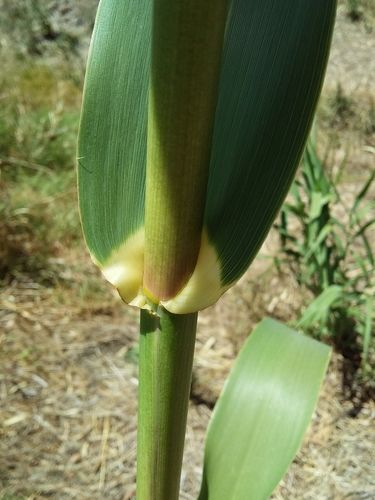
Sources: NSW WeedWise profiles and Greater Sydney priority weed lists; Greater Sydney Regional Strategic Weed Management Plan 2023–2027 (Local Land Services); council environmental weed and exempt-species lists (Ku-ring-gai, Hornsby, Willoughby, Lane Cove, North Sydney, Mosman); Sydney Weeds Committees garden-escape guide. Native replacements are checked against PlantNET and RF Horticulture's local native list. Herbicide options are as listed by WeedWise: always follow the label or APVMA permit.

DIY it

What you'll need:

  • Gloves, a kneeling mat and a sturdy bag or bucket
  • A hand fork or digging knife to get crowns and roots out
  • Bags for seeds, tubers and bulbs (not the compost)
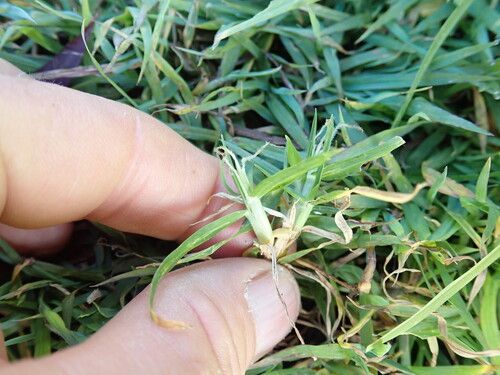
  • Local natives ready to fill the gap

Get in touch for a quote

Big infestation, a slope of asparagus fern, or a weed you can't identify? I can clear it and replant with local natives so it doesn't come back.

Quotes for garden care, weeding, planting and installation. No travel fee on the North Shore.

CallGet a quote