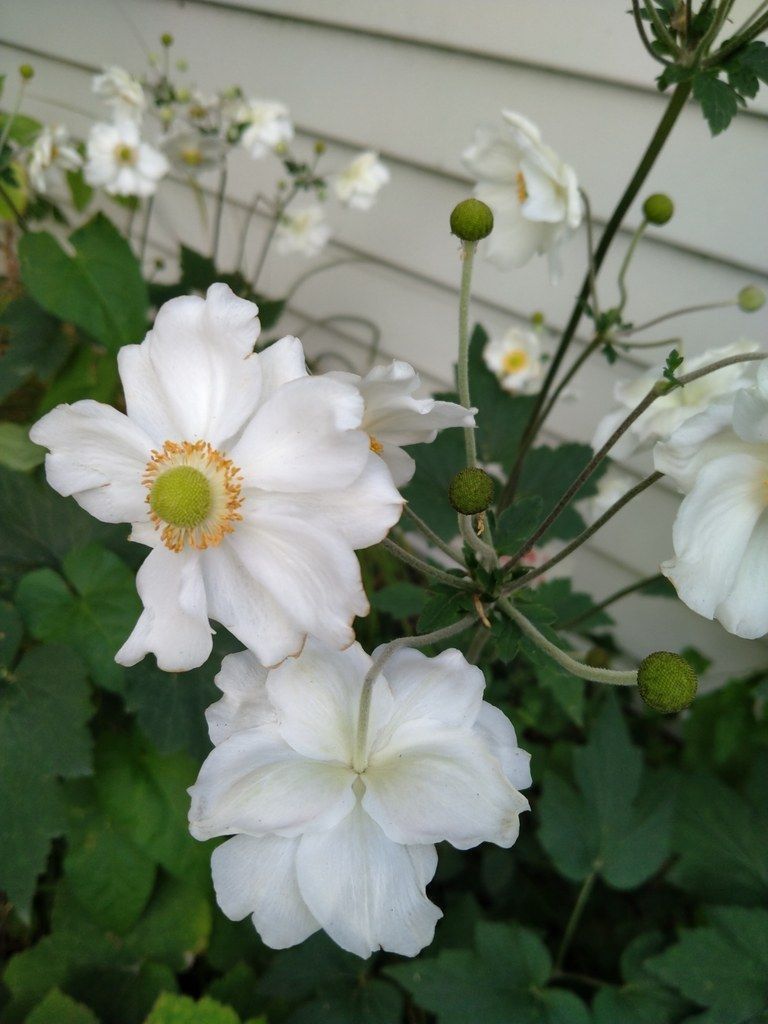
If you have Japanese windflowers (or Japanese anemones) under a tree or along a shady fence, their botanical name has changed. In March, the team behind the autumn windflower display at Mount Tomah published a growing guide saying windflowers have been reclassified into the genus Eriocapitella. The plant once sold as Anemone japonica is now Eriocapitella hupehensis. The hybrid windflowers moved too, and are now Eriocapitella × hybrida.
The new names aren't brand new to botanists. They were published in 2018, and the change is based mostly on differences in the fruit. Eriocapitella means "woolly little head". What's new is that official advice here in NSW has started using them.
Not everyone has switched yet. The Royal Horticultural Society in the UK still lists the plant as Anemone hupehensis, with Eriocapitella as a synonym. So for a while you'll see both names on labels and in books. They're the same plant.
Nothing changes in the garden. Windflowers still like dappled or part shade and moist soil with plenty of organic matter, and they sulk in a long dry spell. They spread by suckering, which is lovely in a big bed and a nuisance in a small one, so give them room or be ready to dig out the extras. I cut the old flower stems back once they've finished in late autumn or early winter. They're also a good late-season source of pollen for bees.
If you're planning a shady bed around them, my heritage and classic gardens guide covers other old favourites for part shade, and the garden styles guide can help you choose a look that suits your house.
Help with your garden
Get in touch for a quote if you'd like help with this.
Sources
- Botanic Gardens of Sydney, How to grow windflowers in your home garden, 26 Mar 2026
- International Plant Names Index, Eriocapitella hupehensis (Lemoine) Christenh. & Byng
- International Plant Names Index, Eriocapitella x hybrida (L.H.Bailey) Christenh. & Byng
- Royal Horticultural Society, Anemone hupehensis