In February 2026 the National Herbarium of NSW published a round-up of changes to the state's plant list, which it plans to repeat every year. It covers decisions made between mid-2023 and the end of 2024. Most of the 33 name changes in it only matter to botanists, but two affect plants you'll find in plenty of North Shore gardens: tea-trees and tibouchinas. The same paper also records a common hedge plant growing wild in NSW for the first time.
As with any name change, the plant itself hasn't changed and needs the same care as before. What changes is the name you'll see on PlantNET (the online Flora of NSW), in newer books and, over time, on nursery labels.
Many tea-trees are now Gaudium
A DNA study published in 2023 by botanists Peter Wilson and Margaret Heslewood found that Leptospermum was really several separate groups of plants. They kept Leptospermum for the species with woody fruit and moved the rest into other genera, three of which have species in NSW. The National Herbarium of NSW has adopted the split, and the February round-up lists the NSW species affected.
The two you're most likely to know:
| Common name | Old name | Name now used in NSW |
|---|---|---|
| Flaky-barked tea-tree | Leptospermum trinervium | Gaudium trinervium |
| Coast tea-tree | Leptospermum laevigatum | Gaudium laevigatum |
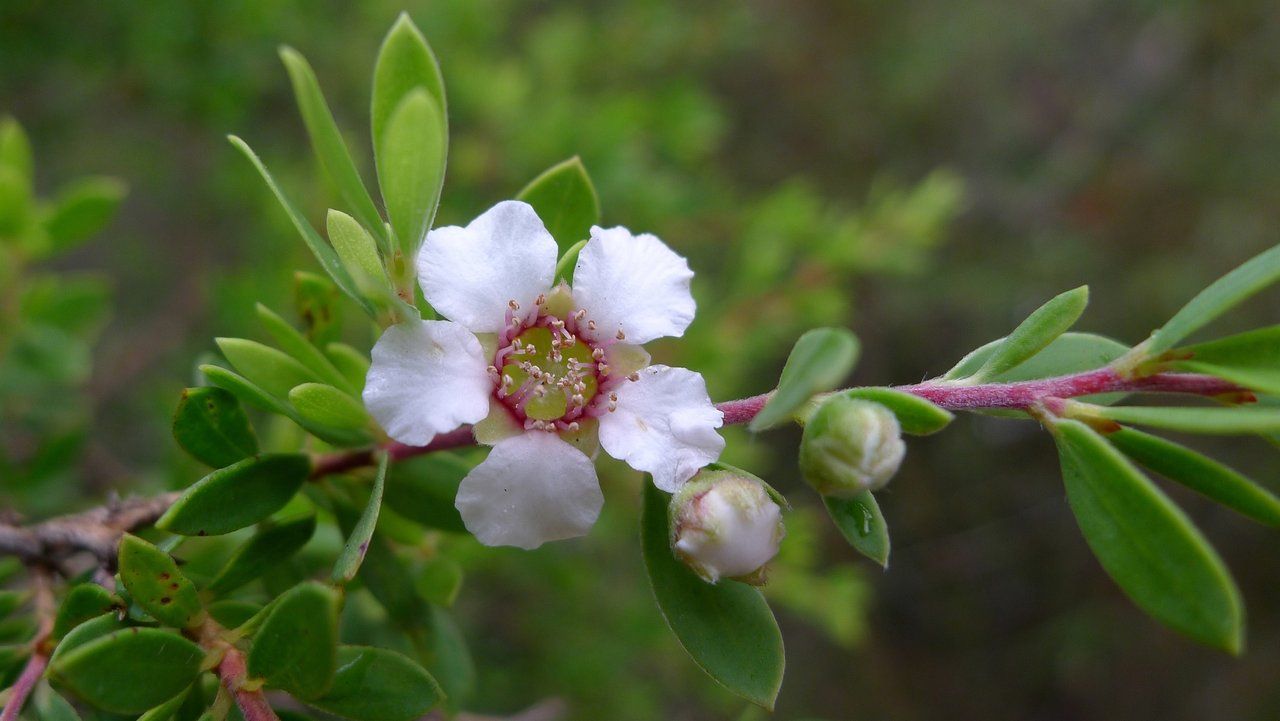
Flaky-barked tea-tree is the one I come across most. It grows wild in the sandstone woodlands around the North Shore, as a shrub or small tree of 2–5 m with bark that peels off in thin layers and white flowers in spring. Coast tea-tree is a grey-green shrub or small tree of coastal NSW. It's native from Nambucca Heads south, but PlantNET notes it has gone wild in other coastal areas where it was planted to hold sand dunes.
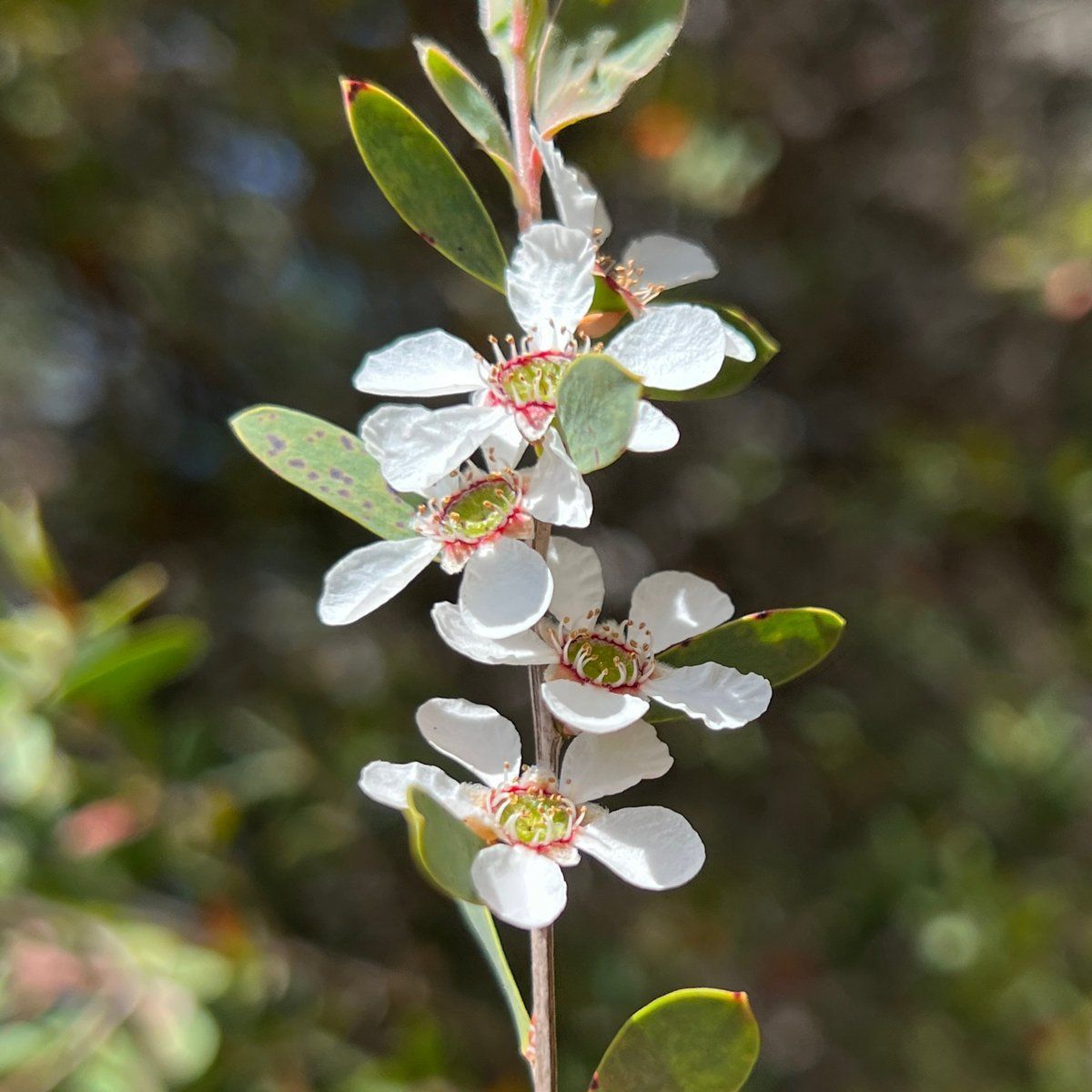
Plenty of familiar tea-trees keep the old name, including lemon-scented tea-tree (Leptospermum petersonii), tantoon (L. polygalifolium) and peach blossom tea-tree (L. squarrosum), which grows on the sandstone around Sydney.
You can often tell the two groups apart by the fruit. Most Leptospermum species have hard, woody capsules that stay on the branches for years. Gaudium fruits are thin-walled and usually drop off. So a tea-tree covered in old woody capsules is probably still a Leptospermum.
The national list, the Australian Plant Census, hadn't taken up the change when I checked on 19 October 2026, and still lists Leptospermum trinervium. So for now the NSW name and the national name are different, and you'll see both. My native plant finder already uses the NSW names, so you'll find flaky-barked tea-tree there as Gaudium trinervium.
Tibouchina is now Pleroma
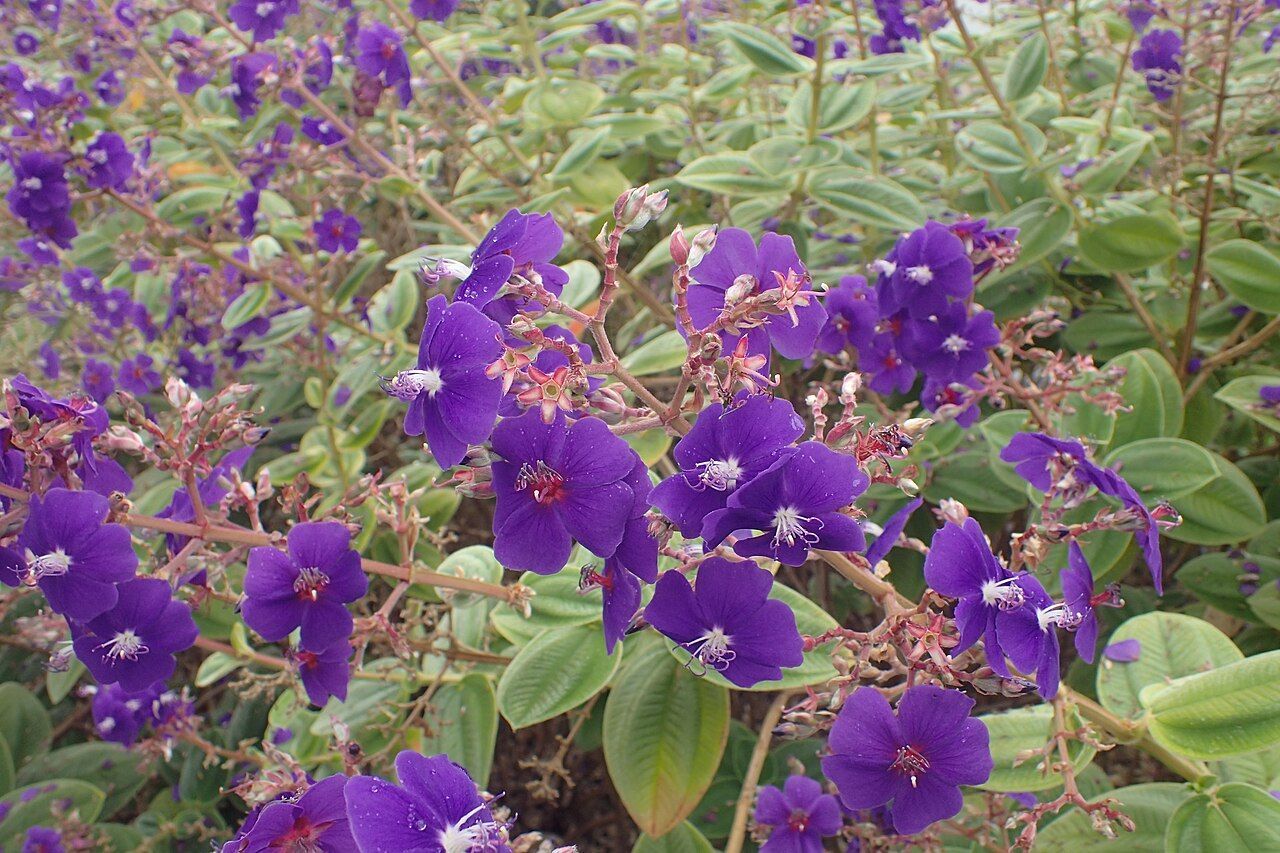
The purple tibouchinas, or lasiandras, that flower across Sydney from late summer into winter have also been renamed. A 2019 reclassification of Tibouchina and its relatives moved the common garden species into other genera, and the February round-up lists the change for NSW:
- Tibouchina urvilleana (lasiandra, purple glory bush) is now Pleroma urvilleanum
The Australian Plant Census already accepts Pleroma urvilleanum, along with Pleroma granulosum (formerly Tibouchina granulosa, the species behind the pink 'Kathleen'). PlantNET's own page was still under Tibouchina urvilleana when I looked on 19 October 2026, so expect to see both names for a while.
'Alstonville' is a different story. It was bred at Alstonville on the NSW North Coast by the late Ken Dunstan, and it's a variety of Tibouchina lepidota, not T. urvilleana. That species went to a different genus, Andesanthus, created in the same 2019 reclassification. Kew's Plants of the World Online now treats Tibouchina lepidota as a synonym of Andesanthus lepidotus, and New Zealand's official plant names list already records the variety as Andesanthus lepidotus 'Alstonville'. Andesanthus isn't in the NSW or national plant lists, because the species doesn't grow wild here, so most Australian labels will keep saying Tibouchina 'Alstonville' for a while yet.

A common hedge plant now recorded growing wild
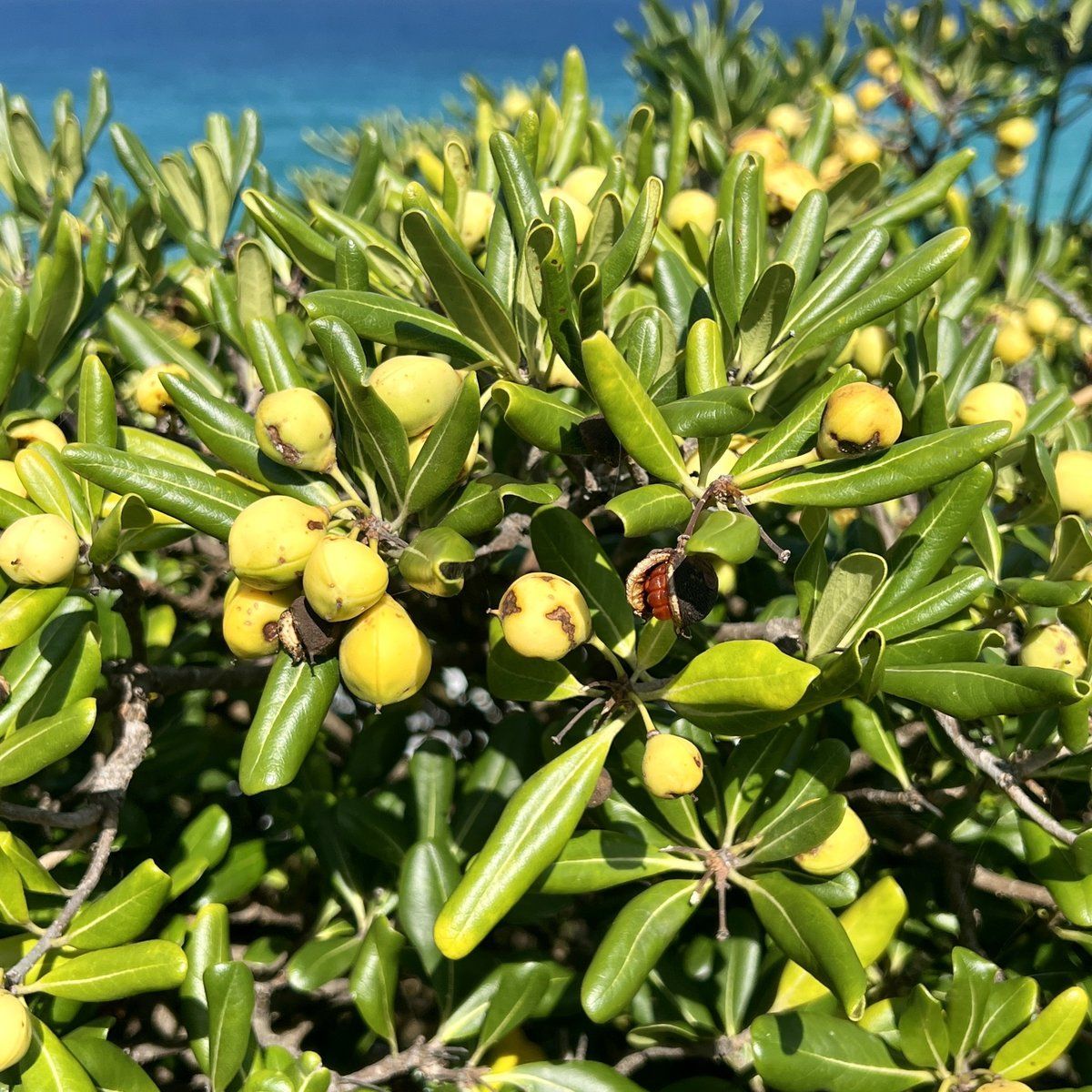
This one isn't a name change, but it's in the same paper and worth knowing about. Pittosporum tobira, the tobira or mock orange often clipped as a hedge, has been recorded as naturalised in NSW for the first time. The record is from the Central Coast botanical subdivision. Despite the name, that's not the same as the Central Coast region around Gosford. It's one of the areas botanists divide NSW into for recording where plants grow, and it's much bigger, running from about Lake Macquarie down to Nowra and taking in the Sydney Plains and the lower Blue Mountains. Gosford, Sydney and the North Shore are all inside it, so the record alone doesn't say which part of that stretch the plant turned up in.
It isn't on the NSW WeedWise list, and a first record doesn't make it a weed. But it sets plenty of red seeds, and if your tobira hedge backs onto bushland I'd clip it straight after flowering, before the seed capsules ripen. That's what the Sydney Weeds Network suggests for garden plants in general, pruning after flowering to stop them setting seed, and straight after flowering is the usual time to trim a tobira anyway, because it flowers on old wood and a late trim takes off next year's flowers. My weeds guide covers the garden plants that already cause trouble in local bushland.
What this means for your garden
Nothing changes in the garden itself. If you're shopping for a tea-tree or a tibouchina and can't find it, search under both names. If you'd like to plant local tea-trees, the which plant community guide shows which ones suit your soil, and my native garden advice page explains how I can help plan it.
Sources
- Jobson PC, McCune S, Orme AE & Wardrop C, Updates to the New South Wales flora for 2023–2024, Telopea 30: 1–7, published 24 Feb 2026
- Wilson PG & Heslewood MM (2023), Revised taxonomy of the tribe Leptospermeae (Myrtaceae) based on morphological and DNA data, Taxon 72(3): 550–571, published 3 May 2023
- Australian Native Plants Society, Leptospermum and relatives
- PlantNET (NSW Flora Online), genus Gaudium
- PlantNET (NSW Flora Online), genus Leptospermum
- PlantNET (NSW Flora Online), Gaudium trinervium
- PlantNET (NSW Flora Online), Gaudium laevigatum
- PlantNET (NSW Flora Online), Leptospermum petersonii, L. polygalifolium and L. squarrosum
- Atlas of Living Australia species search (Australian Plant Census names), checked 19 Oct 2026
- PlantNET (NSW Flora Online), Tibouchina urvilleana
- Guimarães PJF, Michelangeli FA, Sosa K & de Santiago Gómez JR (2019), Systematics of Tibouchina and allies (Melastomataceae: Melastomateae): a new taxonomic classification, Taxon 68: 937–1002
- Downing A & Downing K, Plant of the Week: Tibouchina, Macquarie University Arboretum, 2012
- Guimarães PJF & Michelangeli FA, genus Andesanthus and the combination Andesanthus lepidotus, Taxon 68(5): 947–948 (2019), via International Plant Names Index
- Biota of New Zealand (Manaaki Whenua – Landcare Research), Andesanthus lepidotus 'Alstonville'
- Burke's Backyard, Tibouchinas fact sheet
- Kew, Plants of the World Online, Andesanthus lepidotus
- PlantNET (NSW Flora Online), Pittosporum tobira
- Ramsay HP (1984), Phytogeography of the mosses of New South Wales, Telopea 2(5): 535–547
- Benson D & McDougall L (2001), Ecology of Sydney plant species Part 8, Cunninghamia 7(2), via PlantNET
- eFlora: Vascular Plants of the Sydney Region, University of Sydney, About
- Benson D & McDougall L (2005), Ecology of Sydney plant species Part 10, Cunninghamia 9(1)
- Sydney Weeds Network (2021), Garden Escapes in Bushland and Reserves: a responsible gardening guide for the Greater Sydney region
- Clemson Cooperative Extension, Pittosporum, HGIC 1082, revised Feb 2025
- UC Marin Master Gardeners (University of California Agriculture and Natural Resources), Pruning Pittosporum
- NSW WeedWise A–Z species list, checked 19 Oct 2026
- RF Horticulture native plant list