A meadow is a patch of grasses and wildflowers that sways in the breeze, buzzes with bees and needs far less mowing than lawn. It can be all native, all old-fashioned "cornfield" flowers, or a mix. Here's how to make one work in a North Shore garden, from a whole backyard to a strip of verge.
From the field. "Natives are the trend right now, and I love them. But a meadow doesn't have to be all native. Some of the happiest meadows I've seen mix local grasses with a few classic cottage flowers. The trick is picking plants that suit your soil and won't jump the fence into the bush."
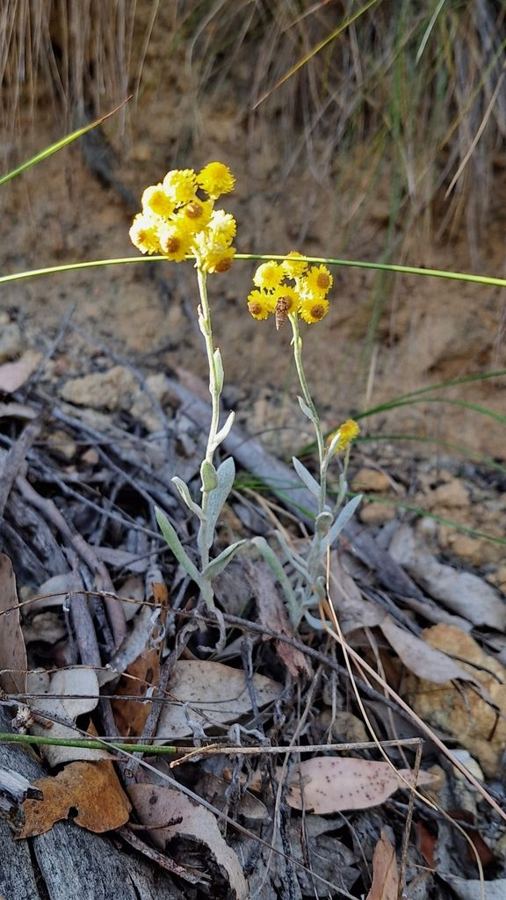
Local grasses like kangaroo grass and weeping grass, with lilies, bluebells and everlasting daisies tucked in between. Slower to start, but long-lived. Great for local wildlife.
Non-native "cornfield" meadow
Cornflowers, poppies and friends, mostly annuals. A huge burst of colour in the first spring. You re-sow or let them self-seed. Fast and fun.
Mixed meadow
A native grass base with a sprinkle of safe cottage flowers for extra colour. The best of both, as long as you skip the weedy ones (see below). From the field
Small-garden and verge ideas
A "meadow rug" in the lawn: swap a 2 × 3 m patch of lawn for a mini meadow, and mow a neat path or edge around it so it looks on purpose.
Front strip or courtyard: everlasting daisies, bluebells and a few tussocks of grass in a sunny 1 m bed.
Pots: a wide, shallow pot of paper daisies on a sunny balcony.
Nature strip (verge): the verge belongs to council. In Ku-ring-gai you fill in a verge garden checklist first. Soft landscaping only (no raised beds or changes to the soil), with plants that stay under 1 mKRG-V. Other councils have their own rules, so check first.
💡 Quick tip
Mow a frame. A crisp mown edge around a meadow tells the neighbours "this is a garden, not a gap in the mowing". It makes even a scruffy first-year meadow look smart.
When to sow and plant in Sydney
Sydney has two good windows: autumn and spring. Which one depends on the plants.
Plant type
Examples
Best time
Cool-season (grows in the cooler months)
Wallaby grasses, weeping grass, cornflowers, poppies, most everlasting daisies
Autumn (March–May). NSW DPI says wallaby grass is ideally sown in April–May, with early spring as a back-upDPI-WG. Annual wildflowers sown in autumn flower the next springMFDIG.
Warm-season (grows in the heat)
Kangaroo grass, cosmos, zinnias
Spring (September–November), when the soil warms up. A Victorian trial found September–October sowing worked best for kangaroo grassCPS. NSW DPI notes kangaroo grass seed mostly germinates in mid-summer, and that farmers often prefer autumn sowing because the soil stays moist longerDPI-KG. In Sydney gardens I usually plant kangaroo grass as tubestock in spring From the field.
🔎 Did you know?
The Diggers Club says that in temperate climates, the sowing window is autumn through to early spring, unless you can water. Sow in late autumn or winter for a spring show, and in spring for a summer showDIG.
Seed or plants? Seed is cheap and fun. Small plants (tubestock) are more reliable for grasses and lilies, and you can see what you've got. Many of the best meadows use both: plants for the grass "skeleton" and seed for the flowers in between. From the field
Site prep: the bit that matters most
Here's the secret nobody puts on the seed packet: a meadow is 80% preparation. The Diggers Club puts it nicely: raking over your lawn and sprinkling a packet of seed "does not a meadow make"DIG.
Pick the sunniest spot you have. Most meadow plants need full sun. Gardening Australia suggests an open spot, free from overhanging treesGA.
Get rid of weeds and lawn grasses first. Especially runners like couch and kikuyuDIG. Seedlings can't compete with them. This can take a few weeks, so start early.
Keep it lean. No compost or fertiliser on the meadow patch. Rich soil grows big weeds and floppy flowers. Native wildflowers especially prefer poor soil. From the field
Know your soil.
Sandstone sands (slopes, gullies, near rock): drain fast and are low in nutrients. Lovely for everlasting daisies and kangaroo grass. Watch for water-repellent patches, where water beads up and runs off.
Shale clays (higher ridges, upper North Shore): hold water and can get sticky. Weeping grass, tussock grass and wallaby grasses cope well. Don't dig clay when it's wet.
Make a fine seedbed. Break up clumps and rake it smooth, so seeds touch the soilGA. On a slope, rake across the slope, not up and down, or your seeds end up at the bottomGA.
Optional "false start": water the bed and wait a couple of weeks. Weed seeds sprout, and you hoe them off before sowingGD.
Sowing method
Measure the area and use the rate on the packet. Gardening Australia uses about 1 g of seed per m² for annual wildflowersGA.
Mix the seed with dry sand. Tiny seeds are hard to spread evenly. Sand helps, and you can see where you've beenGAGD.
Scatter half one way, half the other way, then gently press or "tickle" seed into the surfaceGA. Most wildflower seed needs light, so don't bury it.
Water gently and keep the surface damp until seedlings are upGADIG.
💡 Quick tip
Sow in wavy lines instead of scattering everywhere. The Diggers Club suggests it: you can then tell your seedlings from weed seedlings and weed in betweenDIG. Once things fill in, nobody will notice the lines.
First-year care
Watering: damp, not soggy, while seeds germinate. After that, water less often and only when the soil is dry a few centimetres down. Sandy soils dry fast; clay holds water much longer. There's no one schedule. From the field
Weeding: the big job in year one. Pull weeds while they're small, every couple of weeks. If you can't tell weed from seedling, wait until it flowers or ask.
No fertiliser. Really.
Mulch: not on a seeded meadow (seeds need bare soil). Around planted tubestock, mulch is decided on site. If used, it's coarse only, usually 50–75 mm, kept clear of stems, and never a fine layer. From the field See mulch and your soil.
Cutting back: annual meadows: leave the flowers to set seed, then cut and clear in late summer so seeds can dropGD. Native grassy meadows can be mown on a high setting (50 mm or more) once or twice a year to refresh themNS. Kangaroo grass tussocks can be cut back hard in late winter. From the field
✓ Do this
Start weeding weeks before you sow
Keep it lean: no compost or fertiliser
Water gently until seedlings are up
Mow a tidy edge around it
Be patient in year one
✗ Not that
Sprinkle seed onto lawn and hope
Sow under trees or in deep shade
Feed it "to help it along"
Let weeds get ahead in spring
Use mixes with gazania, coreopsis or other bush weeds
What to expect
Year 1
Annual flowers (cornflowers, poppies, paper daisies) flower in the first season: roughly 6–9 months after an autumn sowing, or about 2 months after a spring sowing, according to one seed supplierMF. Native grasses are slow. Year one is mostly little tufts and weeding.
Year 2 and beyond
The grasses fill out, lilies and bluebells appear, and the meadow starts to look like one. NSW DPI notes wallaby grass sown in May seeds the following springDPI-WG. Some flowers will vanish and others pop up somewhere new. That's normal, and part of the charm.
"A meadow is instant and no work."
A meadow is lower work than lawn once it's settled, but it isn't instant. Year one is the busy year. After that, it's mostly a cut or two a year and some weeding.
Wildlife and pollinator benefits
Native bees: about 70% of Australian native bees nest in the groundAB. A meadow with a few bare, sunny patches gives them homes as well as food.
Butterflies and hoverflies feed on daisies and other open flowers.
Small birds eat grass seed, and lizards shelter in tussocks.
Verge gardens can provide habitat for local wildlife, says Ku-ring-gai CouncilKRG-V.
🔎 Did you know?
Chocolate lily flowers really do smell a bit like chocolate. Get down on your hands and knees on a warm spring day and have a sniff.
Common mistakes
Skipping the weeding before sowing. Couch and kikuyu win every time.
Too much shade. Under big gums or a fig, a meadow will sulk. Try a shady native groundcover instead.
Too rich. Compost and fertiliser feed the weeds, not the wildflowers.
Burying the seed. Most wildflower seed needs light. Press it in, don't dig it in.
Wrong season. Spring-sown cornflowers in a hot Sydney summer often fizzle.
Buying a mix without reading the label. Some "wildflower" mixes contain plants that are weeds in NSW.
Giving up in year one. Native meadows are slow starters.
Native meadow plants for the North Shore
Here are some favourites. The "On my list?" column shows whether the plant is on my North Shore native plant list (BGHF = Blue Gum High Forest, STIF = Sydney Turpentine-Ironbark Forest, DF = Duffys Forest). The others are native to the Sydney region according to PlantNETPN, but they aren't on my local community lists, so ask a local-provenance nursery whether they suit your spot.
Plant
Type
On my list?
Why I like it
Kangaroo grass Themeda triandra
Grass, warm-season
Yes (BGHF, STIF, DF)
Rusty-red seed heads in summer. The backbone of a native meadow.
Weeping grass Microlaena stipoides
Grass, cool-season, mowable
Yes (STIF, DF)
Soft, green, copes with some shade. A lawn-meadow in-between.
Wallaby grasses Rytidosperma spp., e.g. R. racemosum, R. tenuius
Grass, cool-season
No: PlantNET lists them for the Sydney area
Fluffy white seed heads in spring. Fine and low.
Tussock grass Poa affinis
Grass, cool-season
Yes (BGHF, STIF)
Neat tussocks for shale soils.
Golden everlasting Xerochrysum bracteatum
Daisy, short-lived
No: PlantNET records it in the Sydney Basin
Big papery yellow daisies, spring to autumn.
Common everlasting Chrysocephalum apiculatum
Daisy, perennial
No: widespread in NSW (PlantNET)
Silver leaves, yellow button flowers. Tough in sun.
Native bluebells Wahlenbergia gracilis, W. stricta
Wildflower
W. gracilis yes (STIF)
Sky-blue stars that pop up between grasses.
Chocolate lily Arthropodium strictum
Lily, spring
No (pale vanilla-lily, A. milleflorum, is: STIF)
Purple flowers that smell like chocolate. Dies down in summer.
Yam daisy Microseris lanceolata
Daisy, spring
No: PlantNET lists it for the Sydney area
Yellow dandelion-like flowers. A traditional Aboriginal food plant (tuber). Rare in Sydney gardens: ask a specialist nursery.
Bulbine lily Bulbine bulbosa
Lily, spring
No: PlantNET lists it for the Sydney area
Starry yellow flowers. Likes a damp spot in winter.
Local seed is best for bush-edge gardens. If your garden backs onto bushland, ask for plants grown from local (North Shore) seed, for example from the Ku-ring-gai Wildflower Nursery or Harvest Seeds & Native Plants in Terrey Hills.
Non-native meadow flowers that suit Sydney
I checked each of these against NSW WeedWiseWW, PlantNETPN, the Sydney Weeds Network's garden-escapes guideSWN and my own weed list. None is a declared weed in NSW. A couple have escaped into the wild in places, so they get an "OK with care" flag.
Plant
When
My verdict
Weed check
Cornflower Centaurea cyanus
Sow autumn (cool-season)
Good choice
Garden escape only around Cooma (PlantNET). Deadhead near bushland.
Field poppy, Shirley poppy Papaver rhoeas
Sow autumn (cool-season)
Good choice
"Uncommon as a garden escape" (PlantNET). Never grow opium poppy (Papaver somniferum): it's Prohibited Matter in NSW.
Californian poppy Eschscholzia californica
Sow autumn or early spring
OK with care
"Sometimes naturalised", including around Sydney (PlantNET). Fine in a garden bed. Deadhead, and don't sow near bushland.
Cosmos Cosmos bipinnatus
Sow spring (warm-season)
OK with care
A garden escape in the Sydney area (PlantNET). Deadhead before seeds drop if you're near bush.
Zinnia Zinnia elegans
Sow spring (warm-season)
Good choice
Summer colour, loved by butterflies. Not on NSW weed lists I checked.
Paterson's curse (Echium plantagineum): NSW WeedWise profile; Sydney Weeds Network
Mexican feather grass (Nassella tenuissima): State priority weed in NSW: must not be sold (WeedWise)
Fountain grass (Cenchrus setaceus): NSW WeedWise profile; Greater Sydney weed list
Opium poppy (Papaver somniferum): Prohibited Matter in NSW
Seed mixes you can buy
Real products from Australian suppliers. Prices are as shown on each product page on 11 October 2026 and may change. I don't sell these or earn anything from them. Always read the species list before you buy.
12 native grasses and wildflowers (weeping grass, wallaby grasses, kangaroo grass, bluebells, billy buttons and more). The supplier says 500 g sows about 30 m², a typical nature strip, and lists NSW as suitable. Verge-scale and serious. Not grown from North Shore (local) seed.
Pink paper daisies (Rhodanthe chlorocephala subsp. rosea), a Western Australian native. Diggers says it self-seeds readily, so keep it in the garden, not next to bushland. Diggers lists sowing in Feb–Mar or Aug–Oct for warm areas.
All Australian natives (billy buttons, golden everlasting, paper daisies, Swan River daisy, kangaroo paw, purple flag). Most come from inland or WA, not Sydney bush. Great for a sunny pot or a 1–2 m² patch.
Golden everlasting (Xerochrysum bracteatum) in mixed garden colours. PlantNET records the wild species in the Sydney Basin. Sow spring to autumn in Sydney (temperate zone).
Meadow Flowers Australia · Native wildflowers (separate packets)
Separate packets of native wildflowers (Swan River daisy, paper daisies, pink everlastings, blue lace flower, billy buttons, purple flag) with a sowing guide. Not local species, but a fun, colourful native mix.
Zinnia, cosmos, Californian poppy, cornflower, flax, rhodanthe, dill and buckwheat. Sow Sep–Dec. Cosmos and Californian poppy have escaped into the wild in NSW (PlantNET), so deadhead them and keep this mix away from bushland edges.
The true-blue cottage cornflower. PlantNET records it as a garden escape only around Cooma. Sow in autumn for spring flowers. Deadhead near bushland anyway.
Mixes I'd skip:
Diggers Wildflower Meadow Mix: contains false Queen Anne's lace (Ammi majus), which PlantNET calls a widespread weed of disturbed land in NSW
Eden Seeds Butterfly mix: contains purpletop (Verbena bonariensis); the Sydney Weeds Network lists exotic verbenas as bushland weeds
Any mix with gazania, coreopsis, ox-eye daisy, gaura, Paterson's curse (Echium) or Mexican feather grass: all are on Sydney weed lists
Want local Sydney grass seed? Harvest Seeds & Native Plants, Terrey Hills: Sydney native grass and wildflower seed and tubestock, including kangaroo grass; prices on request.
Get in touch for a quote
Meadows live or die on timing and prep. I can check your soil and sun, choose a native, classic or mixed palette, clear the site well, and book your sowing or planting into the right window: autumn for cool-season flowers and grasses, spring for warm-season ones. Book in now and you'll be in the queue for the next window.
Get in touch for a quote on meadow design and planting. I'll check your site, suggest a palette and book the work into the right season. No travel fee on the North Shore.