
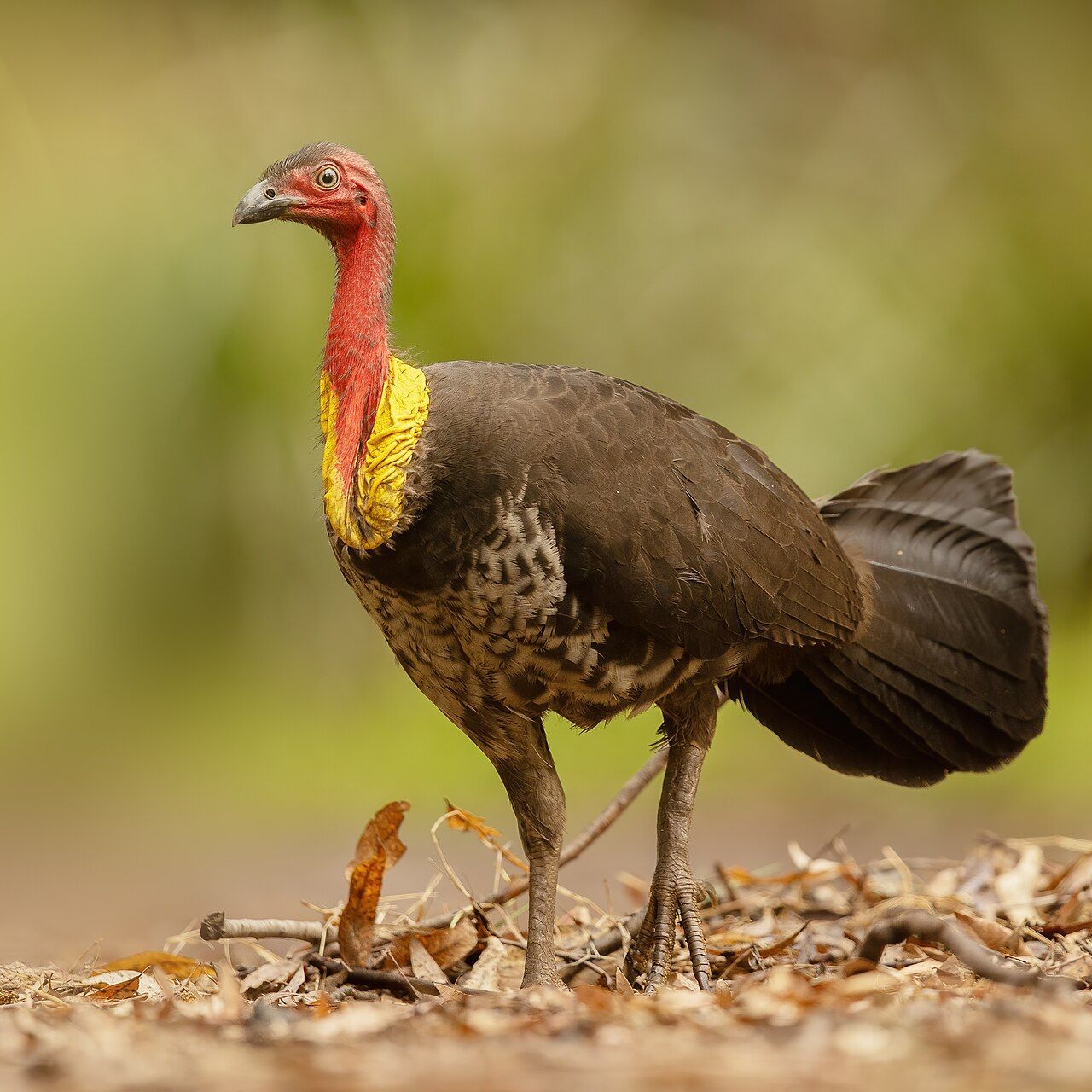

Short answer: in NSW you can't harm or remove a brush turkey, but you can make your garden a poor place to scratch. Pin galvanised mesh flat over beds, put rocks or river gravel around plants, guard anything newly planted, and cover spare mulch and compost. If a male has only just started a mound, you have about a week or two to rake it apart or cover it before eggs are laid. After that, the law says leave it, and you protect the rest of the garden until the season ends.
Ku-ring-gai Council puts the breeding season at August to around February, so October is right in the middle of it. If your mulch is trailing down the path every morning, this is why.
Why your garden, and why now
Male brush turkeys build large mounds of leaf litter, mulch and soil, and the heat of the rotting material incubates the eggs. Shady, leafy gardens near bushland suit them well, and Ku-ring-gai Council says residents have reported more brush turkeys in the area over the last few years. New plantings suffer most: the soil is loose and young plants come out with one kick (Dr Ann Göth's fact sheet for Ku-ring-gai Council).
They're not just a bushland-edge problem, either. I've seen brush turkeys making their way over the bridge into the city. University of Sydney researchers have tracked the same spread: since the 2000s they've moved from the northern suburbs into the inner west and suburbs south of the harbour.
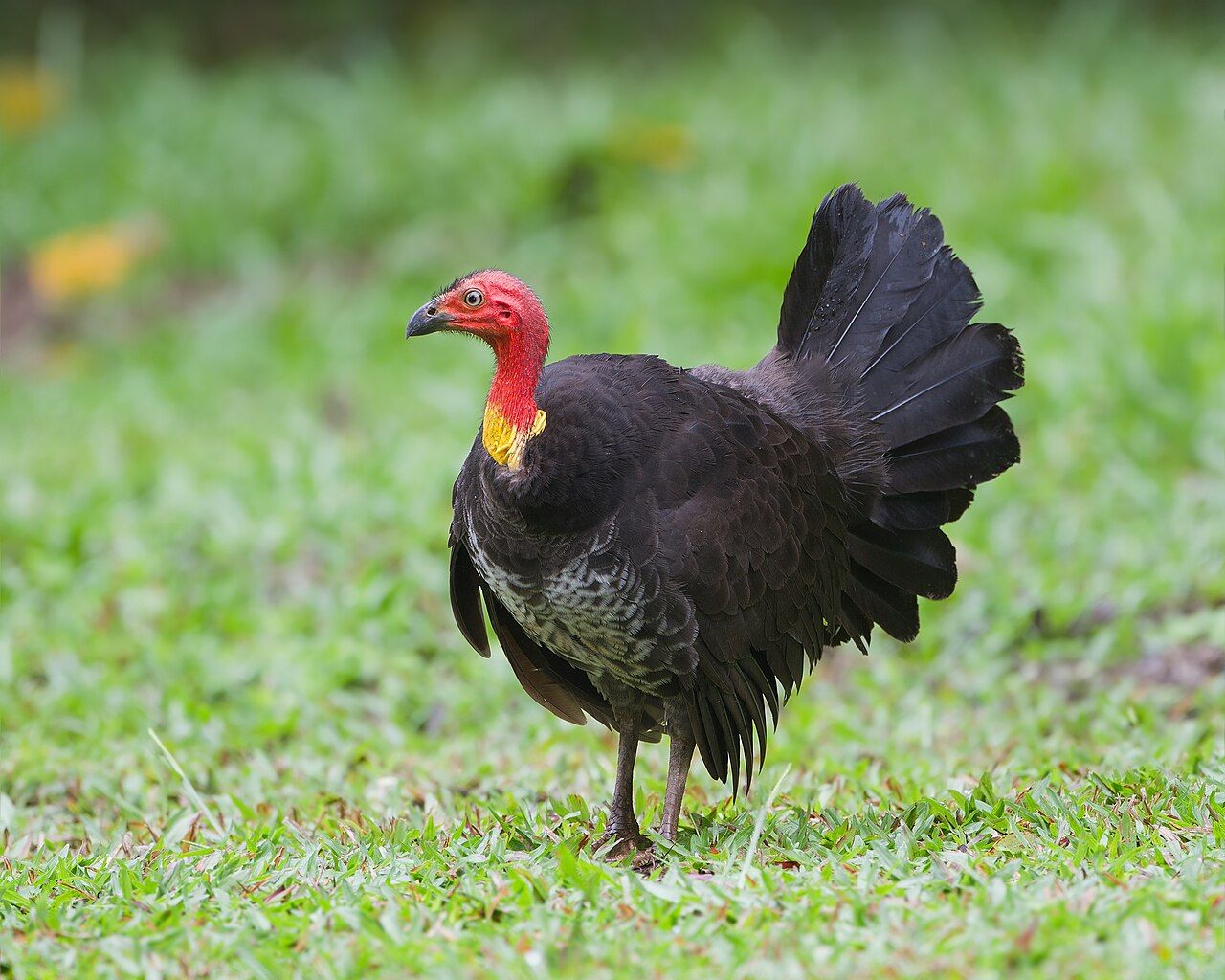

Step 1: Work out what stage you're at
Everything depends on timing. This is what the NSW Government and councils allow:
| What you're seeing | What you can do |
|---|---|
| Scratching, but no mound yet | Protect beds now (steps 2–4). |
| A new heap, started in the last week or two | Rake it apart, or cover it with heavy tarp, shade cloth or chicken wire weighed down with rocks or logs. You may need to repeat this. A short squirt from a hose at the chest, from out of sight, is acceptable at the first signs only. |
| A mound that's been worked for weeks | Leave it alone. It's illegal to damage eggs or stop chicks getting out. If it's been maintained for several weeks, the NSW Government says to wait 60 days before spreading it. |
| Season over, mound abandoned | Spread it. It's useful compost. |
Chasing the bird or repeatedly spraying it counts as harassment under the Biodiversity Conservation Act 2016. Councils such as The Hills say they don't relocate nests. If you accidentally open a mound with eggs in it, Hunter's Hill Council says to call Sydney Wildlife Rescue on (02) 9413 4300.
Step 2: Mesh does most of the work
Brush turkeys rake backwards with their feet. Lay mesh flat over a bed and the scratching slides off. The NSW Government recommends galvanised chicken mesh pegged about 20 mm below the surface of the mulch where they keep digging.
- Cover the whole bed, edge to edge. A bare strip is where they'll start.
- Cut openings around each plant with room for the stem to grow, and bend cut ends down.
- Pin it so no part lifts with your fingers. A turkey will find a loose edge.
- Use rigid galvanised mesh. Don't lay soft plastic netting on the ground, because it tangles lizards, snakes and birds.
- Check it after heavy rain.
A note on mulch. Spare mulch is mound material, which is why councils say to keep it covered. Whether a bed needs mulch at all depends on the site. Where it does, I use coarse mulch only, about 50–75 mm deep and kept clear of stems and trunks. My free mulch and your soil guide explains more.
For established beds, mesh laid on the ground has worked for me to stop turkeys scratching them up.
Step 3: Make the ground hard to rake around plants
- River gravel or a heavy layer of pebbles around trees and shrubs (NSW Government; Ku-ring-gai Council).
- A ring of larger rocks, or sturdy sticks pushed upright into the soil, around each new plant.
- Tree and plant guards, pegged firmly. Remove them once the plant can cope.
- Dense clumping groundcovers such as Lomandra and Dianella, planted in groups with rocks between. Ku-ring-gai Council suggests rock combined with thick groundcover. The native plant finder shows which ones suit your soil.
Step 4: Protect vegetables and new plantings
Brush turkeys don't usually scratch where they can't see, so Ku-ring-gai Council suggests raised beds or a shade-cloth fence about 70 cm high. A bold bird may still hop in, and then you'll need a cover. If you net, use white wildlife-friendly netting with holes too small to poke a finger through (mesh no bigger than 5 × 5 mm at full stretch), pulled taut over a frame and checked daily.
If you're planning a new bed, Willoughby Council suggests planting between February and June, outside the main mound-building months. Spring planting can still work if every plant is protected from day one.
Step 5: Remove the food and building supplies
- Keep spare mulch under a tarp until it's spread. A pile on the driveway is a mound kit.
- Use an enclosed compost bin, not an open heap.
- Bring in pet food, chicken feed and bird seed.
- Don't feed the turkeys, and ask your neighbours not to either.
Optional: a decoy corner
If you have room, the NSW Government suggests offering a better site: an open pile of compost or clippings in a corner you don't mind, ideally beside a large tree that gives 80–95% shade. Rake apart the unwanted mound daily, before any eggs are laid. Willoughby Council notes that males are territorial in the breeding season and keep other males from building mounds nearby, so one tolerated mound in a back corner can help.
Ku-ring-gai Council says mounds need more than 85% shade, so thinning the shade over a favourite spot can also help. Check the tree rules first. In Ku-ring-gai, the exemption covers minor pruning of branches up to 50 mm in diameter, and anything bigger needs approval. No exemptions apply on heritage properties or to trees in threatened ecological communities. My council garden rules guide has the details.
What doesn't work
- Mirrors. Professor Darryl Jones told ABC Gardening Australia that a turkey sees its reflection as a rival, so a mirror attracts it rather than scaring it off.
- Scarecrows, CDs, fake predators, repellent sprays, ultrasonic gadgets. I couldn't find good evidence that any of these work on brush turkeys.
- Trapping or relocating the bird. It's illegal without a licence, and in good mound country another bird is likely to move in.
I'd rather live with brush turkeys than fight them. They're protected under the NSW Biodiversity Conservation Act 2016, which makes it an offence to harm one, including killing, injuring or capturing it. The NSW Government says continually squirting or chasing one counts as harassment. So I protect the beds that matter rather than trying to drive the bird away.
No method makes a garden turkey-free, but you can stop most of the damage.
Help with your garden
Get in touch for a quote if you'd like help with this.
Sources
- NSW Government (DCCEEW), Australian brush turkey: https://www.environment.nsw.gov.au/topics/animals-and-plants/native-animals/native-animal-facts/birds/australian-brush-turkey (once building starts it's extremely difficult to stop; wait 60 days if a mound has been maintained for several weeks; short burst of water at first signs, chest only, from hiding; continual squirting or chasing is harassment under the Biodiversity Conservation Act 2016; cover with chicken wire or heavy tarp; prune overhanging branches; decoy compost pile beside a large tree with 80–95% shade; galvanised mesh about 20 mm below the mulch surface; river gravel, sticks and rocks; low dense groundcover)
- Ku-ring-gai Council, Brush turkey: https://www.krg.nsw.gov.au/Environment/Your-local-environment/Wildlife/Living-with-wildlife/Brush-turkey (breeding season August to about February; illegal to damage eggs or stop chicks leaving; cover a new mound only in the first week or two; pebbles and river gravel; raised beds or shade-cloth fence about 70 cm; mounds need over 85% shade; cover spare mulch; disturbing mounds on council land prohibited; illegal to harm or trap without licences)
- Hunter's Hill Council, Brush Turkeys: https://www.huntershill.nsw.gov.au/Environment/Bushland-and-Biodiversity/Wildlife/Brush-Turkeys (may destroy a mound only if no eggs present; if you disturb a nest with eggs call Sydney Wildlife Rescue 02 9413 4300)
- The Hills Shire Council, Brush Turkey: https://www.thehills.nsw.gov.au/Community/Your-Environment/Living-with-Native-Wildlife/Brush-Turkey (breeding usually August to February; council does not relocate nests)
- Dr Ann Göth, Australian Brush-turkeys in Sydney fact sheet (Ku-ring-gai Council): https://www.krg.nsw.gov.au/files/assets/public/hptrim/information-management-publications-public-website-ku-ring-gai-council-website-environment/updated-brush-turkey-flyer-anne-goeth.pdf (established gardens less vulnerable than new plantings; plant outside the breeding season; mound compost usable after the season)
- Willoughby City Council, The return of Australian brush turkeys to Willoughby: https://www.willoughby.nsw.gov.au/Environment/Bushland-and-Wildlife/Wildlife/Need-help-living-with-wildlife/The-return-of-Australian-brush-turkeys-to-Willoughby (plant between February and June; territorial males keep other males away; don't feed). Read via Internet Archive copy for the draft guide; live page blocked automated fetch.
- ABC Gardening Australia, The Turkey Whisperer (Prof. Darryl Jones): https://www.abc.net.au/gardening/how-to/the-turkey-whisperer/9437300 (mirrors attract rather than deter; raised beds about 70 cm)
- NSW Government, Flying-foxes and netting (wildlife-friendly netting standard): https://www.environment.nsw.gov.au/topics/animals-and-plants/wildlife-management/management-flying-foxes/flying-foxes-and-netting
- Ku-ring-gai Council DCP Part 13 (minor pruning exemption, branches up to 50 mm): https://www.krg.nsw.gov.au/Environment/Your-local-environment/Trees/Trees-on-your-property
- Ku-ring-gai Council, Brush turkey (archived copy; live page blocked automated fetch on 12 Oct 2026): https://web.archive.org/web/2025/https://www.krg.nsw.gov.au/Environment/Your-local-environment/Wildlife/Living-with-wildlife/Brush-turkey (residents report an increase in Ku-ring-gai; cover a new mound only in the first week or two; about 70 cm; over 85% shade)
- Sydney Wildlife Rescue home page (24/7 line 9413 4300, checked 12 Oct 2026): https://www.sydneywildlife.org.au/
- Biodiversity Conservation Act 2016 (NSW) s 2.1 (offence to harm or attempt to harm a protected animal) and s 1.6 (harm includes kill, injure or capture; attempt to harm includes hunting or pursuing): https://legislation.nsw.gov.au/view/html/inforce/current/act-2016-063 (text via AustLII https://classic.austlii.edu.au/au/legis/nsw/consol_act/bca2016309/s2.1.html)