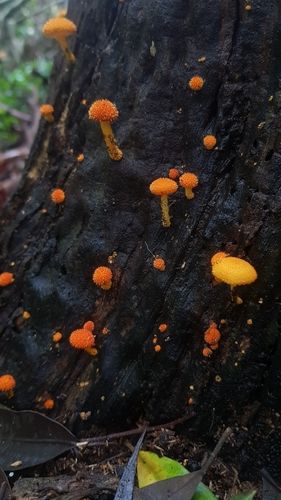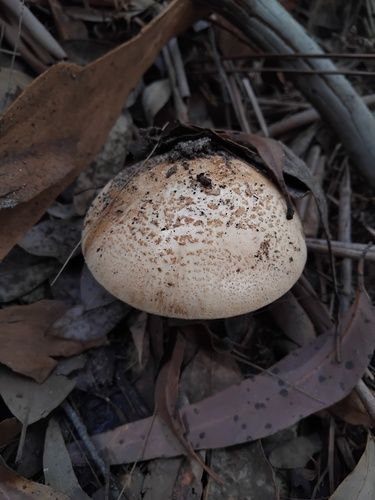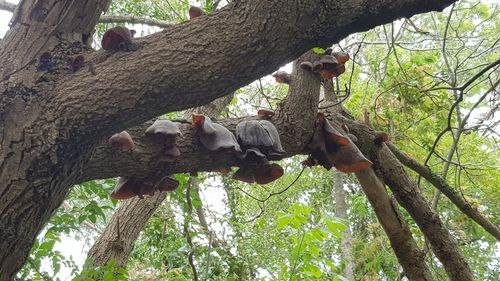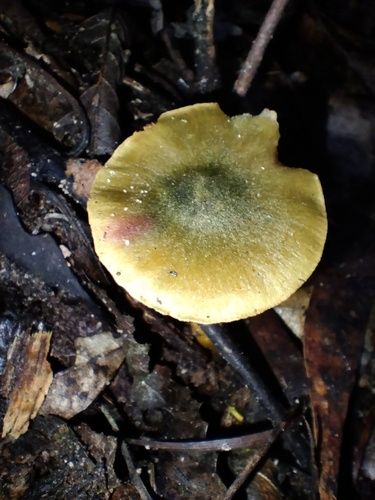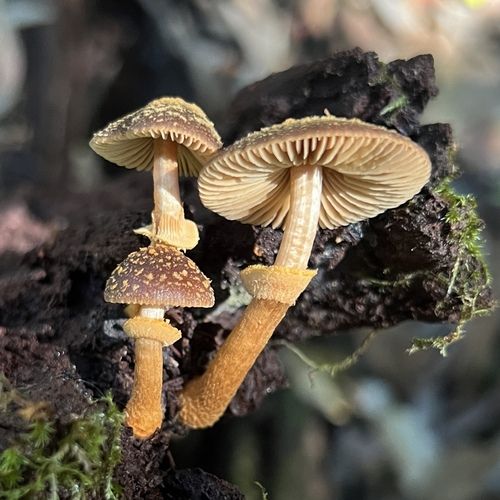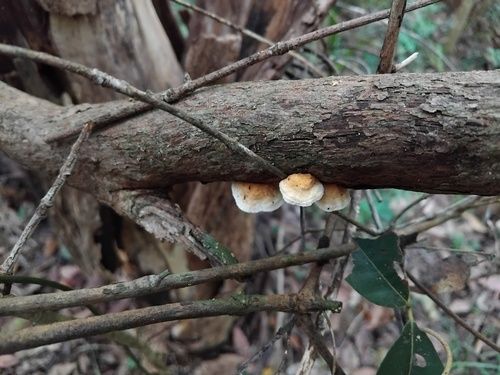
Free guide

Mushrooms and fungi in Sydney gardens

The 85 mushrooms and fungi people photograph most around Sydney, with what each one does in a garden and whether it is known to be toxic.

Never eat a wild mushroom.

Several Sydney species can kill, including the death cap, and some look like mushrooms from the shop. If someone has eaten a wild mushroom, call the NSW Poisons Information Centre on 13 11 26 (24 hours), even if they feel fine. If they are very unwell, call 000. If a pet has eaten one, take it to a vet straight away.

Most fungi in a garden do no harm. Many break down dead wood, mulch and leaf litter, and some live on plant roots and help them take up water and nutrients. A few, like honey fungus (Armillaria), attack living trees. If you see mushrooms around the base of a tree that is dying back, get it looked at.

The list below is ordered by how often each species is recorded on iNaturalist in Greater Sydney. That shows what people photograph, not exactly how common each one is. "Unknown" means I couldn't find a reliable toxicity record for that species, so treat it as poisonous.

All 85 fungi

85 fungi shown

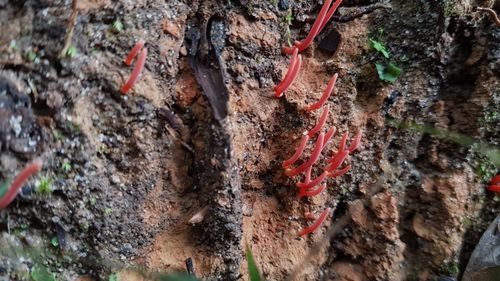
Scarlet bracket (Trametes coccinea)

Scarlet bracket

Trametes coccinea

People: UnknownPets: Unknown, treat as toxicHarmless to plants

What it looks like: Thin, tough orange-red shelves 3–10 cm across, bright red pores underneath.

Where you'll see it: Dead branches, logs and old stumps. It breaks down dead wood.

Effect on plants: Harmless

Photo: Sofia Zvolanek, CC BY 4.0, via iNaturalist (observation)
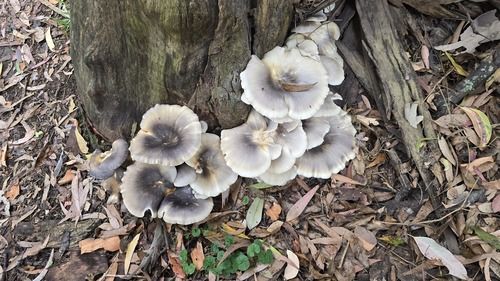
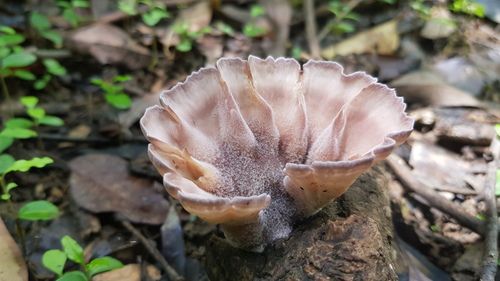
Ghost fungus (Omphalotus nidiformis)

Ghost fungus

Omphalotus nidiformis

People: Toxic/GI upsetPets: Toxic/GI upsetHarmless to plants

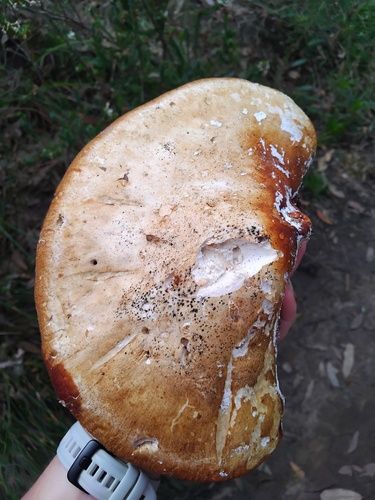
What it looks like: Big creamy-white to fawn funnels or fans up to 30 cm, in clusters. Glows faintly green at night.

Where you'll see it: Stumps, tree bases and buried roots, often eucalypts and pines. It rots dead wood and sometimes weak roots.

Effect on plants: Harmless

Photo: Petra Holland, CC BY 4.0, via iNaturalist (observation)

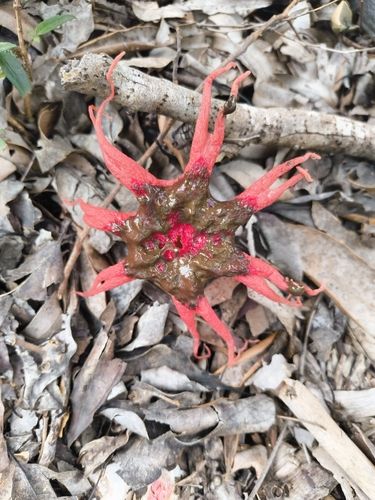
Starfish fungus (Aseroe rubra)

Starfish fungus

Aseroe rubra

People: UnknownPets: Unknown, treat as toxicGood for the garden

What it looks like: Red star of 6–10 forked arms on a white stalk, rising from a white "egg". Smells of rotting meat.

Where you'll see it: Mulch, woodchips and rich garden soil. It feeds on rotting wood mulch; the smell draws flies to spread spores.

Effect on plants: Beneficial

Photo: Billie, CC0 1.0, via iNaturalist (observation)

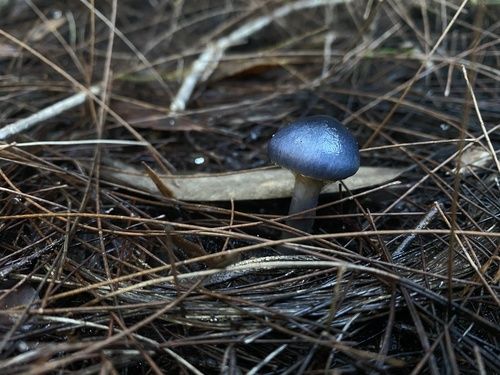
Elegant blue webcap (Cortinarius rotundisporus)

Elegant blue webcap

Cortinarius rotundisporus

People: Unknown (genus has deadly species)Pets: Unknown, treat as toxicGood for the garden

What it looks like: Violet-blue cap 3–8 cm, slimy when wet, fading to brown. Cobweb veil under young caps.

Where you'll see it: On the ground under eucalypts, including garden gums. It partners tree roots.

Effect on plants: Beneficial

Photo: Tess McGrigor, CC0 1.0, via iNaturalist (observation)

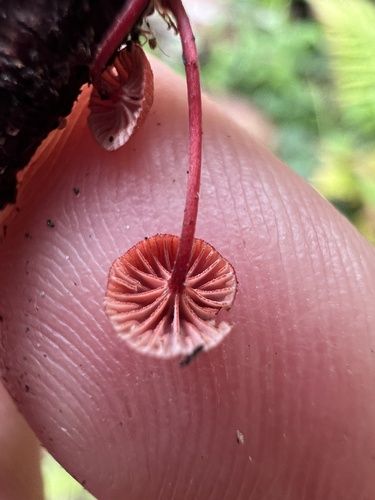
Ruby bonnet (Cruentomycena viscidocruenta)

Ruby bonnet

Cruentomycena viscidocruenta

People: UnknownPets: Unknown, treat as toxicGood for the garden

What it looks like: Tiny glossy blood-red caps under 1.5 cm on thin red stems.

Where you'll see it: Leaf litter and twigs on damp ground. It breaks down fallen leaves.

Effect on plants: Beneficial

Photo: Mark Richman, CC BY 4.0, via iNaturalist (observation)

Emperor cortinar (Cortinarius archeri)

Emperor cortinar

Cortinarius archeri

People: Unknown (genus has deadly species)Pets: Unknown, treat as toxicGood for the garden

What it looks like: Slimy purple cap 4–10 cm with a purple stem and rusty spores.

Where you'll see it: On the ground under eucalypts. It partners tree roots.

Effect on plants: Beneficial

Photo: Petra Holland, CC BY 4.0, via iNaturalist (observation)

Chip cherries (Leratiomyces ceres)

Chip cherries

Leratiomyces ceres

People: UnknownPets: Unknown, treat as toxicGood for the garden

What it looks like: Shiny cherry-red to orange caps 2–5 cm, pale stem, dark gills. Comes up in groups.

Where you'll see it: Woodchip and bark mulch, very common in garden beds. It feeds on the mulch.

Effect on plants: Beneficial

Photo: Thomas Mesaglio, CC BY 4.0, via iNaturalist (observation)

Split gill fungus (Schizophyllum commune)

Split gill fungus

Schizophyllum commune

People: UnknownPets: Unknown, treat as toxicHarmless to plants

What it looks like: Small furry grey-white fans 1–4 cm with split, pinkish gills underneath.

Where you'll see it: Dead branches and logs, sometimes sunburnt or damaged bark on living trees. Mainly a dead-wood rotter; can move into stressed wood.

Effect on plants: Harmless

Photo: James K. Douch, CC BY-SA 4.0, via iNaturalist (observation)

Lantern stinkhorn (Lysurus mokusin)

Lantern stinkhorn

Lysurus mokusin

People: UnknownPets: Unknown, treat as toxicGood for the garden

What it looks like: Pinkish-red ribbed column 5–12 cm with a brown slimy tip. Strong rotting smell.

Where you'll see it: Woodchip mulch and garden beds. It feeds on mulch.

Effect on plants: Beneficial

Photo: Sofia Zvolanek, CC BY 4.0, via iNaturalist (observation)

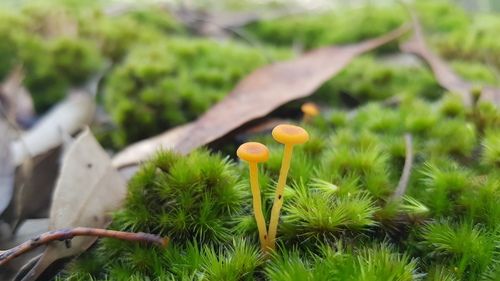
Australian chanterelle (Cantharellus concinnus)

Australian chanterelle

Cantharellus concinnus

People: Not known to be toxicPets: Unknown, treat as toxicGood for the garden

What it looks like: Orange-yellow trumpet 2–5 cm with shallow ridges (not true gills) underneath.

Where you'll see it: On the ground in eucalypt bush and leafy gardens next to bush. It partners tree roots.

Effect on plants: Beneficial

Photo: Sofia Zvolanek, CC BY 4.0, via iNaturalist (observation)

Spring polypore (Lentinus arcularius)

Spring polypore

Lentinus arcularius

People: UnknownPets: Unknown, treat as toxicHarmless to plants

What it looks like: Small tan caps 1–6 cm with fringed edges and honeycomb-like pores, on a short stalk.

Where you'll see it: Dead sticks and branches, including in mulch. It rots dead wood.

Effect on plants: Harmless

Photo: Thomas Mesaglio, CC BY 4.0, via iNaturalist (observation)

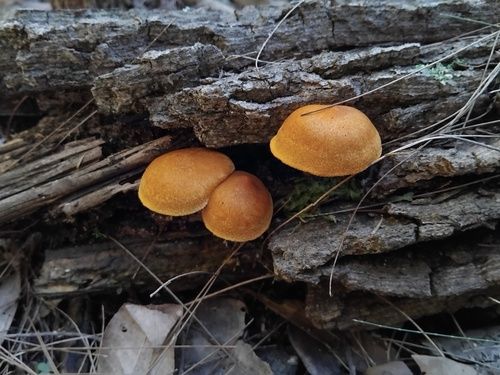
Spectacular rustgill (Gymnopilus junonius)

Spectacular rustgill

Gymnopilus junonius

People: Dangerous (can be psychoactive)Pets: Dangerous (hallucinogenic genus)Can harm plants

What it looks like: Big golden-orange caps 5–15 cm in clumps, rusty-brown spores, ring on stem.

Where you'll see it: Stumps, tree bases and buried roots. It rots dead wood.

Effect on plants: Harmless

Photo: Petra Holland, CC BY 4.0, via iNaturalist (observation)

Lactarius eucalypti

Lactarius eucalypti

No widely used common name

People: UnknownPets: Toxic/GI upsetGood for the garden

What it looks like: Small orange-brown cap 1–4 cm that bleeds milky juice when cut.

Where you'll see it: On the ground and in lawns under eucalypts. It partners tree roots.

Effect on plants: Beneficial

Photo: Sofia Zvolanek, CC BY 4.0, via iNaturalist (observation)

Shaggy ink cap (Coprinus comatus)

Shaggy ink cap

Coprinus comatus

People: Not known to be toxicPets: Unknown, treat as toxicGood for the garden

What it looks like: Tall white shaggy cylinder 5–15 cm that turns black and inky from the bottom up.

Where you'll see it: Lawns, roadsides and disturbed soil. It breaks down buried organic matter.

Effect on plants: Beneficial

Photo: Thomas Mesaglio, CC BY 4.0, via iNaturalist (observation)

Cortinarius kioloensis

Cortinarius kioloensis

No widely used common name

People: Unknown (genus has deadly species)Pets: Unknown, treat as toxicGood for the garden

What it looks like: Brown to tan cap 2–6 cm with rusty gills and a cobweb veil.

Where you'll see it: On the ground under eucalypts. It partners tree roots.

Effect on plants: Beneficial

Photo: James K. Douch, CC BY-SA 4.0, via iNaturalist (observation)

Psilocybe subaeruginosa

Psilocybe subaeruginosa

No widely used common name

People: Dangerous (hallucinogenic)Pets: Dangerous (hallucinogenic)Can harm plants

What it looks like: Brown to golden cap 1–5 cm, thin stem, bruises blue.

Where you'll see it: Woodchip mulch, garden beds and pine litter. It feeds on wood debris.

Effect on plants: Beneficial

Photo: James K. Douch, CC BY-SA 4.0, via iNaturalist (observation)

Red-staining stalked polypore (Sanguinoderma rude)

Red-staining stalked polypore

Sanguinoderma rude

People: UnknownPets: Unknown, treat as toxicHarmless to plants

What it looks like: Dark brown to black stalked bracket 5–15 cm; the white pores stain blood-red when scratched.

Where you'll see it: Ground near trees, growing from buried roots or wood. Its exact role in living roots is not well known.

Effect on plants: Harmless

Photo: Sofia Zvolanek, CC BY 4.0, via iNaturalist (observation)

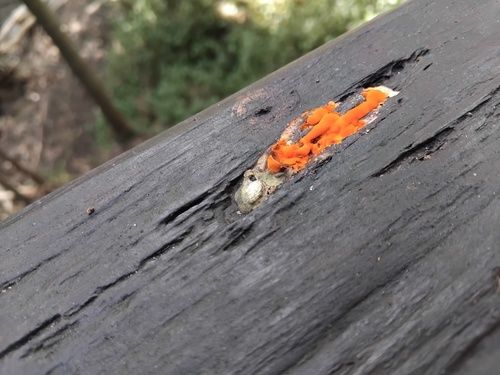
Fan-shaped jelly fungus (Dacrymyces spathularia)

Fan-shaped jelly fungus

Dacrymyces spathularia

People: UnknownPets: Unknown, treat as toxicHarmless to plants

What it looks like: Little orange jelly tongues or fans under 1.5 cm.

Where you'll see it: Dead wood, fence posts and old timber. It rots dead wood.

Effect on plants: Harmless

Photo: James K. Douch, CC BY-SA 4.0, via iNaturalist (observation)

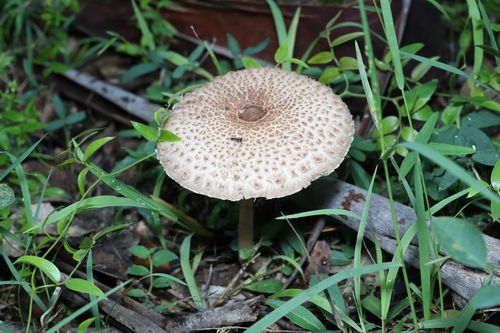
Green-spored parasol (Chlorophyllum molybdites)

Green-spored parasol

Chlorophyllum molybdites

People: Toxic/GI upset (severe)Pets: Toxic/GI upsetGood for the garden

What it looks like: Large white cap 10–30 cm with brown scales; gills turn greenish. Forms rings in lawns.

Where you'll see it: Lawns and grassy parks after summer rain. It feeds on organic matter in the soil.

Effect on plants: Beneficial

Photo: Thomas Mesaglio, CC BY 4.0, via iNaturalist (observation)

Fly agaric (Amanita muscaria)

Fly agaric

Amanita muscaria

People: DangerousPets: DangerousCan harm plants

What it looks like: Classic red cap 8–20 cm with white spots, white gills, ring and bulb.

Where you'll see it: Under pines, birches and oaks in gardens and parks. It partners those exotic trees.

Effect on plants: Beneficial

Photo: James K. Douch, CC BY-SA 4.0, via iNaturalist (observation)

Shaggy cap (Boletellus emodensis)

Shaggy cap

Boletellus emodensis

People: UnknownPets: Unknown, treat as toxicGood for the garden

What it looks like: Pinkish-red scaly cap 3–8 cm with yellow pores that bruise blue.

Where you'll see it: Base of trees and rotting stumps. Partners tree roots.

Effect on plants: Beneficial

Photo: Sofia Zvolanek, CC BY 4.0, via iNaturalist (observation)

Hairy trumpet (Panus fasciatus)

Hairy trumpet

Panus fasciatus

People: UnknownPets: Unknown, treat as toxicHarmless to plants

What it looks like: Hairy tan to purple funnel 2–6 cm, tough and leathery.

Where you'll see it: Dead wood and sticks. It rots dead wood.

Effect on plants: Harmless

Photo: Eamonn Culhane, CC BY 4.0, via iNaturalist (observation)

Collybia kurara

Collybia kurara

No widely used common name

People: UnknownPets: Unknown, treat as toxicGood for the garden

What it looks like: Pale tan to brown cap 2–6 cm with crowded gills on a tough stem.

Where you'll see it: Leaf litter and buried wood. It breaks down litter.

Effect on plants: Beneficial

Photo: Todd Huang, CC BY 4.0, via iNaturalist (observation)

Vermilion amanita (Amanita xanthocephala)

Vermilion amanita

Amanita xanthocephala

People: Unknown (genus has deadly species)Pets: Unknown, treat as toxicGood for the garden

What it looks like: Small orange-red cap 2–5 cm with a yellow edge and white volva cup at the base.

Where you'll see it: On the ground under eucalypts. It partners tree roots.

Effect on plants: Beneficial

Photo: Sofia Zvolanek, CC BY 4.0, via iNaturalist (observation)

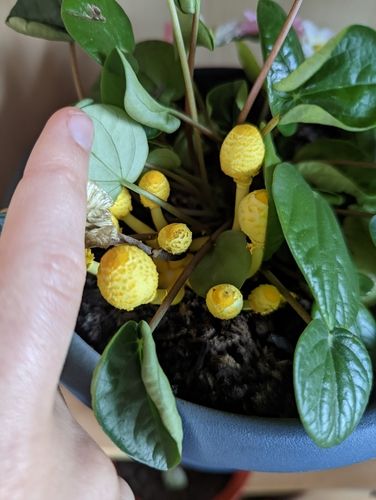
Yellow flowerpot fungus (Leucocoprinus birnbaumii)

Yellow flowerpot fungus

Leucocoprinus birnbaumii

People: Toxic/GI upsetPets: Unknown, treat as toxicGood for the garden

What it looks like: Bright lemon-yellow bell-shaped cap 2–5 cm, powdery.

Where you'll see it: Pot plants and hothouse potting mix. It feeds on the mix.

Effect on plants: Beneficial

Photo: Rosie Steinberg, CC BY 4.0, via iNaturalist (observation)

Devil's stinkhorn (Satyrus rubicundus)

Devil's stinkhorn

Satyrus rubicundus

People: UnknownPets: Unknown, treat as toxicGood for the garden

What it looks like: Orange-red spike 8–15 cm with a dark slimy tip, from a white egg. Stinks.

Where you'll see it: Mulch and rich soil. Feeds on mulch.

Effect on plants: Beneficial

Photo: Todd Huang, CC BY 4.0, via iNaturalist (observation)

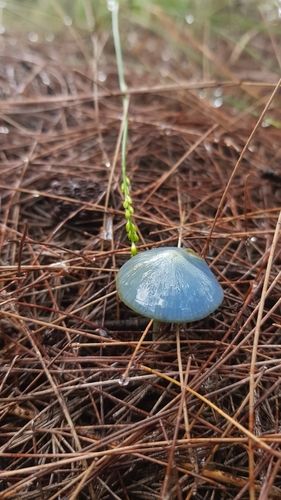
Skyblue pinkgill (Entoloma virescens)

Skyblue pinkgill

Entoloma virescens

People: UnknownPets: Unknown, treat as toxicGood for the garden

What it looks like: Small bright sky-blue cone 1–4 cm, bruises green.

Where you'll see it: Damp litter and moss in bush and shady gardens. Litter decomposer.

Effect on plants: Beneficial

Photo: Sofia Zvolanek, CC BY 4.0, via iNaturalist (observation)

Golden-scruffy collybia (Cyptotrama asprata)

Golden-scruffy collybia

Cyptotrama asprata

People: UnknownPets: Unknown, treat as toxicHarmless to plants

What it looks like: Small golden-yellow cap 1–3 cm with spiky scales.

Where you'll see it: Dead twigs and branches. Rots dead wood.

Effect on plants: Harmless

Photo: Sofia Zvolanek, CC BY 4.0, via iNaturalist (observation)
Ochre-gilled barefoot lepidella (Amanita ochrophylla)

Ochre-gilled barefoot lepidella

Amanita ochrophylla

People: Unknown (genus has deadly species)Pets: Unknown, treat as toxicGood for the garden

What it looks like: Large cream to tan cap 8–20 cm, cream gills, big ring, bulbous base.

Where you'll see it: On the ground under eucalypts. Partners tree roots.

Effect on plants: Beneficial

Photo: Sofia Zvolanek, CC BY 4.0, via iNaturalist (observation)

Wood ear mushroom (Auricularia cornea)

Wood ear mushroom

Auricularia cornea

People: Not known to be toxicPets: Unknown, treat as toxicHarmless to plants

What it looks like: Rubbery brown ear-shaped jelly 3–10 cm, hairy on top.

Where you'll see it: Dead branches and logs. Rots dead wood.

Effect on plants: Harmless

Photo: Sofia Zvolanek, CC BY 4.0, via iNaturalist (observation)
Green skinhead (Cortinarius austrovenetus)

Green skinhead

Cortinarius austrovenetus

People: Unknown (genus has deadly species)Pets: Unknown, treat as toxicGood for the garden

What it looks like: Olive-green dry cap 2–6 cm with yellowish gills.

Where you'll see it: On the ground under eucalypts. Partners tree roots.

Effect on plants: Beneficial

Photo: Sofia Zvolanek, CC BY 4.0, via iNaturalist (observation)

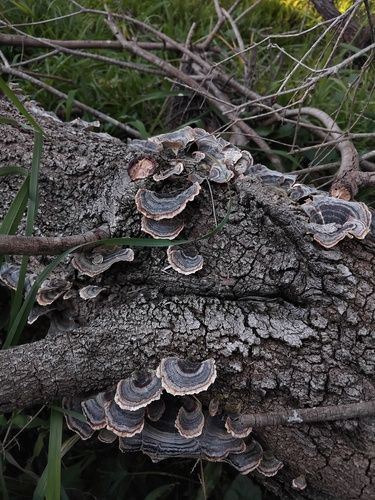
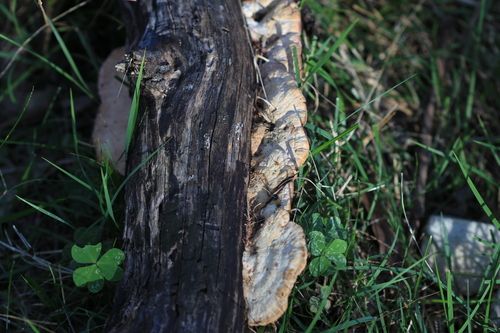
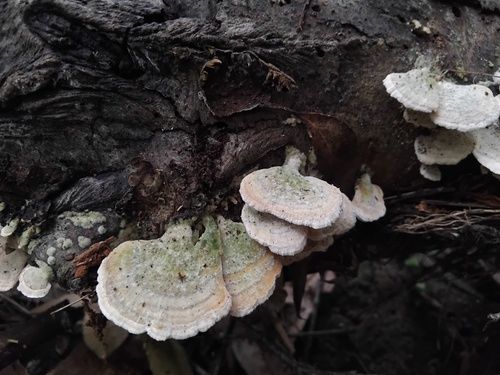
Turkey tail (Trametes versicolor)

Turkey tail

Trametes versicolor

People: UnknownPets: Unknown, treat as toxicHarmless to plants

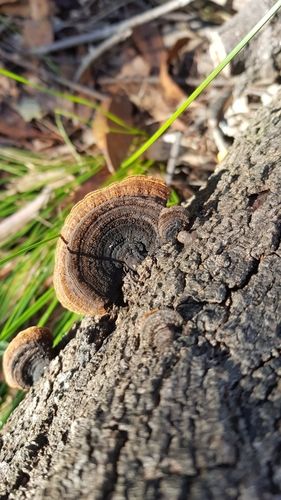
What it looks like: Thin, velvety banded fans 2–8 cm in brown, grey and cream.

Where you'll see it: Dead logs and stumps. Rots dead wood.

Effect on plants: Harmless

Photo: Sofia Zvolanek, CC BY 4.0, via iNaturalist (observation)
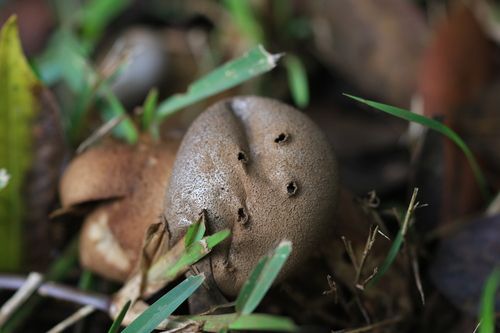
Australian pepperpot (Myriostoma australianum)

Australian pepperpot

Myriostoma australianum

People: UnknownPets: Unknown, treat as toxicGood for the garden

What it looks like: Star-shaped earthstar with a round spore sac with several small holes.

Where you'll see it: Sandy soil and litter. Litter decomposer.

Effect on plants: Beneficial

Photo: Sofia Zvolanek, CC BY 4.0, via iNaturalist (observation)

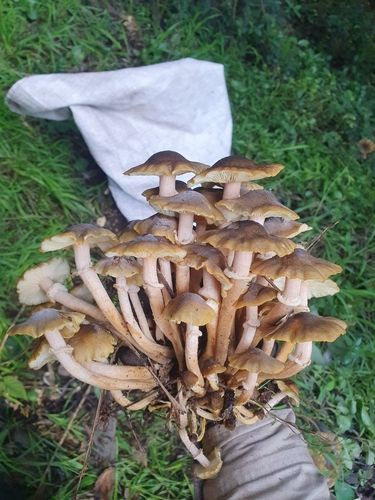
Australian honey fungus (Armillaria luteobubalina)

Australian honey fungus

Armillaria luteobubalina

People: UnknownPets: Unknown, treat as toxicCan harm plants

What it looks like: Clumps of honey-yellow to tan caps 3–10 cm with a ring, at the base of trees in autumn.

Where you'll see it: At the base of living or dead trees and shrubs. It is a root-rot fungus that kills plants.

Effect on plants: Harmful

Photo: maxark, CC BY 4.0, via iNaturalist (observation)

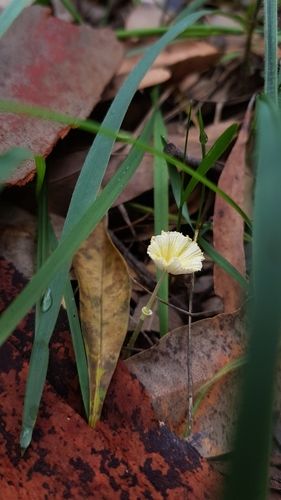
Fragile dapperling (Leucocoprinus fragilissimus)

Fragile dapperling

Leucocoprinus fragilissimus

People: UnknownPets: Unknown, treat as toxicGood for the garden

What it looks like: Very thin pale yellow cap 2–4 cm, so delicate it collapses on touch.

Where you'll see it: Leaf litter and mulch. Litter decomposer.

Effect on plants: Beneficial

Photo: Sofia Zvolanek, CC BY 4.0, via iNaturalist (observation)

Descolea recedens

Descolea recedens

No widely used common name

People: UnknownPets: Unknown, treat as toxicGood for the garden

What it looks like: Golden-brown wrinkled cap 2–6 cm, ring on stem.

Where you'll see it: On the ground under eucalypts. Partners tree roots.

Effect on plants: Beneficial

Photo: James K. Douch, CC BY-SA 4.0, via iNaturalist (observation)

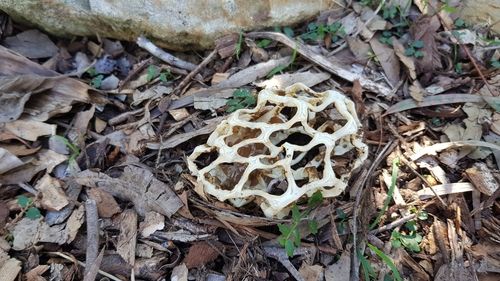
Smooth cage fungus (Ileodictyon gracile)

Smooth cage fungus

Ileodictyon gracile

People: UnknownPets: Unknown, treat as toxicGood for the garden

What it looks like: White open lattice ball 5–10 cm, slimy inside. Smells bad.

Where you'll see it: Mulch and leafy ground. Feeds on mulch.

Effect on plants: Beneficial

Photo: Sofia Zvolanek, CC BY 4.0, via iNaturalist (observation)

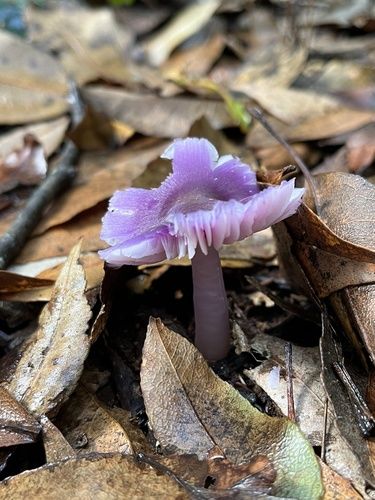
Mauve splitting waxcap (Porpolomopsis lewelliniae)

Mauve splitting waxcap

Porpolomopsis lewelliniae

People: UnknownPets: Unknown, treat as toxicGood for the garden

What it looks like: Lilac to pink conical waxy cap 2–5 cm that splits at the edge.

Where you'll see it: Moss and litter in damp shady spots. Role not well known.

Effect on plants: Beneficial

Photo: Todd Huang, CC BY 4.0, via iNaturalist (observation)

Truncospora ochroleuca

Truncospora ochroleuca

No widely used common name

People: UnknownPets: Unknown, treat as toxicHarmless to plants

What it looks like: Small hard cream to tan hoof-shaped brackets 1–4 cm.

Where you'll see it: Dead branches. Rots dead wood.

Effect on plants: Harmless

Photo: Sofia Zvolanek, CC BY 4.0, via iNaturalist (observation)
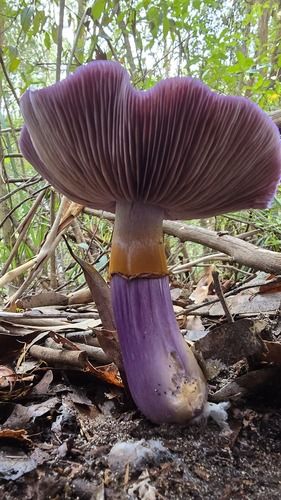
Rhodocollybia eucalyptorum

Rhodocollybia eucalyptorum

No widely used common name

People: UnknownPets: Unknown, treat as toxicGood for the garden

What it looks like: Brown cap 3–8 cm, crowded pale gills, tough stem.

Where you'll see it: Eucalypt litter. Litter decomposer.

Effect on plants: Beneficial

Photo: Sofia Zvolanek, CC BY 4.0, via iNaturalist (observation)

Sulphur tuft (Hypholoma fasciculare)

Sulphur tuft

Hypholoma fasciculare

People: Toxic/GI upsetPets: Unknown, treat as toxicHarmless to plants

What it looks like: Dense clumps of sulphur-yellow caps 2–6 cm with greenish gills.

Where you'll see it: Stumps and buried wood, often pine. Rots dead wood.

Effect on plants: Harmless

Photo: Andrew Holle, CC0 1.0, via iNaturalist (observation)

Ramaria lorithamnus

Ramaria lorithamnus

No widely used common name

People: UnknownPets: Unknown, treat as toxicGood for the garden

What it looks like: Upright bunches of pale to apricot coral branches 5–12 cm.

Where you'll see it: On the ground in eucalypt litter. Likely partners tree roots.

Effect on plants: Beneficial

Photo: Sofia Zvolanek, CC BY 4.0, via iNaturalist (observation)

Salmon gum mushroom (Phlebopus marginatus)

Salmon gum mushroom

Phlebopus marginatus

People: UnknownPets: Unknown, treat as toxicGood for the garden

What it looks like: Huge olive-brown cap up to 50 cm on a thick stem, yellow pores.

Where you'll see it: Lawns and parks near trees, often eucalypts. Linked to tree roots.

Effect on plants: Beneficial

Photo: Sofia Zvolanek, CC BY 4.0, via iNaturalist (observation)

Oudemansiella gigaspora

Oudemansiella gigaspora

No widely used common name

People: UnknownPets: Unknown, treat as toxicHarmless to plants

What it looks like: Slimy white to grey cap 3–10 cm with a long rooting stem.

Where you'll see it: Ground over buried wood. Rots buried wood.

Effect on plants: Harmless

Photo: Carl Ramirez, CC BY 4.0, via iNaturalist (observation)

Australian flour lepidella (Amanita farinacea)

Australian flour lepidella

Amanita farinacea

People: Unknown (genus has deadly species)Pets: Unknown, treat as toxicGood for the garden

What it looks like: Small white mealy cap 2–5 cm with a floury coating.

Where you'll see it: On the ground under eucalypts. Partners tree roots.

Effect on plants: Beneficial

Photo: Sofia Zvolanek, CC BY 4.0, via iNaturalist (observation)

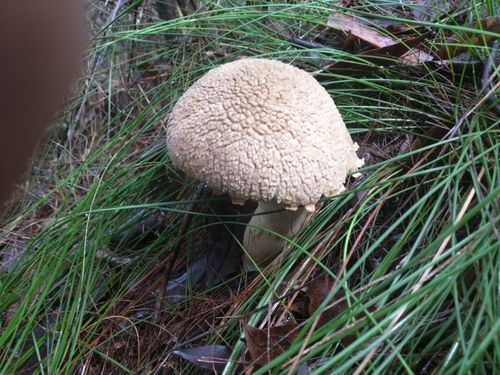
Chlorophyllum nothorhacodes

Chlorophyllum nothorhacodes

No widely used common name

People: UnknownPets: Unknown, treat as toxicGood for the garden

What it looks like: Large brown-scaled cap 6–15 cm, flesh stains orange-red when cut.

Where you'll see it: Mulch, compost heaps and rich garden soil. Decomposer.

Effect on plants: Beneficial

Photo: Sofia Zvolanek, CC BY 4.0, via iNaturalist (observation)

Cerrena zonata

Cerrena zonata

No widely used common name

People: UnknownPets: Unknown, treat as toxicHarmless to plants

What it looks like: Thin grey-brown zoned brackets with maze-like pores.

Where you'll see it: Dead wood. Rots dead wood.

Effect on plants: Harmless

Photo: ian_mcallan, CC BY 4.0, via iNaturalist (observation)

White punk (Laetiporus portentosus)

White punk

Laetiporus portentosus

People: UnknownPets: Unknown, treat as toxicCan harm plants

What it looks like: Soft white bracket 10–40 cm, dries chalky. Looks like a lump of foam on the trunk.

Where you'll see it: High on trunks of living and dead eucalypts. Causes heart rot inside the trunk.

Effect on plants: Harmful

Photo: Sofia Zvolanek, CC BY 4.0, via iNaturalist (observation)

Fairy inkcap (Coprinellus disseminatus)

Fairy inkcap

Coprinellus disseminatus

People: UnknownPets: Unknown, treat as toxicHarmless to plants

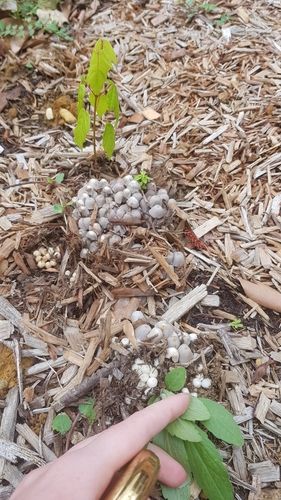
What it looks like: Hundreds of tiny grey-white bells under 1.5 cm in a swarm.

Where you'll see it: Around stumps and buried wood. Rots dead wood.

Effect on plants: Harmless

Photo: Sofia Zvolanek, CC BY 4.0, via iNaturalist (observation)
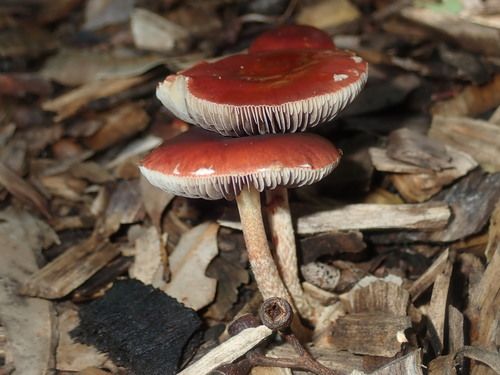
Phaeotrametes decipiens

Phaeotrametes decipiens

No widely used common name

People: UnknownPets: Unknown, treat as toxicHarmless to plants

What it looks like: Tough brown banded brackets 3–8 cm.

Where you'll see it: Dead wood. Rots dead wood.

Effect on plants: Harmless

Photo: Sofia Zvolanek, CC BY 4.0, via iNaturalist (observation)
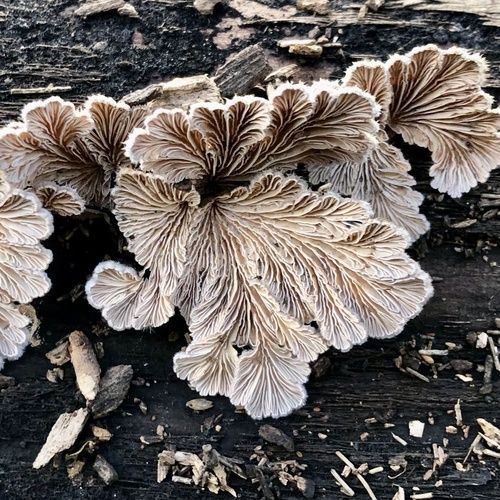
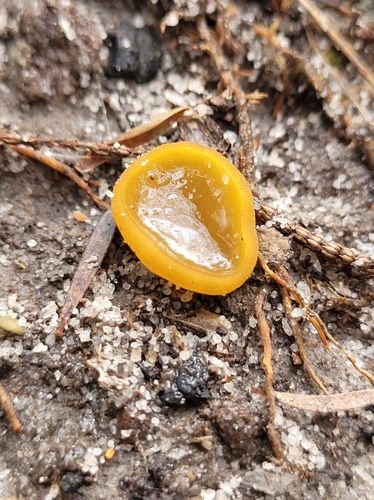
Yellow earth buttons (Phaeohelotium baileyanum)

Yellow earth buttons

Phaeohelotium baileyanum

People: UnknownPets: Unknown, treat as toxicGood for the garden

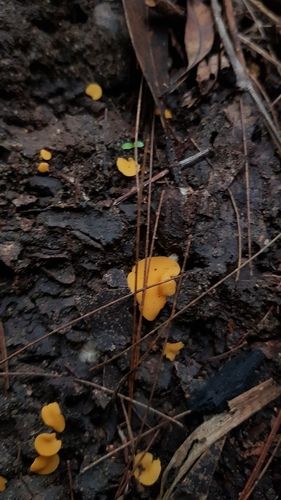
What it looks like: Tiny yellow discs or buttons under 1 cm on the ground.

Where you'll see it: Damp soil and litter. Litter decomposer.

Effect on plants: Beneficial

Photo: Sofia Zvolanek, CC BY 4.0, via iNaturalist (observation)

Burnt-orange bolete (Tylopilus balloui)

Burnt-orange bolete

Tylopilus balloui

People: UnknownPets: Unknown, treat as toxicGood for the garden

What it looks like: Orange cap 4–10 cm with white to pinkish pores.

Where you'll see it: Under eucalypts. Partners tree roots.

Effect on plants: Beneficial

Photo: Sofia Zvolanek, CC BY 4.0, via iNaturalist (observation)

Gliophorus graminicolor

Gliophorus graminicolor

No widely used common name

People: UnknownPets: Unknown, treat as toxicGood for the garden

What it looks like: Small slimy olive-green cap 1–3 cm.

Where you'll see it: Moss and short grass. Role not well known.

Effect on plants: Beneficial

Photo: prossington, CC BY 4.0, via iNaturalist (observation)

Russula persanguinea

Russula persanguinea

No widely used common name

People: UnknownPets: Unknown, treat as toxicGood for the garden

What it looks like: Bright red cap 3–8 cm with white gills and stem; brittle flesh.

Where you'll see it: Under eucalypts. Partners tree roots.

Effect on plants: Beneficial

Photo: Sofia Zvolanek, CC BY 4.0, via iNaturalist (observation)

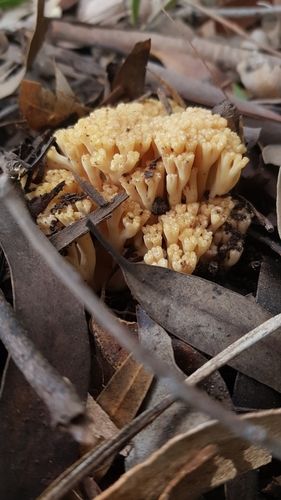
Ramaria filicicola

Ramaria filicicola

No widely used common name

People: UnknownPets: Unknown, treat as toxicGood for the garden

What it looks like: Small yellowish-tan coral branches 2–6 cm.

Where you'll see it: Fern and leaf litter. Litter decomposer.

Effect on plants: Beneficial

Photo: Sofia Zvolanek, CC BY 4.0, via iNaturalist (observation)

Graceful parasol (Macrolepiota clelandii)

Graceful parasol

Macrolepiota clelandii

People: UnknownPets: Unknown, treat as toxicGood for the garden

What it looks like: Tall slender parasol, cap 5–12 cm with brown scales, movable ring.

Where you'll see it: Litter and mulch in gardens and bush. Decomposer.

Effect on plants: Beneficial

Photo: Liam southwell, CC BY 4.0, via iNaturalist (observation)

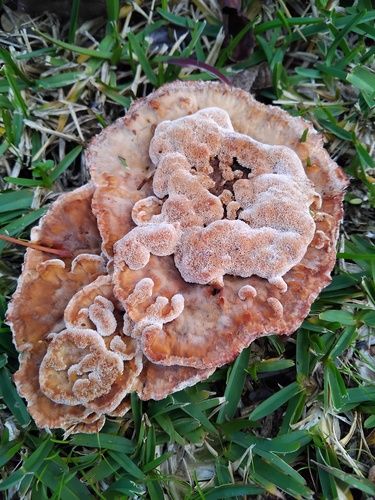
Blushing rosette (Abortiporus biennis)

Blushing rosette

Abortiporus biennis

People: UnknownPets: Unknown, treat as toxicHarmless to plants

What it looks like: Pale rosette or lump 5–15 cm that bruises reddish.

Where you'll see it: Ground near stumps or buried roots. Rots dead wood.

Effect on plants: Harmless

Photo: Sofia Zvolanek, CC BY 4.0, via iNaturalist (observation)
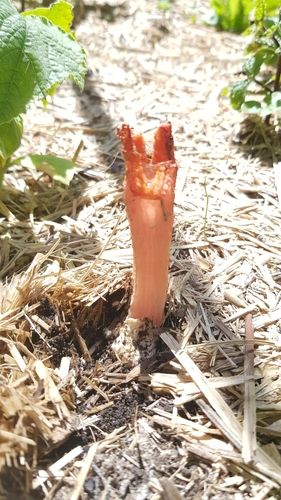
Orange moss navel (Rickenella fibula)

Orange moss navel

Rickenella fibula

People: UnknownPets: Unknown, treat as toxicGood for the garden

What it looks like: Tiny orange cap under 1 cm on a thin stem.

Where you'll see it: Moss on lawns, paths and logs. Lives with moss.

Effect on plants: Beneficial

Photo: Sofia Zvolanek, CC BY 4.0, via iNaturalist (observation)

Pyramid builder lepidella (Amanita pyramidifera)

Pyramid builder lepidella

Amanita pyramidifera

People: Unknown (genus has deadly species)Pets: Unknown, treat as toxicGood for the garden

What it looks like: White cap 5–15 cm covered in small pyramid-shaped warts.

Where you'll see it: Under eucalypts. Partners tree roots.

Effect on plants: Beneficial

Photo: ian_mcallan, CC BY 4.0, via iNaturalist (observation)

Fleshy ground cup (Aleurina ferruginea)

Fleshy ground cup

Aleurina ferruginea

People: UnknownPets: Unknown, treat as toxicGood for the garden

What it looks like: Rusty-brown cups 1–3 cm on the ground.

Where you'll see it: Bare soil and litter. Decomposer.

Effect on plants: Beneficial

Photo: Eamonn Culhane, CC BY 4.0, via iNaturalist (observation)

Orange fan (Anthracophyllum archeri)

Orange fan

Anthracophyllum archeri

People: UnknownPets: Unknown, treat as toxicHarmless to plants

What it looks like: Small orange-red fans 1–3 cm with sparse gills.

Where you'll see it: Dead twigs. Rots dead wood.

Effect on plants: Harmless

Photo: Sofia Zvolanek, CC BY 4.0, via iNaturalist (observation)
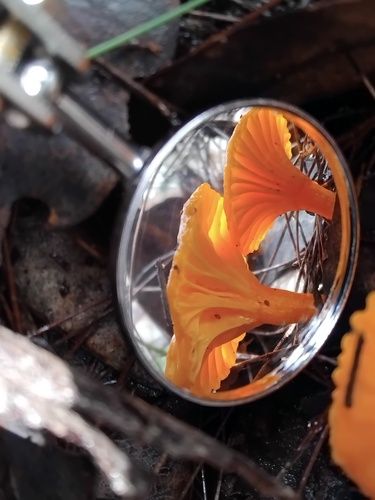
Clavulinopsis corallinorosacea

Clavulinopsis corallinorosacea

No widely used common name

People: UnknownPets: Unknown, treat as toxicGood for the garden

What it looks like: Small pink-orange coral branches 2–5 cm.

Where you'll see it: Litter and moss. Role not well known.

Effect on plants: Beneficial

Photo: Sofia Zvolanek, CC BY 4.0, via iNaturalist (observation)

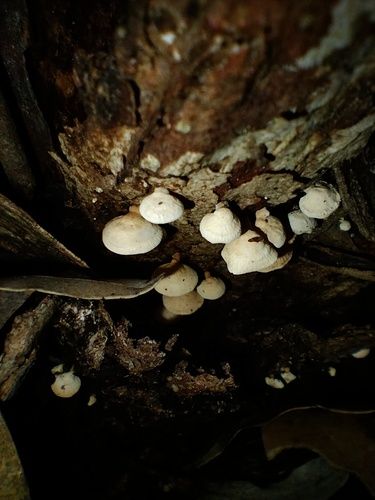
Panellus luxfilamentus

Panellus luxfilamentus

No widely used common name

People: UnknownPets: Unknown, treat as toxicHarmless to plants

What it looks like: Tiny cream fans under 2 cm; the threads glow at night.

Where you'll see it: Dead wood. Rots dead wood.

Effect on plants: Harmless

Photo: Sofia Zvolanek, CC BY 4.0, via iNaturalist (observation)
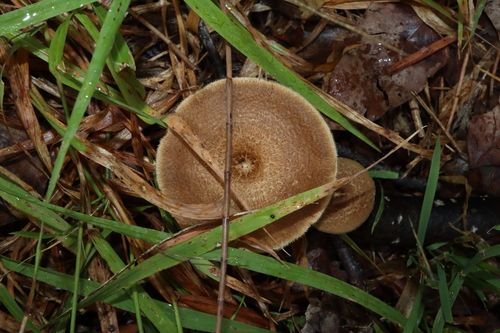
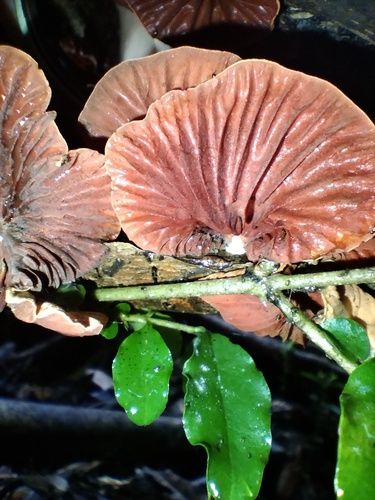
Leathery goblet (Cymatoderma elegans)

Leathery goblet

Cymatoderma elegans

People: UnknownPets: Unknown, treat as toxicHarmless to plants

What it looks like: Tough tan goblet or funnel 5–15 cm with ridged surface.

Where you'll see it: Buried and fallen wood. Rots dead wood.

Effect on plants: Harmless

Photo: Sofia Zvolanek, CC BY 4.0, via iNaturalist (observation)
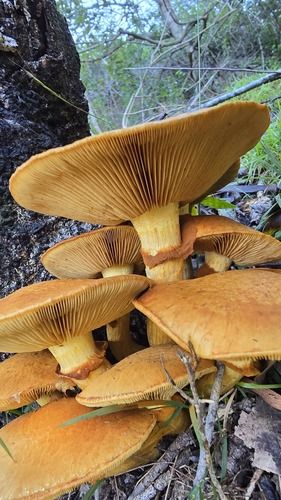
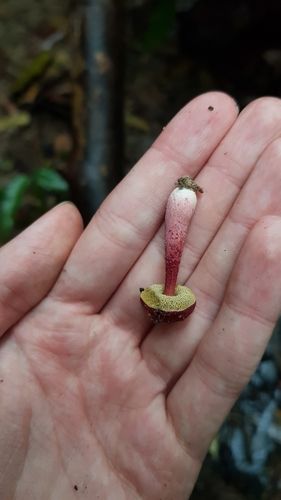
Rhubarb bolete (Boletellus obscurecoccineus)

Rhubarb bolete

Boletellus obscurecoccineus

People: UnknownPets: Unknown, treat as toxicGood for the garden

What it looks like: Pink-red cap 3–8 cm with yellow pores and a pink scaly stem.

Where you'll see it: Under eucalypts. Partners tree roots.

Effect on plants: Beneficial

Photo: Sofia Zvolanek, CC BY 4.0, via iNaturalist (observation)

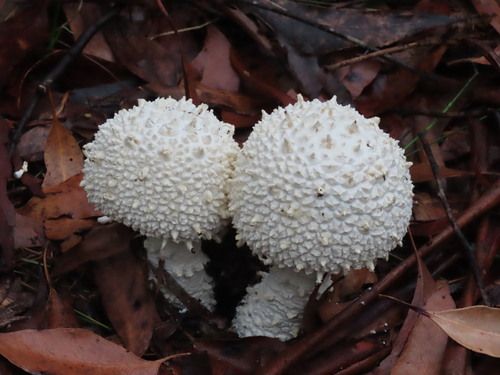
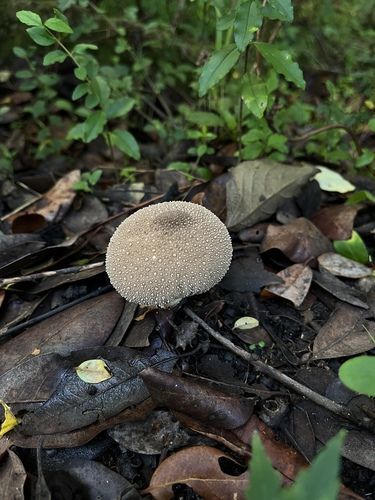
Common puffball (Lycoperdon perlatum)

Common puffball

Lycoperdon perlatum

People: Not known to be toxicPets: Dangerous (if spores inhaled)Can harm plants

What it looks like: White to tan pear-shaped ball 3–6 cm covered in little spines; puffs brown spores when old.

Where you'll see it: Lawns, mulch and litter. Decomposer.

Effect on plants: Beneficial

Photo: Todd Huang, CC BY 4.0, via iNaturalist (observation)

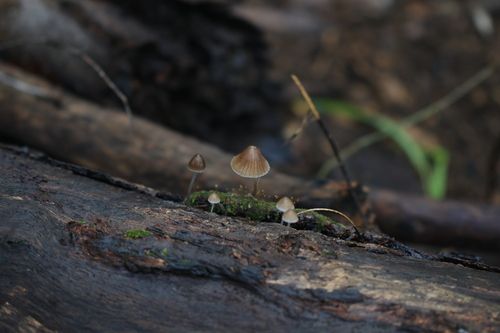
Mycena subgalericulata

Mycena subgalericulata

No widely used common name

People: UnknownPets: Unknown, treat as toxicHarmless to plants

What it looks like: Grey-brown bell-shaped cap 1–3 cm in clusters.

Where you'll see it: Dead wood. Rots dead wood.

Effect on plants: Harmless

Photo: Sofia Zvolanek, CC BY 4.0, via iNaturalist (observation)
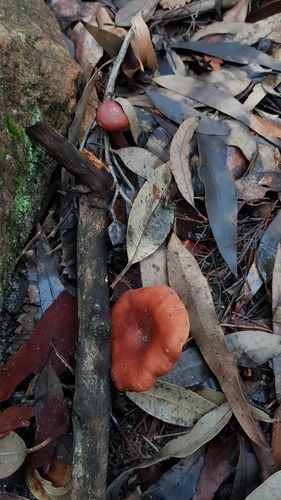
Gymnopilus ferruginosus

Gymnopilus ferruginosus

No widely used common name

People: UnknownPets: Dangerous (hallucinogenic genus)Can harm plants

What it looks like: Rusty-orange cap 2–6 cm, rusty spores.

Where you'll see it: Dead wood and woodchips. Rots dead wood.

Effect on plants: Harmless

Photo: Sofia Zvolanek, CC BY 4.0, via iNaturalist (observation)
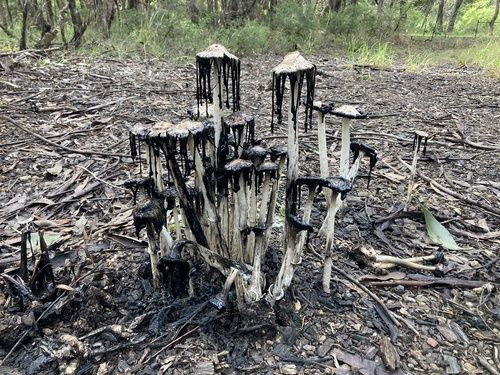
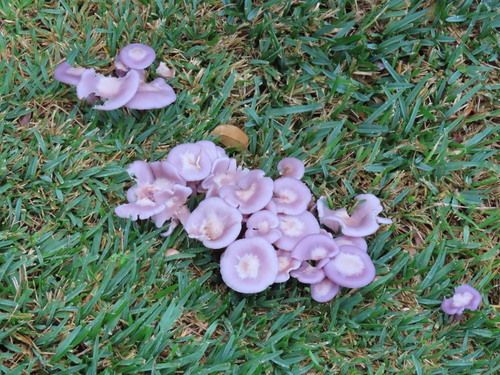
Lepista sublilacina

Lepista sublilacina

No widely used common name

People: UnknownPets: Unknown, treat as toxicGood for the garden

What it looks like: Lilac-tan cap 4–10 cm with lilac gills.

Where you'll see it: Litter, compost and mulch. Decomposer.

Effect on plants: Beneficial

Photo: ian_mcallan, CC BY 4.0, via iNaturalist (observation)

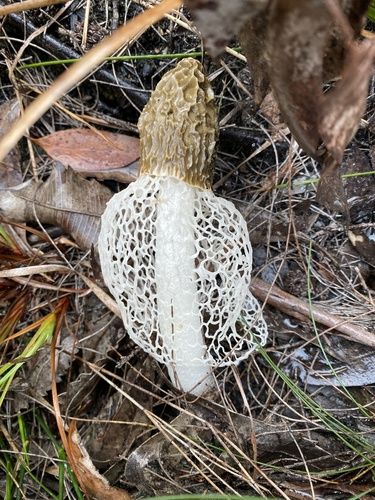
Bridal veil stinkhorn (Phallus indusiatus)

Bridal veil stinkhorn

Phallus indusiatus

People: UnknownPets: Unknown, treat as toxicGood for the garden

What it looks like: White stalk 10–20 cm with a lacy white skirt and a slimy olive tip.

Where you'll see it: Mulch and rich soil. Feeds on mulch.

Effect on plants: Beneficial

Photo: Tess McGrigor, CC0 1.0, via iNaturalist (observation)

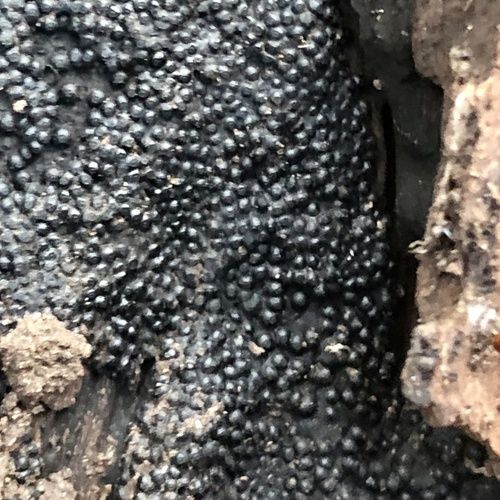
Annulohypoxylon bovei

Annulohypoxylon bovei

No widely used common name

People: UnknownPets: Unknown, treat as toxicHarmless to plants

What it looks like: Small hard black bumps on bark.

Where you'll see it: Dead wood. Rots dead wood.

Effect on plants: Harmless

Photo: James K. Douch, CC BY-SA 4.0, via iNaturalist (observation)

Marbled death cap (Amanita marmorata)

Marbled death cap

Amanita marmorata

People: Unknown (genus has deadly species)Pets: Unknown, treat as toxicGood for the garden

What it looks like: Grey-brown streaky cap 4–8 cm, white gills, ring and cup at the base.

Where you'll see it: Under trees in coastal sand. Partners tree roots.

Effect on plants: Beneficial

Photo: Sofia Zvolanek, CC BY 4.0, via iNaturalist (observation)

Gymnopilus allantopus

Gymnopilus allantopus

No widely used common name

People: UnknownPets: Dangerous (hallucinogenic genus)Can harm plants

What it looks like: Yellow-brown cap 2–5 cm, rusty spores.

Where you'll see it: Dead wood and woodchips. Rots dead wood.

Effect on plants: Harmless

Photo: Sofia Zvolanek, CC BY 4.0, via iNaturalist (observation)
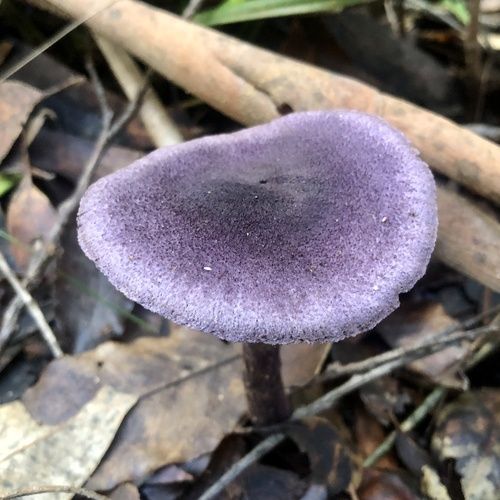
Cortinarius sinapicolor

Cortinarius sinapicolor

No widely used common name

People: Unknown (genus has deadly species)Pets: Unknown, treat as toxicGood for the garden

What it looks like: Slimy mustard-yellow cap 3–8 cm.

Where you'll see it: Under eucalypts. Partners tree roots.

Effect on plants: Beneficial

Photo: Sofia Zvolanek, CC BY 4.0, via iNaturalist (observation)

Stinky squid (Pseudocolus fusiformis)

Stinky squid

Pseudocolus fusiformis

People: UnknownPets: Unknown, treat as toxicGood for the garden

What it looks like: Three orange arms joined at the tip, 5–10 cm. Stinks.

Where you'll see it: Mulch and woodchips. Feeds on mulch.

Effect on plants: Beneficial

Photo: Billie, CC0 1.0, via iNaturalist (observation)

Gum bracket (Fomitopsis lilacinogilva)

Gum bracket

Fomitopsis lilacinogilva

People: UnknownPets: Unknown, treat as toxicHarmless to plants

What it looks like: Woody cream to brown bracket 5–15 cm with lilac-pink pores.

Where you'll see it: Dead eucalypt wood and dead parts of trees. Brown-rots wood.

Effect on plants: Harmless

Photo: Sofia Zvolanek, CC BY 4.0, via iNaturalist (observation)
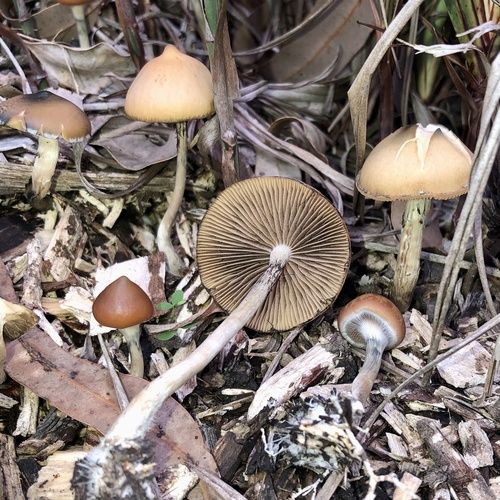
Violet-toothed polypore (Trichaptum biforme)

Violet-toothed polypore

Trichaptum biforme

People: UnknownPets: Unknown, treat as toxicHarmless to plants

What it looks like: Thin grey fans 1–5 cm with violet pore edge.

Where you'll see it: Dead wood. Rots dead wood.

Effect on plants: Harmless

Photo: Sofia Zvolanek, CC BY 4.0, via iNaturalist (observation)
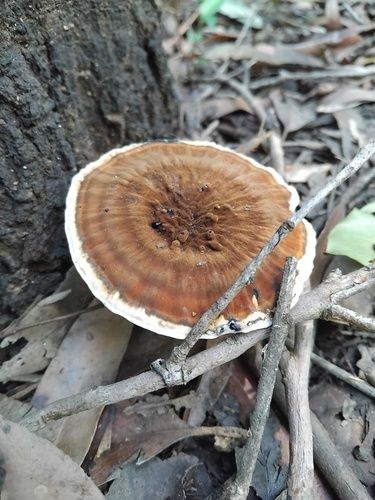
Ramaria capitata

Ramaria capitata

No widely used common name

People: UnknownPets: Unknown, treat as toxicGood for the garden

What it looks like: Pale coral with flattened tips, 4–10 cm.

Where you'll see it: Under eucalypts. Likely partners tree roots.

Effect on plants: Beneficial

Photo: Sofia Zvolanek, CC BY 4.0, via iNaturalist (observation)

Boletellus dissiliens

Boletellus dissiliens

No widely used common name

People: UnknownPets: Unknown, treat as toxicGood for the garden

What it looks like: Red cap 3–8 cm that cracks to show yellow flesh; yellow pores bruise blue.

Where you'll see it: Under eucalypts. Partners tree roots.

Effect on plants: Beneficial

Photo: Geoff Shuetrim, CC BY 4.0, via iNaturalist (observation)

Snow fungus (Tremella fuciformis)

Snow fungus

Tremella fuciformis

People: Not known to be toxicPets: Unknown, treat as toxicHarmless to plants

What it looks like: Clear-white frilly jelly 3–8 cm.

Where you'll see it: Dead branches, where it lives off other wood fungi.

Effect on plants: Harmless

Photo: Sofia Zvolanek, CC BY 4.0, via iNaturalist (observation)
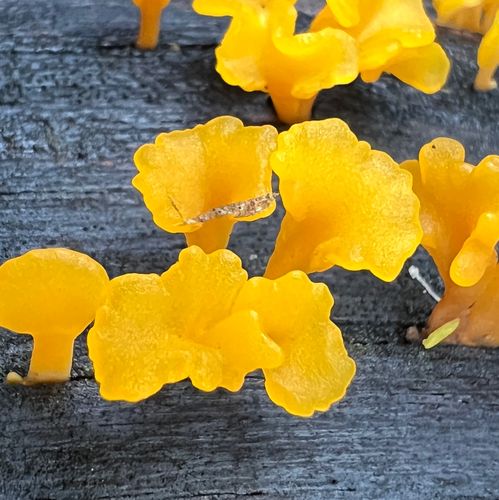
Austral honey mushroom (Armillaria novae-zelandiae)

Austral honey mushroom

Armillaria novae-zelandiae

People: UnknownPets: Unknown, treat as toxicCan harm plants

What it looks like: Clusters of slimy brown caps 2–6 cm with a ring.

Where you'll see it: Base of trees and stumps in damp areas. Root-rot fungus.

Effect on plants: Harmful

Photo: Sofia Zvolanek, CC BY 4.0, via iNaturalist (observation)
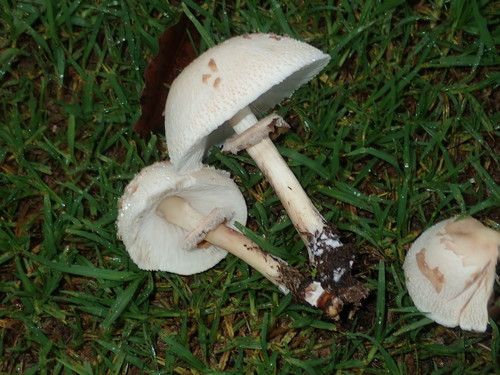
White dunce cap (Conocybe apala)

White dunce cap

Conocybe apala

People: UnknownPets: Unknown, treat as toxicGood for the garden

What it looks like: Tiny pale cone cap 1–3 cm on a very thin, fragile stem.

Where you'll see it: Lawns, mostly in the morning after rain. Decomposer.

Effect on plants: Beneficial

Photo: Sofia Zvolanek, CC BY 4.0, via iNaturalist (observation)
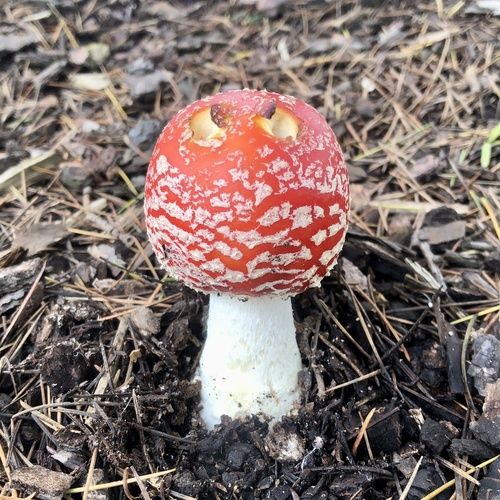
Yellow stainer (Agaricus xanthodermus)

Yellow stainer

Agaricus xanthodermus

People: Toxic/GI upsetPets: Unknown, treat as toxicGood for the garden

What it looks like: White mushroom 5–15 cm that stains chrome-yellow at the stem base when cut; smells like ink or phenol.

Where you'll see it: Lawns and garden beds in towns. Decomposer.

Effect on plants: Beneficial

Photo: Beau Meister, CC BY 4.0, via iNaturalist (observation)
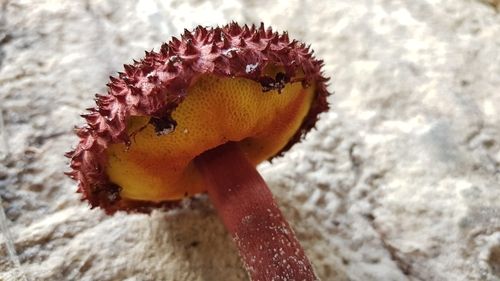
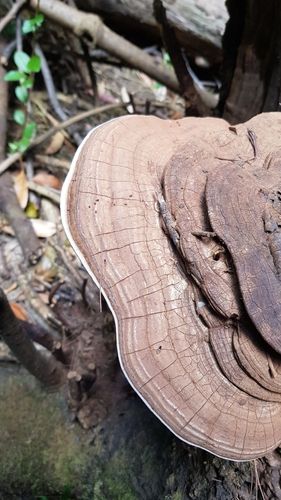
Southern bracket (Ganoderma australe)

Southern bracket

Ganoderma australe

People: UnknownPets: Unknown, treat as toxicCan harm plants

What it looks like: Big hard brown bracket 10–50 cm with a white edge; cocoa-brown spore dust nearby.

Where you'll see it: Base and trunks of living trees, stumps. Causes root, butt and trunk rot.

Effect on plants: Harmful

Photo: Sofia Zvolanek, CC BY 4.0, via iNaturalist (observation)
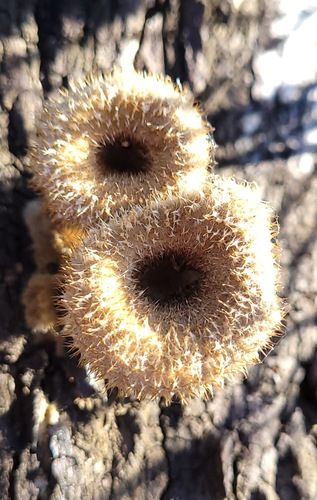
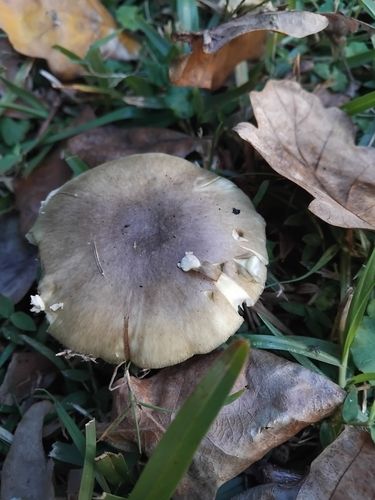
Death cap (Amanita phalloides)

Death cap

Amanita phalloides

People: DeadlyPets: DeadlyCan harm plants

What it looks like: Yellow-green to olive cap 4–16 cm, white gills, skirt-like ring, cup at the base.

Where you'll see it: Under oak trees in parks and gardens (found in Canberra and Victoria; a few iNat records in Sydney). Partners oak roots.

Effect on plants: Beneficial

Photo: Sofia Zvolanek, CC BY 4.0, via iNaturalist (observation)
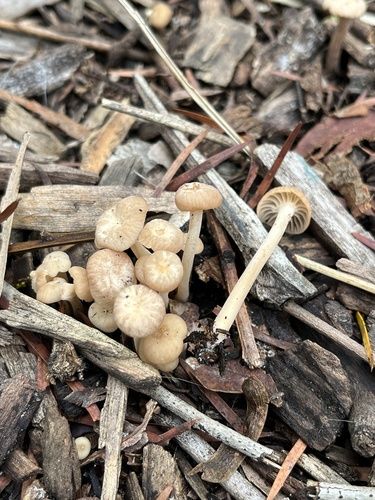
Sources: iNaturalist research-grade records for Greater Sydney (October 2026); Queensland Health, mushroom poisoning; Pet Poison Helpline; published veterinary case reports; NSW DPI and other state government fact sheets on Armillaria and Ganoderma. Toxicity marked "Unknown" means no species-level record was found. Photos are from iNaturalist under the licences shown.

Get in touch for a quote

Worried about fungi on a tree or in your lawn? I can take a look and tell you what I see, and point you to an arborist if the tree needs one.

CallGet a quote