Guide

Sydney lawn pests: what's eating my lawn?

The 11 pests I find most in Sydney lawns, with how to spot each one, simple checks you can do yourself, and what I'd do about it.

Brown patches aren't always pests. Dry weather, dog urine, scalping and spray damage can look much the same, so check before you treat anything. The pests are listed roughly from most to least common in Sydney lawns. That order is my own judgement; there's no official ranking.

Download the PDF (2.0 MB)

Four quick checks

Soap flush test

Mix 1–2 tablespoons of dishwashing liquid into a bucket (about 2.5–9 L) of water. Pour it over about 1 m² of lawn right at the edge of the damaged patch, ideally in the evening. Watch for 10–15 minutes. Caterpillars, cutworms and mole crickets wriggle up to the surface.

Tug test

Grab a handful of yellowing grass at the edge of a patch and pull. If it lifts like a loose rug with few roots, something is eating the roots. If single stems snap off at the base and are hollow with sawdust-like crumbs inside, think billbug.

Spade check

Cut a spade-sized square of turf on three sides at the edge of the damage and fold it back. Look in the top 5–10 cm of soil for C-shaped white grubs.

Birds and night watch

Lots of birds pecking or digging in one spot is a big hint that grubs or caterpillars are there. A torch walk after dark shows caterpillars feeding and moths around lights.

Find your pest

11 pests shown

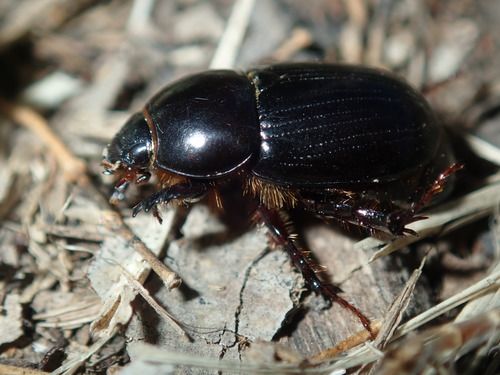
Adult beetle (Heteronychus arator)
Adult beetlePhoto: Thomas Mesaglio, CC BY 4.0, via iNaturalist

African black beetle

Heteronychus arator · Root feeder (larvae) and beetle

Brown or yellow patchesTurf lifts like a rug (roots gone)Birds digging or pecking

Damage: Irregular brown patches that look like drought and don't green up after watering. The turf feels spongy and can be rolled back like carpet because the roots are gone. Birds, and sometimes foxes, dig it up looking for grubs.

The insect: Adults are shiny jet-black beetles, 12–15 mm long, that wander over paths and lawns and fly to lights at night. Larvae are cream C-shaped curl grubs up to about 25 mm with a brown head, three pairs of legs and a darker rear end.

When: Beetles roam and lay eggs in spring (about September–October). Grubs hatch around November and do their damage from December to March. New beetles come out from late summer into autumn.

JFMAMJJASOND

Lawns it hits: Couch, Kikuyu, Buffalo, Zoysia. Recorded mainly on couch and kikuyu; most lawn grasses can be hit.

Checks to try:

  • Spade check
  • Tug test
  • Birds and night watch
Could it be something else?
  • Drought stress: Dry grass still has roots and stays anchored when you tug. Grub-eaten turf lifts straight off.
  • Dog urine: Urine spots are small, round and often have a ring of extra-green grass around the edge.
What I'd do about it
  • Water deeply and less often so roots go down further and can cope with some feeding.
  • Don't overdo the fertiliser in spring; lush, soft turf attracts the beetles.
  • Mow at the right height for your grass, not too low, so it stays strong.
  • Beneficial nematodes (Heterorhabditis) watered into moist soil have given very good control of the grubs in trials.
  • Let the magpies, ibis and currawongs dig. Rake and top-dress the holes after.

If it's bad: If you are finding more than a handful of grubs per spade square and the lawn keeps dying back, a registered lawn grub product applied in late spring, when the grubs are small, works better than waiting until autumn.
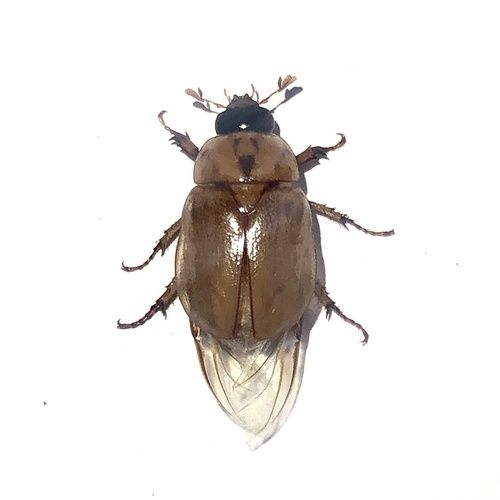
Argentinian scarab adult (Cyclocephala signaticollis)
Argentinian scarab adultPhoto: James K. Douch, CC BY-SA 4.0, via iNaturalist
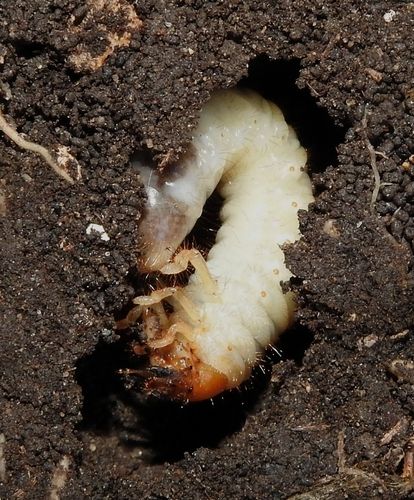
Typical curl grub shape (overseas relative) (Melolontha melolontha)
Typical curl grub shape (overseas relative)Photo: Lucas Benaiche, CC BY-SA 4.0, via iNaturalist
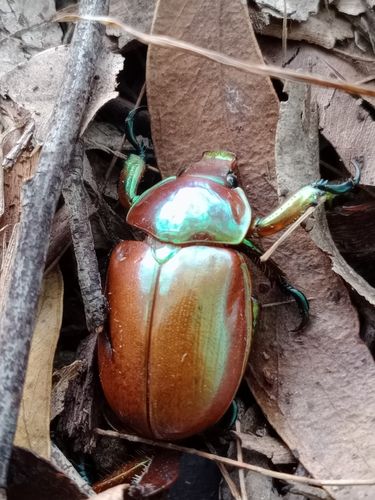
Christmas beetle adult (Anoplognathus viriditarsis)
Christmas beetle adultPhoto: Carl Ramirez, CC BY 4.0, via iNaturalist

3 photos: swipe for more

Curl grubs (other scarab larvae)

Scarabaeidae, e.g. Argentinian scarab (Cyclocephala signaticollis) and Christmas beetles (Anoplognathus) · Root feeder (larvae)

Brown or yellow patchesTurf lifts like a rug (roots gone)Birds digging or pecking

Damage: Same pattern as African black beetle: yellow then brown patches, turf that lifts like a rug, and birds digging.

The insect: Fat, cream, C-shaped grubs with six legs near the head and a swollen grey-brown rear. Head colour varies (yellow, brown, red or black). The adults are brown or metallic beetles. The Argentinian scarab is a small brown beetle that swarms to lights on summer nights.

When: Grubs feed through summer and autumn. Beetles fly in late spring and summer.

JFMAMJJASOND

Lawns it hits: Couch, Kikuyu, Buffalo, Zoysia. Any lawn grass.

Checks to try:

  • Spade check
  • Tug test
  • Birds and night watch
Could it be something else?
  • Drought stress: Roots stay attached; the grass recovers within a week or two of a good soak.
  • Big compost-eating grubs: Not every curl grub is a problem. A couple per spade square in a garden bed or compost is normal and mostly feeding on organic matter.
What I'd do about it
  • Deep, less frequent watering for deep roots.
  • Mow a bit higher in summer.
  • Aerate compacted lawn in spring so roots can grow down.
  • Beneficial nematodes for heavy grub numbers.
  • Encourage birds that feed on grubs.

If it's bad: Only treat if you find lots of grubs and the lawn keeps losing ground; a registered lawn grub product timed for small grubs in late spring or early summer.

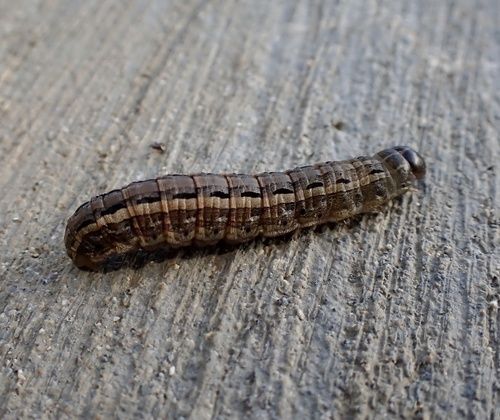
Caterpillar (Spodoptera mauritia)
CaterpillarPhoto: entophile, CC BY 4.0, via iNaturalist
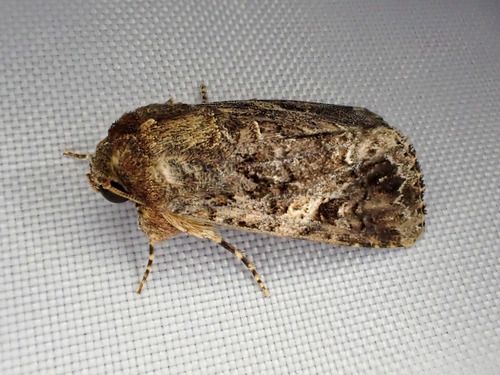
Adult moth (Spodoptera mauritia)
Adult mothPhoto: Richard Fuller, CC0 1.0, via iNaturalist
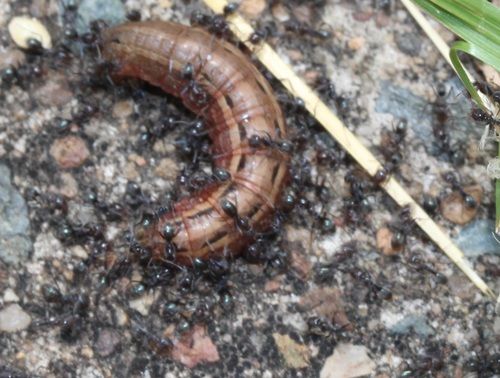
Common armyworm caterpillar (Pseudaletia convecta)
Common armyworm caterpillarPhoto: Natasha Taylor, CC BY 4.0, via iNaturalist

3 photos: swipe for more

Lawn armyworm (and common armyworm)

Spodoptera mauritia; Mythimna convecta · Leaf-chewing caterpillar

Brown or yellow patchesChewed, ragged or scalped blades

Damage: Patches that look freshly mown or scalped, ragged chewed leaf tips, and brown areas that spread fast, often overnight and starting from the lawn edge near garden beds. The roots are still fine.

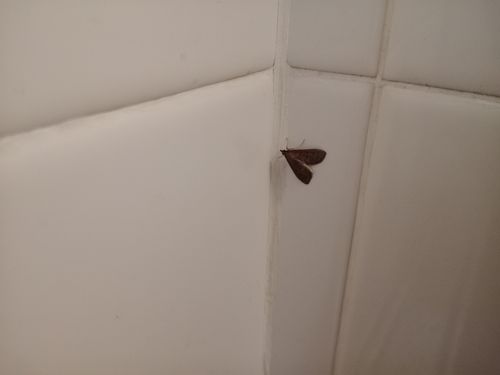
The insect: Smooth caterpillars up to 30–40 mm, green when small, then grey-brown with pale stripes along the body. They curl into a C when disturbed and hide in the thatch by day. Adults are dull brown moths.

When: Mostly late summer and early autumn (about December–April). There can be two or three generations in a season.

JFMAMJJASOND

Lawns it hits: Couch, Kikuyu, Buffalo, Zoysia. Couch and kikuyu are favourites; it will eat most lawn grasses.

Checks to try:

  • Soap flush test
  • Birds and night watch
Could it be something else?
  • Scalping from the mower: Scalped grass is cut evenly and shows the same day you mowed. Armyworm damage keeps growing night after night.
  • Drought stress: Drought browns the whole leaf evenly; armyworm leaves look chewed.
What I'd do about it
  • Keep the lawn watered and lightly fed so it can regrow; the roots usually survive.
  • Mow regularly and dethatch so caterpillars have fewer places to hide by day.
  • Check after warm, humid spells in late summer with a soap flush.
  • Birds love them. A lawn full of birds in February is worth a look.

If it's bad: If a soap flush brings up lots of caterpillars and the damage is spreading, a registered lawn caterpillar product applied in the evening, then repair with a light feed and water.

Adult moth (Herpetogramma licarsisalis)
Adult mothPhoto: Carl Ramirez, CC BY 4.0, via iNaturalist

Sod webworm (tropical grass webworm)

Herpetogramma licarsisalis · Leaf-chewing caterpillar

Brown or yellow patchesChewed, ragged or scalped blades

Damage: Small brown patches with chewed, ragged blades that join up into bigger bare areas. You may see fine silk and little green droppings in the thatch.

The insect: Slim greenish-brown caterpillars with dark spots, up to about 25 mm, hiding in silk tunnels in the thatch by day. Adults are pale brown moths that fly up in short hops when you walk across the lawn.

When: Damage is mostly January to April.

JFMAMJJASOND

Lawns it hits: Kikuyu, Buffalo, Couch. Named on kikuyu and buffalo.

Checks to try:

  • Soap flush test
  • Birds and night watch
Could it be something else?
  • Armyworm: Similar damage. Webworms are thinner, spotted, and live in silk-lined tunnels.
  • Fungal patch disease: Disease patches often have a darker or yellow ring and no chewed leaves.
What I'd do about it
  • Dethatch so there's less cover for the caterpillars.
  • Keep up water and a light feed through late summer so the grass outgrows the damage.
  • Soap flush when you see the moths fluttering over the lawn.

If it's bad: If the soap flush brings up lots of caterpillars, a registered lawn caterpillar product in the evening.

Cutworm caterpillar (Agrotis ipsilon)
Cutworm caterpillarPhoto: Aalbert Rebergen, CC BY 4.0, via iNaturalist
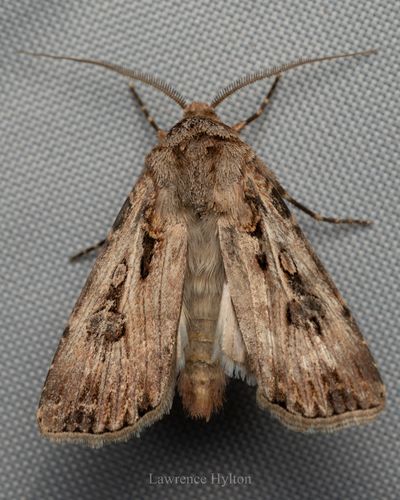
Adult moth (Agrotis munda)
Adult mothPhoto: Lawrence Hylton, CC BY 4.0, via iNaturalist

2 photos: swipe for more

Cutworms

Agrotis species · Leaf- and stem-chewing caterpillar

Brown or yellow patchesChewed, ragged or scalped blades

Damage: Small brown patches and grass chewed off at ground level, sometimes with little holes in the turf where caterpillars hide.

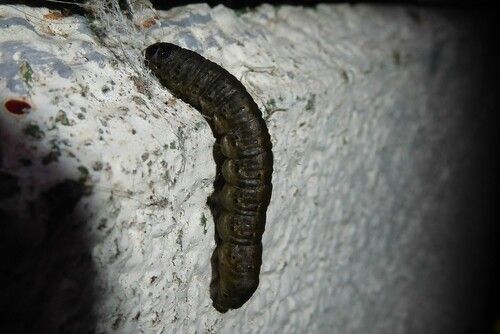
The insect: Plump grey-brown caterpillars up to about 40 mm that curl up tightly when disturbed. They hide in the soil by day. Adults are brown moths that come to lights.

When: Warmer months.

JFMAMJJASOND

Lawns it hits: Couch, Kikuyu, Buffalo, Zoysia. Any lawn grass.

Checks to try:

  • Soap flush test
  • Birds and night watch
Could it be something else?
  • Armyworm: Cutworms work alone or in small numbers and chew at the base; armyworms come in crowds.
What I'd do about it
  • Mow and dethatch regularly.
  • Water and lightly feed to help regrowth.
  • Check at night with a torch.

If it's bad: Small outbreaks rarely need anything. If there are lots, a registered lawn caterpillar product.

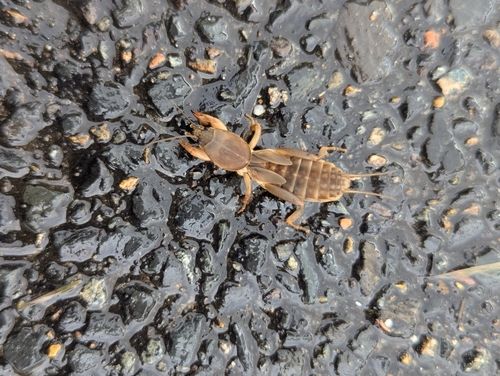
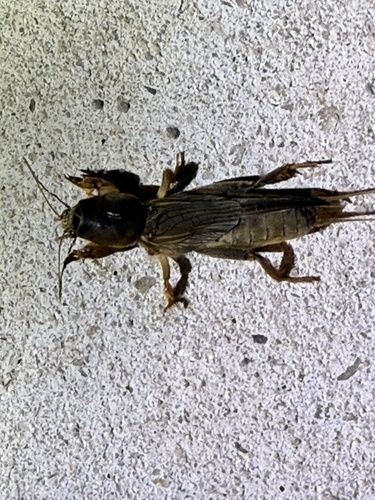
Mole cricket (Gryllotalpa australis)
Mole cricketPhoto: Rosie Steinberg, CC BY 4.0, via iNaturalist
Mole cricket (Gryllotalpa australis)
Mole cricketPhoto: Dave, CC BY 4.0, via iNaturalist

2 photos: swipe for more

Mole crickets

Gryllotalpa species · Burrowing root feeder

Brown or yellow patchesMounds, tunnels or loose soil

Damage: Raised soft tunnels under the turf, small piles of loose soil and grass that browns and dries because its roots have been cut.

The insect: Shiny brown crickets about 30–45 mm with huge spade-like front legs for digging. You'll often hear them more than see them: a loud continuous buzz from the lawn at dusk, especially after rain or watering.

When: Most active in summer.

JFMAMJJASOND

Lawns it hits: Couch, Kikuyu, Buffalo, Zoysia. Any lawn grass.

Checks to try:

  • Soap flush test
Could it be something else?
  • Ant nests or worm casts: Ant mounds have ants. Worm casts are small rounded piles with no tunnels.
What I'd do about it
  • Most lawns live happily with a few. Fill and roll soft tunnels.
  • Water deeply and less often rather than every evening; they are most common in well-watered ground.

If it's bad: Only if tunnelling is killing big areas. Talk to me before reaching for a spray.

Meat ants on a nest (Iridomyrmex purpureus)
Meat ants on a nestPhoto: Thomas Mesaglio, CC BY 4.0, via iNaturalist

Ants

Several species, e.g. meat ants (Iridomyrmex purpureus) · Nest builder

Mounds, tunnels or loose soilThin, weak grass dying out

Damage: Mounds of fine soil that smother the grass, and bare or thin spots where nests are busy.

The insect: Small ants coming and going from soil mounds or holes in the lawn.

When: Warmer months.

JFMAMJJASOND

Lawns it hits: Couch, Kikuyu, Buffalo, Zoysia. Any lawn grass.

Checks to try:

  • Birds and night watch
Could it be something else?
  • Worm casts: Little rounded piles of moist soil with no ants. They are a good sign.
What I'd do about it
  • Rake or hose mounds flat.
  • Keep the lawn thick so there's less bare ground to nest in.
  • Remember ants also eat other lawn pests.

If it's bad: Most ants need no treatment. For a persistent nest in the wrong place, a registered ant bait used to the label.

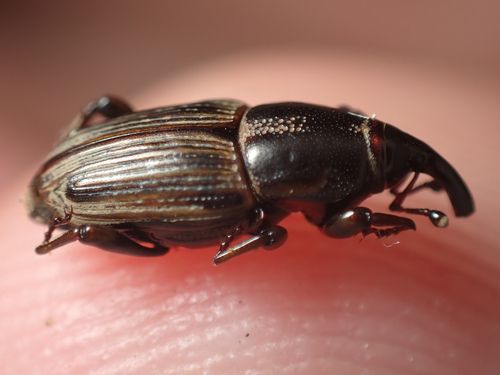
Adult weevil (Sphenophorus brunnipennis)
Adult weevilPhoto: Joshua S. Martin, CC0 1.0, via iNaturalist

Billbug (La Plata weevil)

Sphenophorus brunnipennis · Stem and root feeder (larvae)

Brown or yellow patchesStems snap off, hollow inside

Damage: Small yellow patches that turn brown and don't respond to watering. Stems snap off easily at the crown and are hollow with sawdust-like crumbs.

The insect: Adults are dark weevils about 8–12 mm with a long curved snout, often seen walking on paths. Larvae are creamy-white legless grubs with a brown head, inside stems or just below the surface.

When: Adults are active from late August. The worst damage is November to February.

JFMAMJJASOND

Lawns it hits: Kikuyu, Couch. Mainly kikuyu, sometimes couch.

Checks to try:

  • Tug test
  • Spade check
Could it be something else?
  • Dollar spot or other fungal disease: Disease leaves stems intact. Billbug stems are hollow and break at the crown.
  • Curl grubs: Curl grubs are C-shaped with legs; billbug larvae have no legs.
What I'd do about it
  • Water and feed properly so the turf can outgrow mild damage.
  • Avoid drought stress over summer.
  • Do the tug test in early summer on kikuyu.

If it's bad: If tug tests keep turning up hollow stems, a registered product timed for small larvae in late spring.

No photo

I couldn't find a photo with a licence that lets me use it.

Couch mite

Aceria cynodoniensis · Microscopic sap feeder

Stunted, tufty couch

Damage: Couch that goes stunted and tufty: short, bunched leaves forming little "witches' brooms" or rosettes, often worst along edges. Runners stop spreading.

The insect: Far too small to see without a microscope.

When: Hot, dry weather in summer.

JFMAMJJASOND

Lawns it hits: Couch. Couch; other mite species occur on kikuyu.

Could it be something else?
  • Herbicide damage: Spray damage shows up all at once after spraying, often with yellowing; mite tufts build up slowly.
  • Scalping: Scalped couch is brown and thin, not bunched and tufted.
What I'd do about it
  • Keep couch watered through hot dry spells.
  • Don't overdo nitrogen fertiliser; mites got worse with more nitrogen and less water in trials.
  • For bad patches, mow low and bag and remove the clippings.

If it's bad: Get it confirmed first; other mites look similar. Then a registered miticide if it keeps spreading.

Felted sacs on grass stems (Antonina graminis)
Felted sacs on grass stemsPhoto: CSIRO, Public domain, via Wikimedia Commons

Rhodes grass scale (felted coccid)

Antonina graminis · Sap-sucking mealybug

Brown or yellow patchesThin, weak grass dying out

Damage: Thin, weak, yellowing grass that slowly dies out in patches, usually where the lawn is already stressed.

The insect: Small white woolly or felty sacs about 2–3 mm stuck at the base of stems, under leaf sheaths and at the nodes of runners. Ants often visit them.

When: Worse in warm, dry, stressed times.

JFMAMJJASOND

Lawns it hits: Couch, Buffalo. Couch, Queensland blue couch and buffalo are preferred.

Checks to try:

  • Tug test
Could it be something else?
  • Drought stress: Pull back the leaf sheaths: drought leaves no white sacs.
What I'd do about it
  • Don't mow too low.
  • Water properly so the grass isn't stressed.
  • Check new turf on delivery; it spreads on clippings, mowers and new turf.

If it's bad: Hard to clear completely. Good lawn care is the main fix; talk to me before spraying.

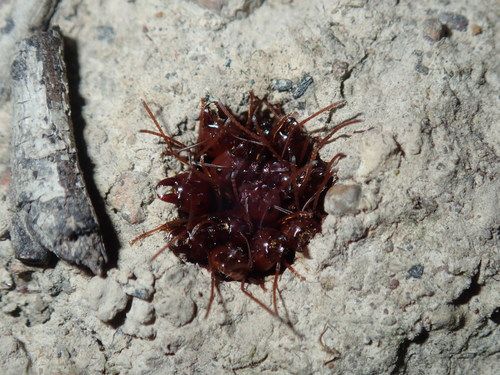
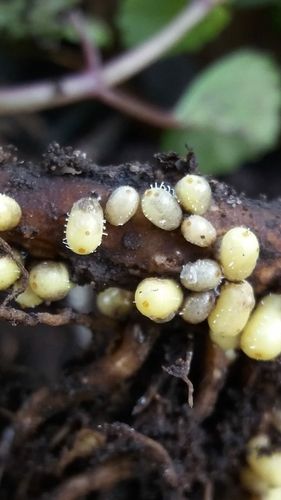
Ground pearl cysts (South American relative) (Eurhizococcus brasiliensis)
Ground pearl cysts (South American relative)Photo: mirmeleon, CC BY 4.0, via iNaturalist

Ground pearls

Margarodidae · Root-sucking scale insect

Brown or yellow patchesThin, weak grass dying out

Damage: Irregular yellow, thin and dead patches that look exactly like drought and don't recover, usually in sandy soil.

The insect: Tiny shiny round cysts, like little golden or pearly beads, among the roots and soil.

When: All year in the soil; damage shows in hot dry spells.

JFMAMJJASOND

Lawns it hits: Couch, Kikuyu, Buffalo, Zoysia. Any grass, warm-season types mostly.

Checks to try:

  • Spade check
Could it be something else?
  • Drought stress: Sift soil from the edge of the patch through your fingers and look for tiny pearls.
What I'd do about it
  • Water during dry spells and use a wetting agent in sandy soil.
  • Balanced feeding, fix compaction, mow at the right height.
  • In bad spots, zoysia and some couch varieties cope better.

If it's bad: Sprays do very little against ground pearls. Good lawn care is the fix.

Sources

General information only. Check the label of any product before you use it.

Get in touch for a quote

If you're not sure what's eating your lawn, get in touch for a quote.

CallGet a quote